To combine unique mechanical keyboard case materials, start by choosing a core material like aluminum or wood to set your sound and feel. Add dampening layers such as foam or gasket mounts to reduce vibrations and shape your sound profile. Mix metals with plastic or bamboo for a warm, durable build, and consider using hybrid or layered designs for balance. Experimenting with different combinations allows you to personalize both sound and tactile experience—continue exploring to reveal even more options.
How Do Different Materials Affect Keyboard Sound and Feel?
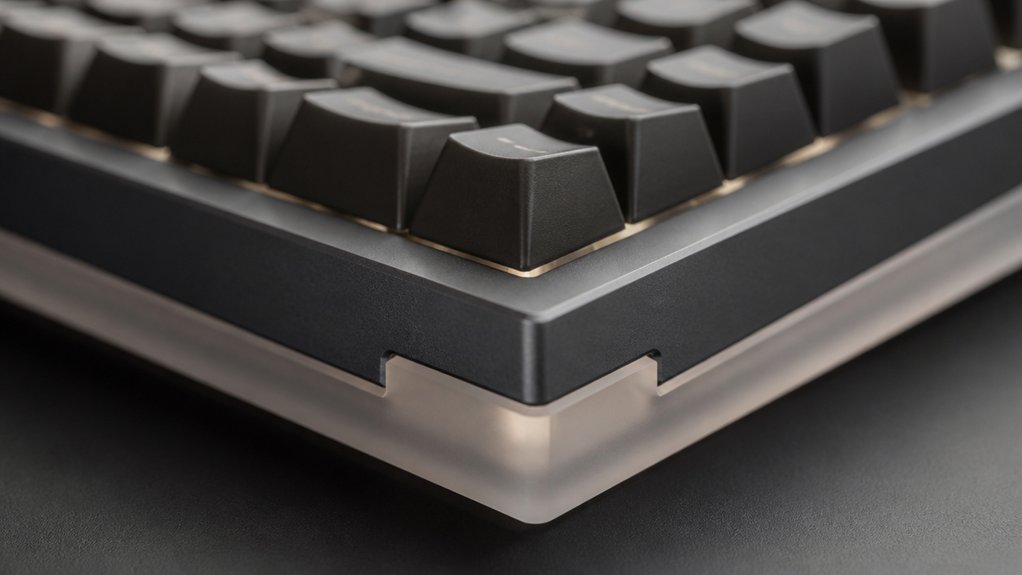
Have you ever wondered how the material of a keyboard case shapes its sound and feel? Your choice of keyboard case material greatly influences keyboard acoustics and typing experience.
Keyboard case materials significantly define sound and feel, shaping your perfect typing experience.
Aluminum cases, especially heavier alloys like 7075, create a bright or pingy sound with a crisp, sturdy feel, though foam and mounting techniques can soften this.
Polycarbonate cases produce a deep, resonant sound, providing a softer, muted typing feel by damping vibrations.
Wood and bamboo cases offer warm, natural tones with authentic acoustic qualities due to their grain and density variations.
Plastic plates, such as Delrin, absorb vibrations for deep, quiet sounds and buttery keystrokes.
Your mounting style further refines these effects, balancing rigidity and vibration isolation to achieve your ideal sound profile and typing feel.
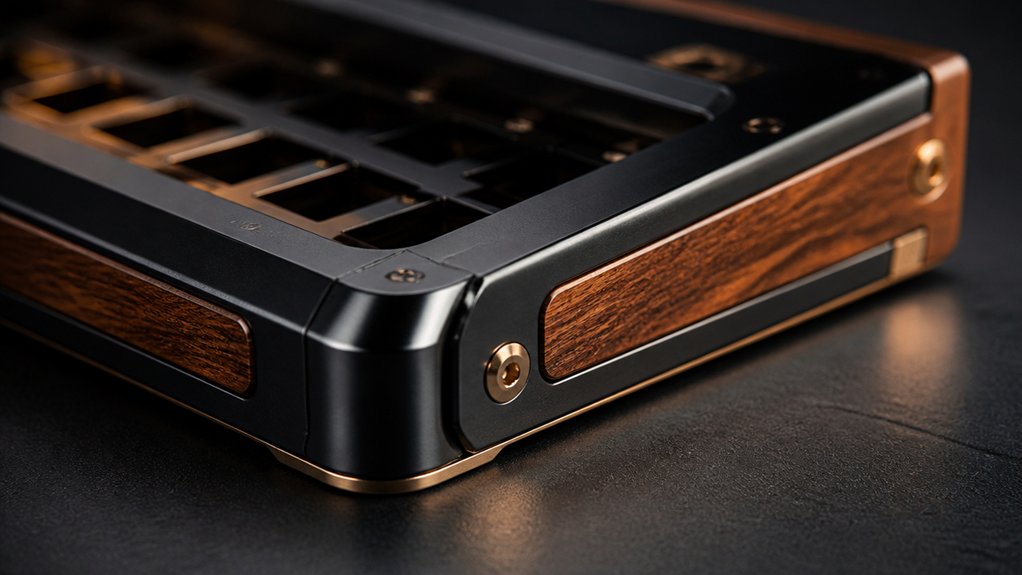
Furthermore, the choice of solid, monolithic wood for cases notably enhances the acoustic resonance and tactile warmth, adding a unique, organic quality to your typing experience.
Combining Metal and Plastic Cases for Better Sound and Vibration
Blending metal and plastic cases offers a balanced approach to achieving superior sound and vibration control in mechanical keyboards. When you combine aluminum cases, especially 6063 alloy, with plastic inserts like polycarbonate or POM, you create a hybrid structure that benefits from both materials.
This setup enhances internal dampening, reducing the characteristic ping of aluminum and softening the overall sound. Using gasket mounts or foam layers between the metal and plastic components isolates vibrations, improving the typing experience.
These hybrid cases also cut down weight while maintaining durability, making custom mechanical keyboards more ergonomic. Advanced manufacturing techniques, such as CNC machining, guarantee precise fitting of plastic shells or inserts. Incorporating aluminum finish options like anodizing or powder coating can further enhance the case’s resistance to wear and corrosion, ensuring longevity and a premium feel.
Using Wood and Bamboo for Warmth and Unique Texture
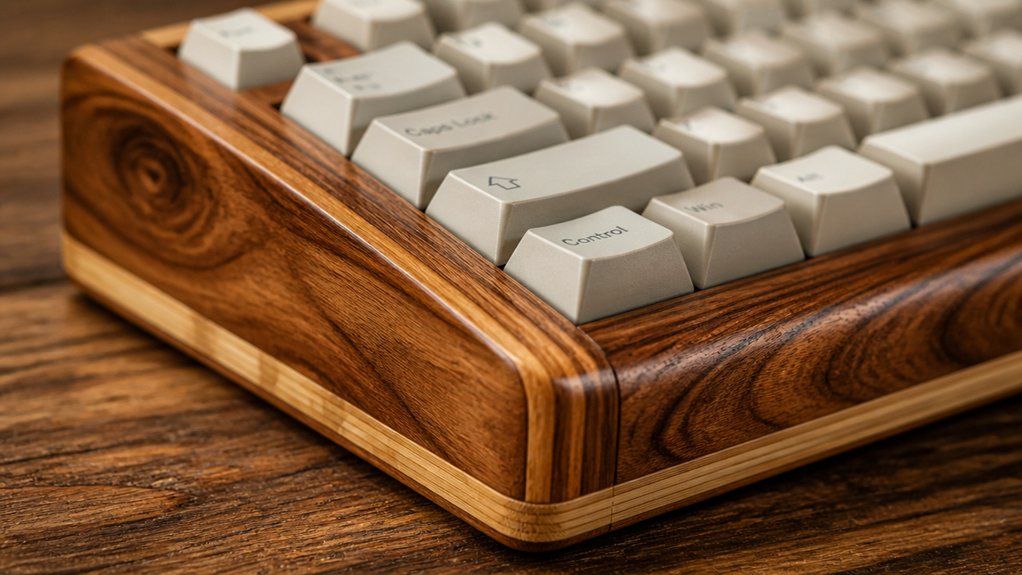
Using wood and bamboo for keyboard cases introduces a warm, natural tone that enhances the overall sound and feel of your typing experience. These materials bring a distinct character to custom keyboards, affecting sound signatures and typing feedback.
Wood and bamboo cases add warmth and natural charm, enriching sound and tactile feedback for a unique typing experience.
Consider these points:
- Unique Texture and Aesthetic: Wood and bamboo provide visual warmth and tactile richness, making your keyboard stand out among different case materials.
- Enhanced Sound and Feel: Their grain and density create a softer typing experience with pleasant acoustic tones, improving overall soundscape.
- Eco-Friendly and Durable: Bamboo offers a lightweight, sustainable alternative, while custom wood cases are treated for durability without sacrificing natural appeal.
Incorporating wood or bamboo elevates your keyboard’s look and feel, offering a personalized, authentic typing experience.
Mounting Styles and Dampening Tricks to Supercharge Your Sound
Choosing the right mounting style and incorporating effective dampening tricks can dramatically transform your keyboard’s sound and feel. For a custom mechanical keyboard, your case’s mounting method influences vibration transfer and tone.
Gasket mounts, using flexible materials, isolate the plate and PCB from the case, producing a softer, thocky sound that’s highly valued in high-end builds. Alternatively, adding foam like Poron or PolyFil between the plate and PCB or inside the case reduces resonance, smoothing out the overall sound without sacrificing key feel.
Metal cases, especially aluminum, benefit from force-break mods—like painter’s tape—eliminating ping and unwanted resonances. Tray mount cases tend to sound firmer and clackier, while sandwich and integrated plate mounts offer stiffer feels with more metallic tones. Combining these approaches allows you to customize your typing experience perfectly, all while considering material compatibility to ensure longevity and optimal performance.
Experimenting With Material Mixes to Personalize Your Keyboard
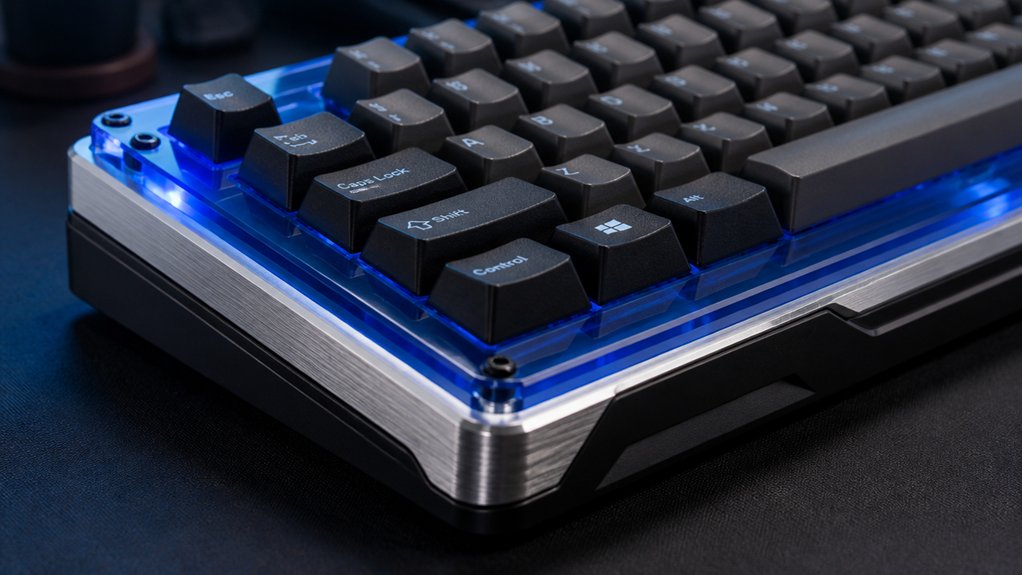
Experimenting with material mixes allows you to tailor your keyboard’s sound and feel uniquely to your preferences. Combining different materials, like aluminum bases with polycarbonate or wooden tops, makes the keyboard sound different by blending durability with warm acoustics.
Here are three ways to personalize your keyboard kit:
- Use hybrid cases with bamboo and CNC-machined aluminum to optimize cushioning while preserving structure and sound profiles.
- Add metal inserts or brass fittings in plastic or Delrin cases to enhance build quality and stability without changing the tactile switches’ feel.
- Layer foam or vibration-dampening materials between dissimilar cases provide, controlling resonance and making the keyboard sound differently to suit your taste.
- Consider the material quality, durability, and protection features of each component to ensure the longevity and performance of your custom build.
These approaches let you experiment with combinations to craft a truly unique typing experience.
Frequently Asked Questions
What Does a 96% Keyboard Not Have?
A 96% keyboard doesn’t have a dedicated function row separation, a full-sized number pad, or extra macro and media keys. It also lacks the larger, more complex layouts like split ergonomic designs, fitting within a compact, efficient form.
Is 84 Keys 75%?
Yes, an 84-key keyboard is considered a 75% layout, balancing compactness and functionality. You get dedicated arrow keys and a compact function row, making it a popular choice for desksaving without sacrificing essential keys.
Are FR4 Plates Thocky?
Yes, FR4 plates are thocky, offering a deeper, muted sound. You’ll notice smoother vibrations and less ping, especially with gasket mounts, creating a satisfying, cushioned typing experience that balances sound and feel perfectly.
Is OEM or Cherry Better?
You’ll find Cherry profile keycaps offer a more ergonomic, softer typing experience and sound, while OEM keycaps are more standard and accessible. Choose based on comfort, aesthetics, and compatibility with your keyboard’s design and switch preferences.
In Summary
Mixing different materials in your keyboard case isn’t just about aesthetics — it’s about customizing sound, feel, and vibration. By experimenting with combinations like metal and plastic or wood and bamboo, you can craft a keyboard that’s uniquely yours. Play around with mounting styles and dampening tricks to fine-tune your setup. Don’t be afraid to get creative—your perfect mechanical keyboard is just some material experimentation away!