
The material you choose for your mechanical keyboard case mainly affects its weight, with dense metals like brass, steel, and aluminum adding more heft for stability and durability, while plastics like polypropylene and POM keep it lightweight for portability. Heavier materials reduce vibrations and improve sound, but may be less portable. Lighter options make transport easier but might compromise stability or acoustics. Keep exploring to discover how different materials can shape your ideal keyboard experience.
How Material Choices Impact Keyboard Case Weight
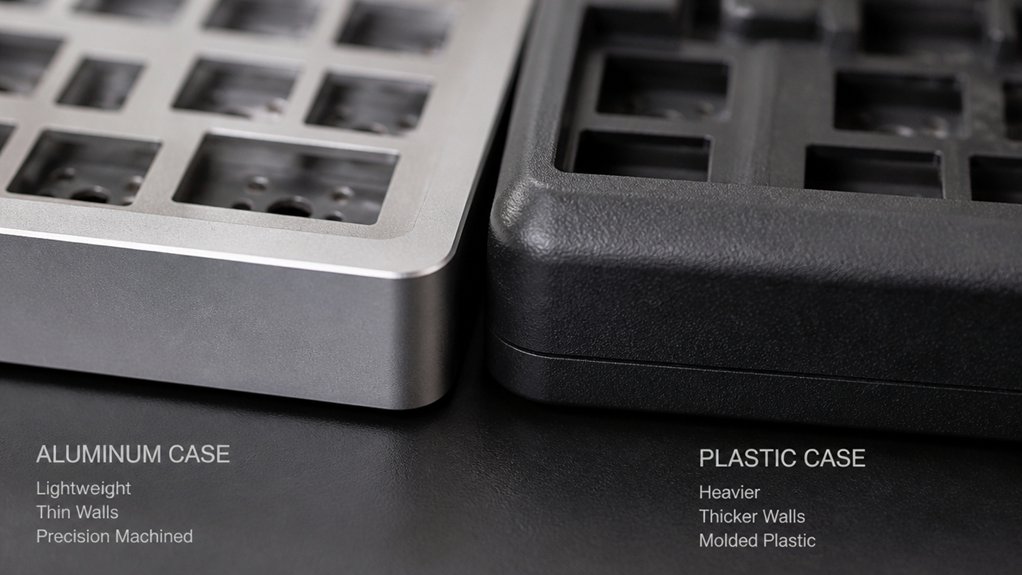
The choice of materials directly influences the weight of a keyboard case, affecting both portability and stability.
Material choice impacts keyboard weight, balancing portability and stability.
For example, aluminum is a popular case material because it balances durability and weight, typically totaling 1.5 to 2.5 kg. Brass and steel, however, are much denser, with brass at 8.6 g/cm³ and steel at 7.9 g/cm³, making cases considerably heavier. This added weight enhances stability during intense typing but reduces portability.
Plastic, like polypropylene, is much lighter at around 0.9 g/cm³, resulting in cases that are easier to carry but less stable.
When selecting a mechanical keyboard case, consider how these case materials affect overall weight, balance, and performance to suit your preferences.
The Effect of Density on Adding Weight and Stability
Higher material density directly translates into increased weight and stability for your keyboard case. Dense case materials like brass (8.6 g/cm³) and steel (7.9 g/cm³) substantially boost the weight compared to lighter options such as aluminum (2.7 g/cm³) or polypropylene. Adding these dense metals to your keyboard cases improves stability by reducing movement and sliding, especially during intense gaming or fast typing. Heavier cases lower the vibration frequency, creating a deeper sound and reducing resonant pinging. Mechanical keyboards with dense material cases give you a firm, grounded feel on your desk, enhancing precision and consistency. Material engineering also plays a crucial role in ensuring the durability and impact resistance of your case, making it a key consideration for high-performance setups. Material density directly influences stability and your overall typing experience, making denser cases a popular choice for those seeking a solid, high-performance build.
Rigidity and Flexibility: How They Shape Feel and Sound
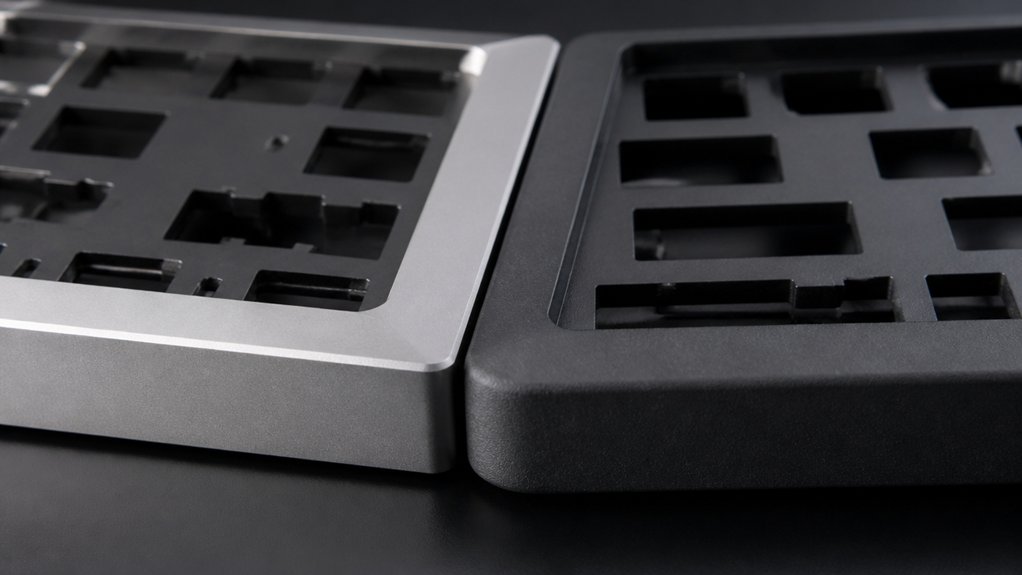
Material stiffness greatly influences how your keyboard feels and sounds during use. Rigid materials like stainless steel offer a firm typing feel with sharp, high-pitched sounds because they limit flex and absorb less vibration.
Rigid materials like stainless steel provide a firm feel and sharp sound due to limited flex and vibration absorption.
Softer materials such as polycarbonate create a cushioned, muted experience, absorbing keystroke impact and softening the sound profile. Flexible designs, like 1.2mm flex-cut plates, increase softness but can thin out the acoustic richness when used without foam damping.
Rigid cases provide a precise response favored by gamers, reducing key wobble and enhancing the typing feel. Conversely, softer, flexible cases reduce fatigue and dampen harsh keyboard sounds, offering a more comfortable long-term typing experience.
Your choice of material directly affects the grip, sound profile, and overall feel of your keyboard.
Damping and Its Role in Reducing Noise and Weight
Damping materials play a key role in reducing noise without adding much weight to your keyboard case. Using flexible or absorbent materials like polycarbonate or foam can absorb vibrations and minimize resonance effectively.
Damping Materials and Sound
Ever wondered how keyboard cases stay quiet without becoming heavy? Damping materials like polycarbonate and POM absorb vibrations and control sound decay, reducing keyboard noise without adding much weight.
Silicone and force-break dampeners cut metal-on-metal resonance, making pings and ringing clearer. Poron foam inserts, only 2–3 mm thick, deepen sound and reduce reverb while keeping weight minimal. These materials help isolate sound and dampen vibrations effectively, improving acoustic quality.
- Polycarbonate’s low density (<1.4 g/cm³) offers noise reduction with lightweight properties.
- Silicone and force-break dampeners improve sound without increasing weight.
- Internal acoustic ribs and textured surfaces scatter sound waves, minimizing echo without bulk.
Together, damping materials optimize sound quality and maintain portability in your keyboard case.
Weight Reduction Strategies
By strategically incorporating damping layers into your keyboard case, you can substantially reduce noise without adding extra weight. Using damping materials like Poron foam and silicone dampeners absorbs vibrations, minimizing sound and resonance while maintaining lightweight design.
Lightweight plastic options, such as polycarbonate or POM cases, naturally offer sound dampening properties, reducing the need for heavy materials. Adding internal acoustic foams enhances sound quality by cutting reverberation and pinging, allowing the use of lighter case materials without sacrificing acoustic performance.
Proper placement of damping layers lessens echo and high-frequency metallic pinging typical in aluminum cases, balancing sound dampening with material choice. This approach effectively reduces the overall weight of your keyboard case while improving acoustic quality. Additionally, selecting foam with appropriate density and construction can further optimize vibration absorption and noise reduction, supporting both lightweight design and sound fidelity.
Comparing Common Keyboard Case Materials: Pros and Cons
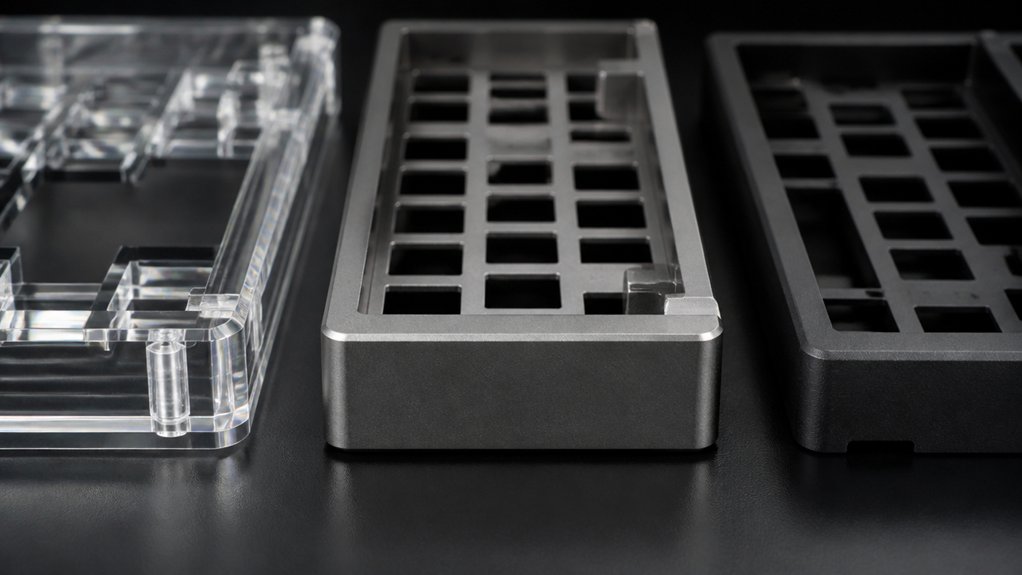
Choosing the right keyboard case material involves balancing weight, durability, and sound. Aluminum cases are heavy but offer strength and better heat dissipation, while plastics are lighter but less robust. Additionally, materials like brass, steel, or acrylic provide unique sounds and aesthetics, often at higher costs or lower durability. For those seeking an organic and warm aesthetic, solid wood shells can offer a pleasing tactile experience and natural beauty, though they may require more careful maintenance.
Material Weight and Durability
Different keyboard case materials vary considerably in weight and durability, which directly impacts their suitability for long-term use. Aluminum keyboard cases weigh around 1.5–2.5 kg, offering superior rigidity guarantees longevity, durability, and a lifespan of 10–20 years.
In contrast, plastic cases are lighter, about 1 kg, but tend to show wear and damage within 1–3 years of heavy use. Brass and steel, often used for internal weights, add significant weight but improve stability and sound quality.
- Aluminum provides strength, thermal conductivity, and long-lasting durability.
- Plastic cases are lightweight and offer vibration damping but lack durability over time.
- Brass and steel increase overall weight, enhancing case stability but reducing portability.
This balance between weight and durability influences your choice depending on usage intensity and desired longevity. Additionally, case construction quality plays a crucial role in determining how well a keyboard case withstands daily handling and environmental factors over extended periods.
Acoustic Profile Variations
The material of your keyboard case greatly influences its acoustic profile, shaping the sound it produces during typing. Heavy case materials like brass and steel produce deep, resonant thock sounds with minimal resonance. Aluminum cases, weighing less, offer a firm, crisp sound profile but can suffer from pinging without damping. Lighter plastics, such as polycarbonate or POM, generate softer, muted sounds with less echo and vibration. Acrylic cases tend to be bright and hollow, which may impact overall tone and durability. Stabilizing lighter cases with dense weights like brass or steel can sharpen the sound profile and reduce pinging. Additionally, the choice of material quality can affect the longevity and consistency of the sound over time.
Cost and Aesthetic Options
Material choices for keyboard cases vary widely in cost and aesthetic appeal, impacting both your budget and the overall look of your setup.
Aluminum keyboards offer a sleek, professional appearance with an anodized finish and customizable colors, but come at a higher cost starting near $100.
Plastic keyboard cases, like ABS or POM, are affordable and lightweight but may yellow or fade over time, especially under heavy use.
Brass and steel cases are heavy, durable, and provide a deep, resonant sound, with a premium vibe but limited design options and a steeper price.
Polycarbonate and acrylic cases enhance RGB lighting effects with colorful or transparent visuals; polycarbonate is impact-resistant, while acrylic is more brittle but visually striking.
In addition, the choice of material quality directly influences the weight and durability of your keyboard case, affecting overall portability and long-term resilience.
Tips for Picking the Right Material for Your Build
When choosing the right material for your keyboard case, consider how weight and acoustics will impact your experience. A case Materials Comparison reveals that heavier materials like brass and steel provide a firmer sound profile and improved stability during intense use, ideal for gamers seeking precision. Additionally, impact resistance varies widely among materials, influencing both durability and sound characteristics. Aluminum alloys such as 7075 offer a good balance of weight—around 2.5 kg for a full case—and durability, producing a richer keyboard sound. Lightweight materials like polycarbonate or POM deliver quieter, cushioned typing but may lack overall stability. Adding internal metal weights to lighter cases enhances heft and acoustics without replacing the case material. Your choice depends on your use case: gamers and heavy typists prioritize stability with heavier options, while portable or office builds benefit from lighter materials.
Frequently Asked Questions
Is 84 Keys 75%?
Yes, an 84-key layout is typically considered a 75% keyboard. You’ll find it features most function keys and navigation keys in a compact form, making it a versatile, space-efficient choice between larger TKL and smaller layouts.
Why Do Gamers Hate Membrane Keyboards?
You dislike membrane keyboards because they feel mushy, lack solid feedback, and respond slowly, which hampers your gaming speed and accuracy. Their short lifespan and inability to customize also make them less reliable for intense gaming sessions.
What Is a 96% Keyboard Missing?
A 96% keyboard is missing a dedicated navigation cluster and some function keys like Print Screen, Scroll Lock, or Pause. It combines or reorganizes these keys to save space, offering nearly full functionality in a compact layout.
Is a 60% Keyboard Better Than 75% for Gaming?
A 60% keyboard can be better for gaming if you prioritize speed and minimal hand movement, enhancing reaction times. However, a 75% offers more keys for quick access, making it better for complex commands and multitasking.
In Summary
Choosing the right material for your mechanical keyboard case directly affects its weight, stability, and feel. Heavier materials like metal add durability and a satisfying heft, while lighter options like plastic boost portability. Consider how density, rigidity, and damping impact your typing experience and noise levels. By understanding these factors, you can select a case that balances weight and performance perfectly, ensuring your keyboard feels just right for your style and needs.