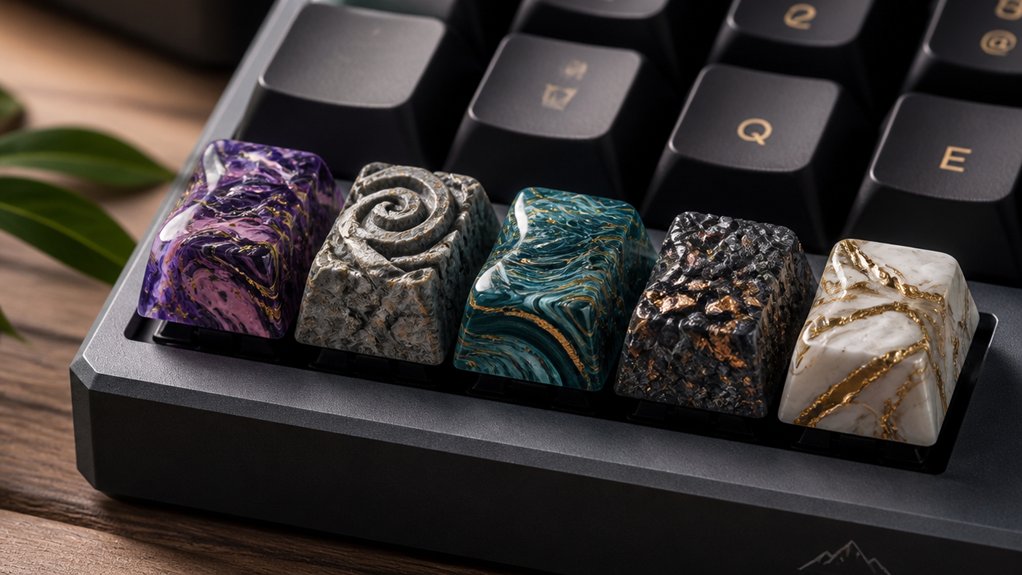
To get the best out of artisan keycaps on modular boards, first confirm your switches are MX-compatible with cross-shaped stems. Choose the right sizes like 1U or 1.25U, and match profiles such as OEM or SA for comfort and style. Pick durable materials like PBT or resin that complement your keyboard’s look. Position artful caps on less-used keys, and keep them clean and protected. Keep exploring to discover even more tips for enhancing your custom setup.
How to Check If Your Modular Keyboard Can Handle Artisan Keycaps
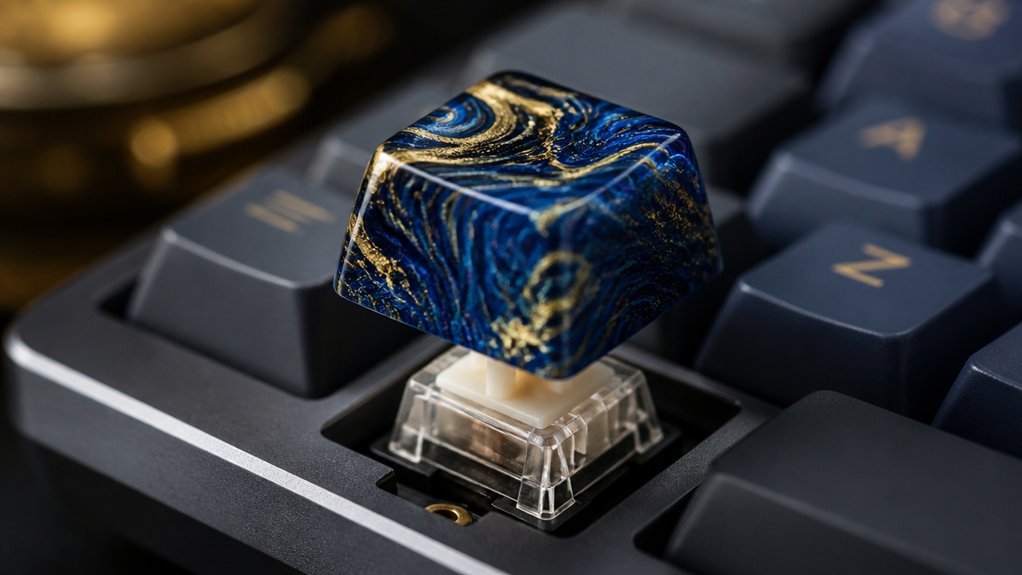
Wondering if your modular keyboard can handle artisan keycaps? First, confirm your keyboard uses MX-compatible switches, which have cross-shaped stems, to guarantee artisan keycaps fit properly.
Measure the keycap size and profile on your modular board—pay attention to 1U or larger sizes like 1.25U or 1.5U—to confirm they’ll suit your setup and maintain comfortable typing. Check the key spacing to prevent artisan keycaps from interfering with neighboring keys.
Also, verify if your modular board supports non-standard key sizes or layouts, as some artisan keycaps are designed for standard ANSI or ISO standards. Finally, review whether your keyboard’s switch mounting style is hot-swappable or soldered, easing keycap installation and swaps.
Additionally, examining your keyboard’s keycap compatibility with artisan designs ensures a seamless fit and prevents potential damage or misalignment during installation. These steps confirm your artisan keycaps will fit and work seamlessly on your modular setup.
Choosing the Right Sizes and Profiles for Your Artisan Keycaps
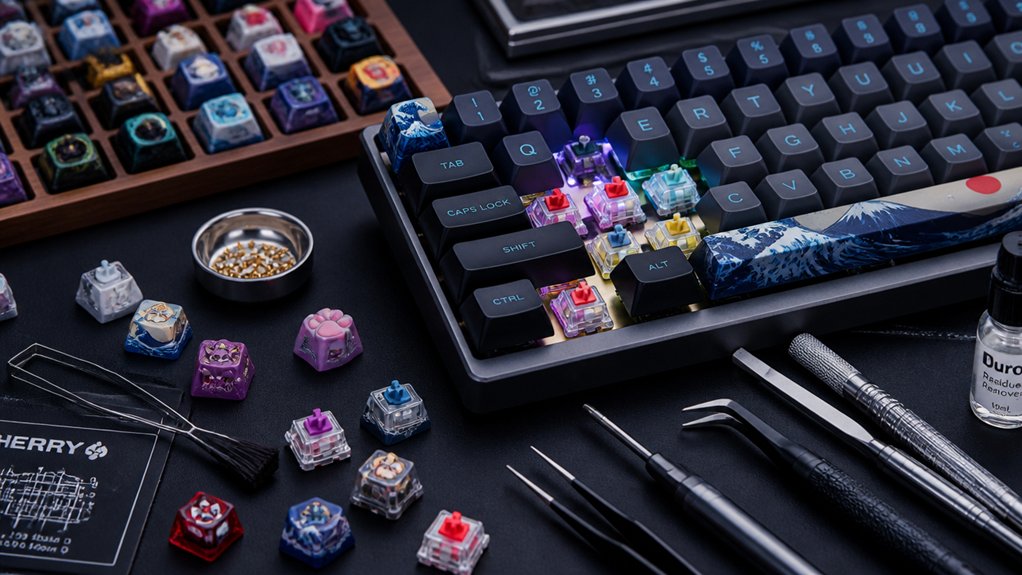
Selecting the right sizes and profiles for your artisan keycaps is essential to guarantee they fit comfortably and enhance your typing experience. To do this, make certain your artisan keycap matches the specific key size of your modular keyboard, such as 1U for letter keys or larger sizes like 1.25U and 1.5U for modifiers like Shift or Function keys. It’s also important to consider material durability, as high-quality materials like PBT ensure longer-lasting and more resilient keycaps. Confirm that the keycap profile (SA, DSA, OEM, Cherry) aligns with your keyboard’s existing set to prevent discomfort. Prioritize placing artisan keycaps on less frequently used keys such as Escape or Function keys, which can accommodate their sculptural designs. For RGB-backlit boards, choose artisan keycaps with translucent resin to preserve lighting effects. Proper sizing and matching profiles create a seamless, enjoyable typing experience on your modular board.
Picking Materials and Designs That Match Your Keyboard’s Style
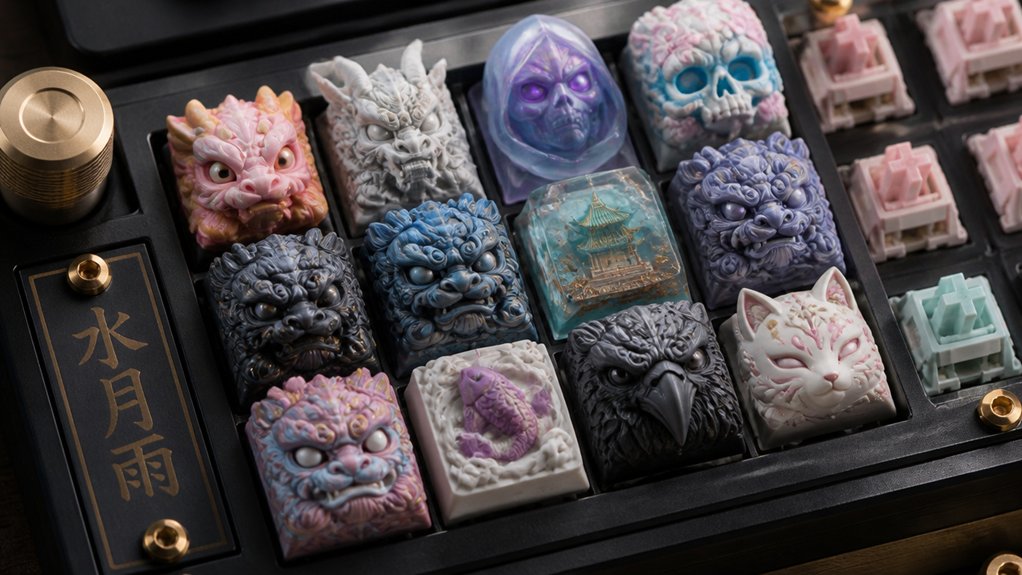
Matching your artisan keycaps to your keyboard’s style involves carefully choosing materials and designs that enhance the overall look while maintaining usability.
You can make artisan keycaps stand out by focusing on:
- Selecting materials and equipment like resin or metal that complement your modular board’s texture and base color for a cohesive aesthetic.
- Choosing designs, such as sculpted keycaps, that balance visual flair with functionality—ensuring escape or modifier keys don’t obstruct usability.
- Matching profiles, like SA or OEM, and color palettes that harmonize with your keyboard’s theme or lighting, especially if you want translucent resin for RGB effects.
Considering compatibility, like MX-compatible stems and correct unit sizes, helps blend style with typing comfort on your modular board.
Balancing Looks and Functionality When Using Artisan Keycaps
Balancing the visual appeal and practical use of artisan keycaps is essential to achieve a cohesive and functional keyboard setup. Place artisan keycaps on less frequently used keys like Escape or Function to preserve typing fluidity and primary key accessibility.
A well-chosen dye sublimation technique can ensure the artwork remains vivid and resistant to fading over time, enhancing both aesthetics and longevity.
Verify MX-compatible stems or switch compatibility to guarantee secure fitting and reliable keypress feedback. Select resin or polymer materials that enhance tactile appeal without sacrificing functionality or causing finger fatigue, helping you personalize your keyboards effectively.
Installing, Caring For, and Protecting Your Artisan Keycaps
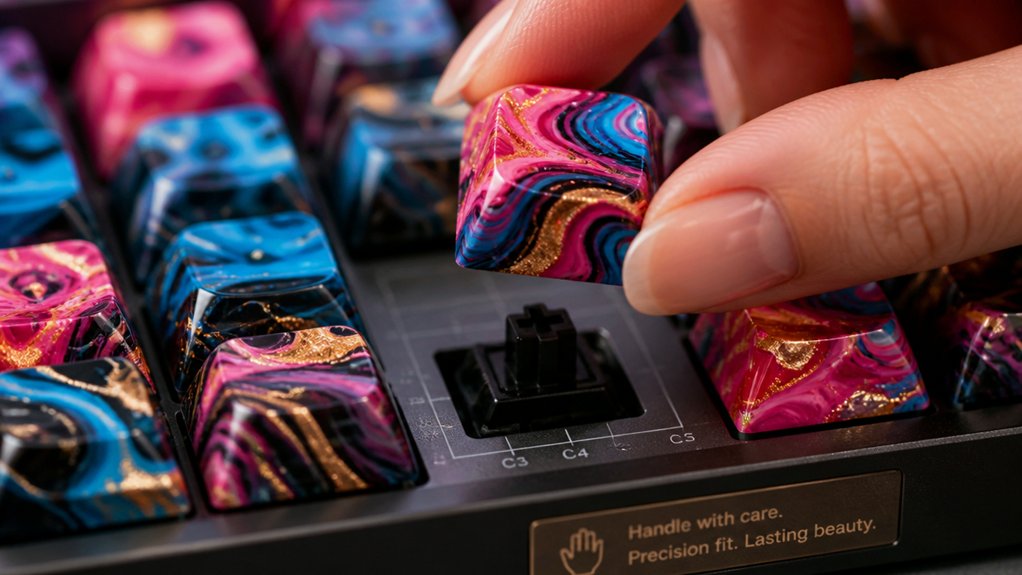
Installing, caring for, and protecting your artisan keycaps is essential to their longevity and visual appeal. Proper handling guarantees your delicate sculpted features stay safe and vibrant.
Proper care and handling ensure your artisan keycaps remain vibrant and in perfect condition.
To start:
- Make sure your artisan keycaps are MX-compatible for your modular keyboard, firm but gentle pressed onto switches.
- Regularly clean artisan keycaps with a microfiber cloth and mild soap to preserve resin clarity and painted details.
- Protect them from direct sunlight to prevent fading and material degradation over time.
Always remove artisan keycaps before transporting or disassembling your modular board, avoiding chipping or damage. Store them in dust-free containers or display cases to preserve intricate designs and prevent grime buildup, keeping your artisan keycaps looking their best.
Frequently Asked Questions
What Is the Point of Artisan Keycaps?
The point of artisan keycaps is to personalize and enhance your keyboard’s appearance, showcasing your creativity and style. They serve as eye-catching accents, often on less-used keys, combining artistry with practicality for a unique, expressive typing experience.
Is ABS or PBT More Thocky?
You’ll find PBT keycaps more thocky than ABS, thanks to their higher density and matte texture. They produce a deeper, richer sound that many enthusiasts prefer, especially for its consistent acoustics and satisfying, muted “thock.”
Should I Dry My Keycaps Facing up or Down?
You should dry your keycaps facing down on a soft surface to let residual water drip out, preventing moisture buildup, damage, or mold. Using a gentle airflow can help dry intricate designs faster, but avoid face-up drying.
Do Artisan Keycaps Improve Typing?
Yes, artisan keycaps improve your typing by providing unique textures and shapes, enhancing tactile feedback, and boosting comfort. They can also help with finger placement and reduce fatigue, making your typing experience more satisfying and efficient.
In Summary
Now that you know how to select the right sizes, materials, and styles, you’re ready to elevate your keyboard with artisan keycaps. Remember to check compatibility before purchasing, balance aesthetics with practicality, and care for your keycaps properly. With the right tips in mind, you’ll create a unique, personalized setup that reflects your style while maintaining ideal function. Happy customizing—your perfect keyboard look is just a few keycaps away!