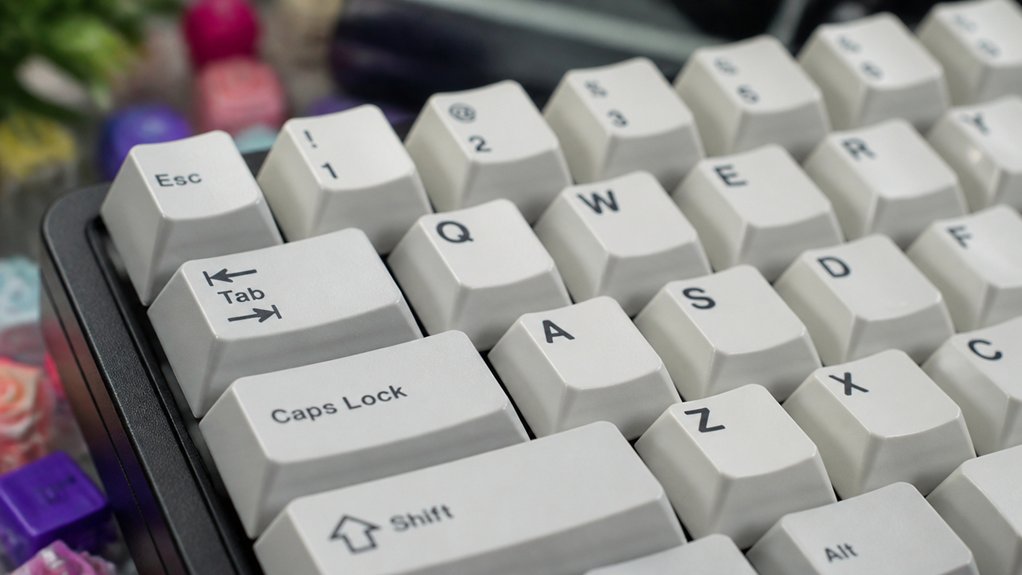
You’ll value POM keycaps for their silky smooth, thin texture that enhances RGB lighting and delivers a sharp, clacky sound. They’re durable and resist wear well but can feel slippery, reducing grip and accuracy—especially during fast typing or gaming. Their milky surface limits legend options, and they may wobble slightly without adjustments. While pricier and less common than PBT, they offer a premium feel that makes them worth considering if you want to explore their unique qualities.
What Makes POM Keycaps Unique?
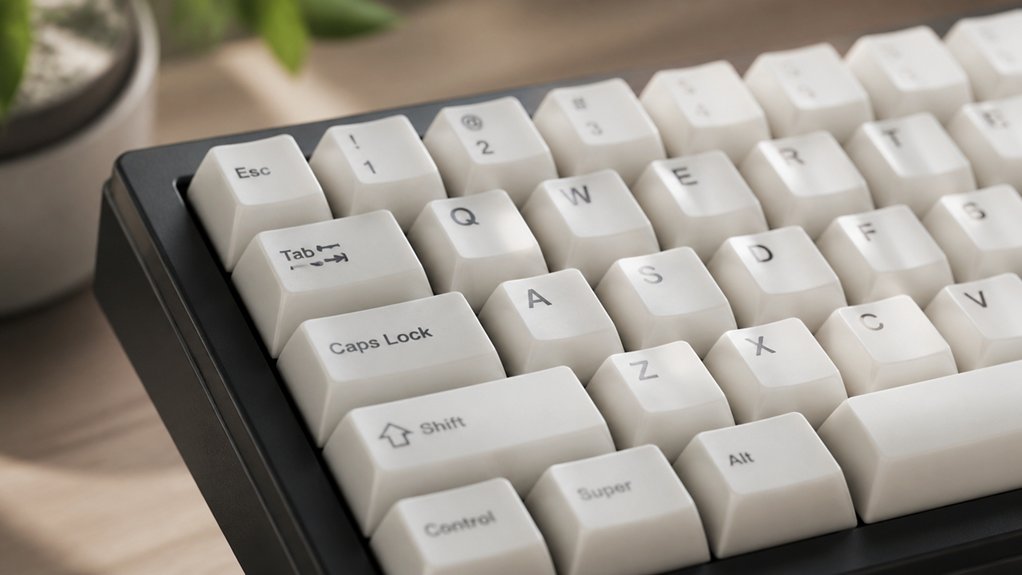
What sets POM keycaps apart from the rest? You’ll notice their smooth, silky, almost slippery surface that enthusiasts call “buttery smooth.”
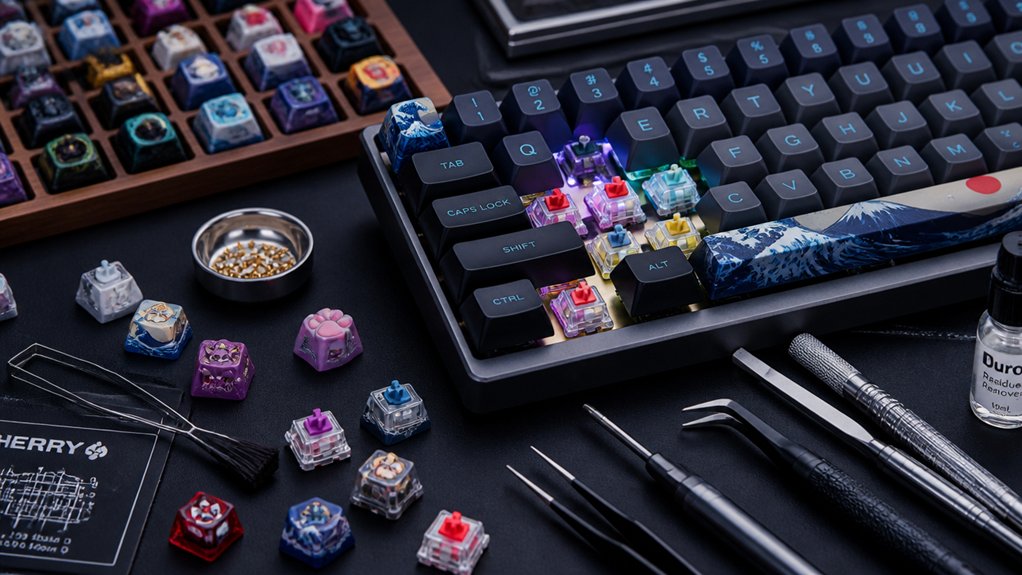
Unlike common keycaps, POM keycaps have a unique milky white, waxy look when undyed, which gives your keyboard a distinct visual appeal. They’re typically thinner than PBT keycaps, allowing more vibrant RGB lighting to shine through with better transparency.
POM keycaps also produce a higher-pitched, clacky sound—more resonant than ABS but not as deep as PBT, giving your typing a sharper acoustic signature. Though less common and pricier, their durability shines as they resist wear effectively, keeping their surface quality over time.
If you want something visually unique and long-lasting, POM keycaps truly stand out.
How Do POM Keycaps Feel When Typing?
Typing on POM keycaps offers a unique tactile experience thanks to their smooth, silky surface. You get a smooth typing experience that feels almost buttery and glides effortlessly under your fingers.
Experience the buttery smooth glide of POM keycaps for effortless, silky typing comfort.
Here’s what you’ll notice:
- Low friction reduces scratchiness without needing lubrication
- The surface can feel slightly slippery, which some find comfortable
- Compared to PBT, POM keycaps deliver a lighter, gliding feel instead of a textured grip
- They produce a higher-pitched, clacky sound that complements the smooth keystrokes
- Some users find the slickness a bit too much for fast-paced gaming
Why Do POM Keycaps Have a Silky Smooth Surface?
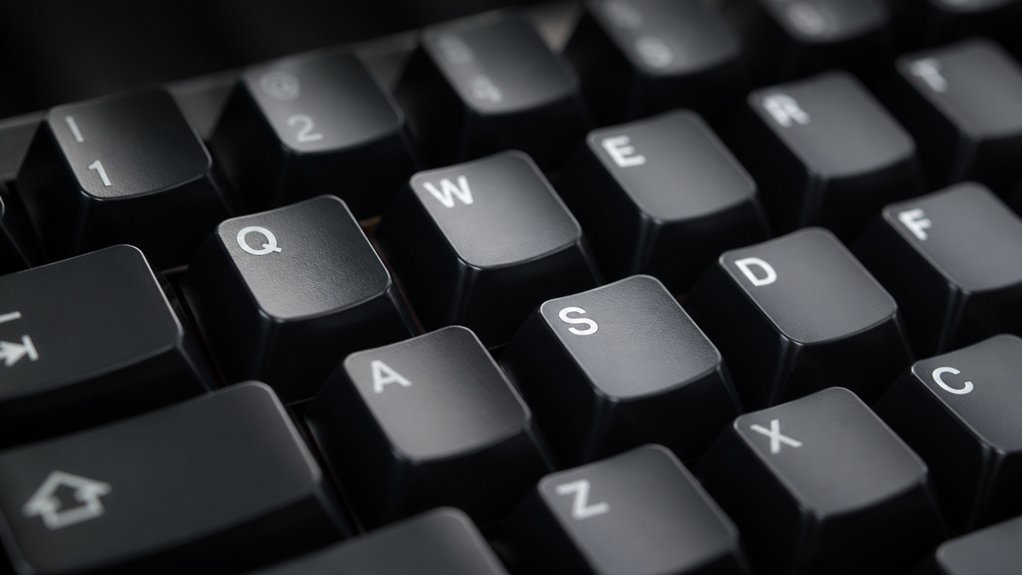
Why does POM feel so silky smooth under your fingers? It’s all thanks to the polyoxymethylene polymer’s low-friction nature. This material’s molecular structure creates a naturally waxy, slippery texture that makes POM keycaps uniquely smooth compared to PBT or ABS.
When you press a POM keycap, you’ll notice reduced resistance thanks to this smooth surface, giving you that buttery smooth typing experience enthusiasts love. Plus, the smooth finish doesn’t just feel great—it also helps POM keycaps resist wear and avoid the shine that can develop over time on other materials.
Because of this naturally smooth surface, you often won’t need extra lubrication to prevent scratchiness, making POM keycaps both smooth to the touch and low maintenance.
What Sound Do POM Keycaps Produce?
When you type on POM keycaps, you’ll notice a distinct, clacky high-pitched tone that stands out compared to other materials.
The sound is more muted and resonant than ABS but brighter than PBT keycaps. This unique resonance creates a satisfying audio experience that many enthusiasts appreciate.
Clacky High-Pitched Tone
How does the sound of POM keycaps compare to other materials? You’ll notice they produce a distinctly clacky, high-pitched tone, quite different from the deeper, “thocky” sound you get with PBT keycaps.
Their smooth and silky surface sharpens this acoustic profile, giving the sound a crisp, bright clarity.
Here’s what you should know about POM keycaps’ sound:
- Higher-pitched and more resonant than PBT keycaps
- Crisp, clacky, and less muted
- Produces a sharper, more pronounced typing sound
- Offers a premium, tactile auditory experience
- Preferred by enthusiasts who enjoy a lively sound
If you want a keycap sound that stands out with its distinct clarity and brightness, POM keycaps deliver.
Muted Sound Comparison
What kind of sound can you expect from POM keycaps? You’ll notice a deeper, more muted tone, especially if you use full housing switches.
While they still produce a higher-pitched, clacky sound compared to PBT, the overall effect is smoother and less harsh. Thanks to their low friction surface, POM keycaps reduce scratchiness and deliver a quieter, less sharp auditory experience.
The sound signature leans toward a “premium” feel—quieter than ABS but not as deep as some PBT varieties. This unique balance means you get a softer, more resonant typing sound without sacrificing the tactile feedback you enjoy.
If you’re after muted sound qualities with a smooth typing feel, POM keycaps are a solid choice.
Resonance Versus Other Materials
Ever wondered how POM keycaps stack up acoustically against other materials? Polybutylene Terephthalate (POM) keycaps offer a distinct sound signature that balances between the softer thock of PBT and the sharper clack of ABS.
When you type with POM keycaps, expect:
- A higher-pitched, crisper typing sound
- Muted, deeper resonance with full switch housing
- A sound profile that reduces unwanted noise and excess resonance
- A sharper keypress sound some find premium, others too clacky
- A resonance closer to PBT but uniquely distinct due to material traits
If you favor a pronounced, clean acoustic feel without too much thock, POM keycaps provide a satisfying middle ground compared to traditional Polybutylene Terephthalate options.
How Durable Are POM Keycaps for Everyday Use?
Because POM keycaps feature a resilient polymer structure, you can expect excellent durability and resistance to impacts, solvents, and moisture during everyday use. This durable quality makes POM keycaps comparable to PBT keycaps, known for their wear resistance.
You’ll value how these keycaps maintain their texture and sound without heavy wear, despite having a thinner profile that may slightly reduce sturdiness compared to thicker options.
The smooth, slippery surface resists grime buildup, helping your keyboard stay cleaner, though it might show fingerprints more easily over time.
Keep in mind that while POM keycaps are highly resistant and long-lasting, they’re also rarer and more expensive, which could influence your options if you want to replace or customize them later on.
Who Benefits Most From POM Keycaps?
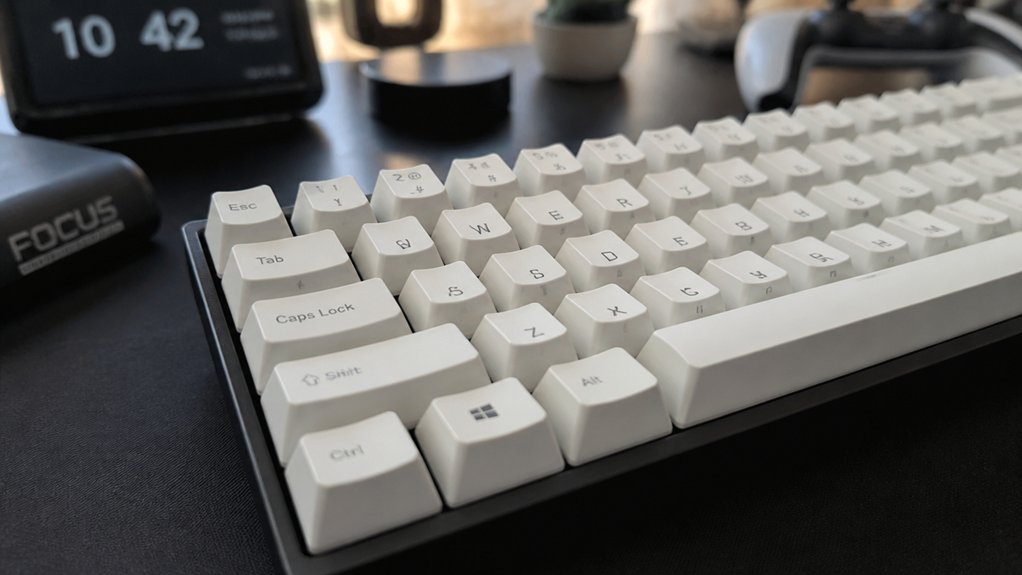
POM keycaps offer a unique blend of smooth texture and durability that suits specific users exceptionally well. If you value the durable nature of materials but prefer a silky smooth surface over rough textures, POM keycaps are a great fit.
You’ll benefit most if you:
- Type for long hours and crave a buttery, smooth keystroke feel
- Want a premium typing experience with a distinctively clacky, higher-pitched sound
- Build custom keyboards and seek enhanced RGB lighting through thinner keycaps
- Appreciate keycaps that resist wear like PBT but with less texture
- Enjoy a smooth, sleek surface rather than a grip-focused material
If you prioritize these traits, the durable nature and feel of POM keycaps will enhance your typing or gaming sessions.
When Can POM Keycaps Cause Grip Issues?
You might notice grip issues with POM keycaps because their smooth, silky surface can feel slippery during fast typing or gaming.
If you rely on strong key control, this low-friction texture may cause your fingers to slide off more easily. These challenges become even more obvious when your hands are sweaty or oily.
Smooth Surface Impact
Though the smooth, silky surface of these keycaps can feel satisfying to some, it often causes grip challenges during fast or precise typing. The smooth surface of POM keycaps reduces tactile feedback, making your fingers more prone to slipping.
You’ll especially notice this in humid or sweaty conditions, where the waxy texture becomes slick. Before switching to POM, consider these points:
- Smooth surface lowers friction compared to textured options like PBT
- Finger slip increases during long, intense typing sessions
- New users may struggle to adjust their typing technique
- Control decreases when accuracy is essential, like detailed editing
- The surface feels polarizing—some love it, others find it frustrating
Understanding these factors helps you decide if POM’s smooth surface matches your typing style and environment.
Gaming Grip Challenges
When fast, precise keystrokes make or break your game, the smooth and slippery surface of POM keycaps can quickly hinder your performance. Their waxy texture lacks the textured feel that gives you better grip, causing your fingers to slip during intense sessions. This leads to missed keystrokes and can even cause finger fatigue, as you constantly adjust your hand placement.
| Challenge | Impact |
|---|---|
| Slippery surface | Reduced tactile friction |
| Thin keycaps | Less control during fast typing |
| Lack of texture | Fingers prone to slipping |
| Extended use | Increased fatigue and errors |
If you rely on grip and precision, you might find POM keycaps less ideal for competitive gaming.
How Do POM Keycaps Affect Gaming Performance?
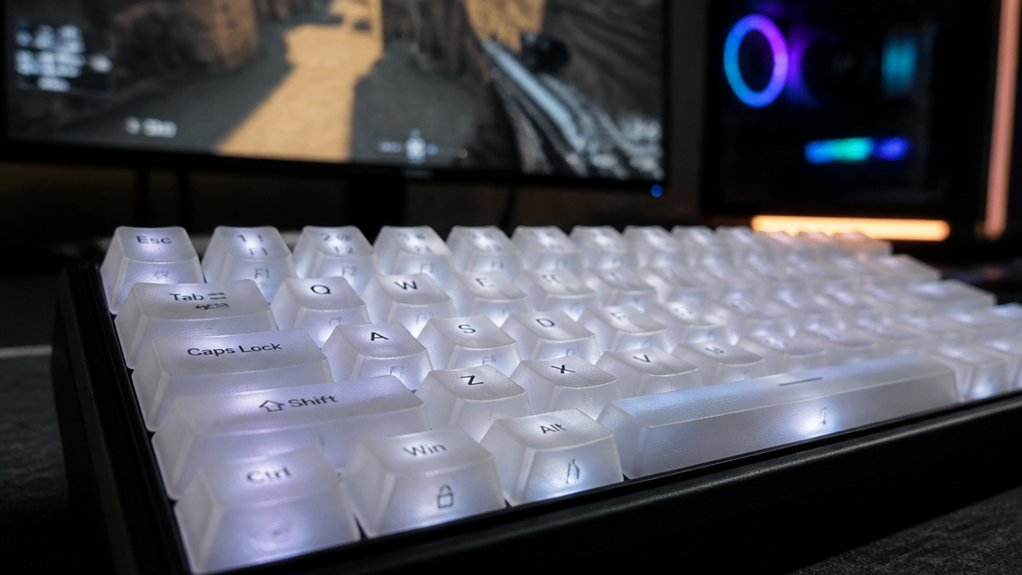
How does the feel of POM keycaps impact your gaming performance? The silky smooth, slippery surface of POM keycaps can change how you interact with your keyboard during gameplay.
While the low-friction texture allows for fast, fluid keystrokes, it might also reduce your finger grip, which could affect precision in high-stakes moments. Here’s what to keep in mind:
- Silky smooth surface enables quick, effortless key presses
- Slippery surface may challenge finger control during intense sessions
- Quieter, muted typing sound reduces distractions in competitive play
- Not as common on mainstream keyboards, limiting immediate access
- Some gamers prefer more tactile keycaps for enhanced stability
In short, POM keycaps can boost speed but might demand adjustments if you rely on grip for accuracy.
Why Are POM Keycaps More Expensive?
You’ll notice POM keycaps cost more due to their complex production process that demands precise control of the material’s properties. The rarity of POM compared to more common plastics also drives up material expenses.
Plus, lower market demand means smaller production runs, which pushes the price even higher.
Production Complexity Factors
Because POM’s chemical and thermal properties make it harder to injection mold, manufacturers face higher production challenges that increase costs. POM keycaps are often tougher to produce due to their unique material behavior, requiring strict process control for quality results.
You’ll notice these key factors add complexity:
- Precise molding to handle POM’s higher shrinkage and dimensional instability
- Maintaining the smooth, waxy finish without defects
- Limited availability of POM raw material restricting supplier options
- Fewer large-scale production runs due to niche market demand
- Specialized equipment and expertise needed for consistent performance
Understanding these complexities explains why POM keycaps are often pricier—manufacturers invest more time and care in crafting them, which you ultimately pay for in quality.
Material Cost Implications
The production challenges surrounding POM keycaps naturally affect their pricing. Since polyoxymethylene is a less common, specialized polymer compared to popular materials like PBT, sourcing higher-grade raw materials costs more.
Plus, the injection molding process demands precision to guarantee the keycaps’ smooth, durable finish, adding complexity and expense. POM keycaps also see limited production volumes, driving up per-unit costs because manufacturers can’t fully leverage economies of scale.
On top of this, keyboard makers often position POM keycaps as premium products, pricing them higher to match the material’s low friction feel and enhanced durability. So, when you invest in POM keycaps, you’re paying for superior raw materials, intricate manufacturing, and their exclusive appeal—all of which combine to increase their cost relative to other keycap types.
Market Demand Influence
While many factors influence the price of keycaps, market demand plays a crucial role in why POM keycaps cost more. Compared to the more common PBT keycap material, POM keycaps serve a niche market with fewer suppliers and less competition. This limited availability increases their cost.
Additionally, the complex injection molding process for POM raises manufacturing expenses. You’ll often find POM keycaps in custom, exclusive keyboard builds, appealing to enthusiasts who value their smooth texture and premium feel.
Consider these demand-driven reasons behind POM keycap pricing:
- Lower production volumes than PBT keycaps
- Niche market with fewer manufacturers
- Complex, costly molding process
- Enhanced typing experience driving desirability
- Exclusivity in custom keyboard communities
These factors together justify why POM keycaps come with a higher price tag.
Where Can You Find POM Keycaps for Custom Builds?
Where can you find POM keycaps for your custom keyboard builds? POM keycaps are often available through niche custom keyboard vendors and enthusiast group buys, rather than mainstream retailers.
Specialty online stores like RGBKeys frequently offer POM keycaps, often in unique sets without printed legends. These keycaps usually come in limited runs featuring milky white or cloud white colorways, making them highly desirable for collectors and customizers.
Since availability is generally lower than PBT keycaps, POM sets can be harder to source and more expensive. To stay updated, you can join custom keyboard communities on platforms like Reddit and Discord, where members share information about upcoming POM keycap group buys and sales, helping you find the perfect set for your build.
How Do POM Keycaps Compare to Popular PBT Keycaps?
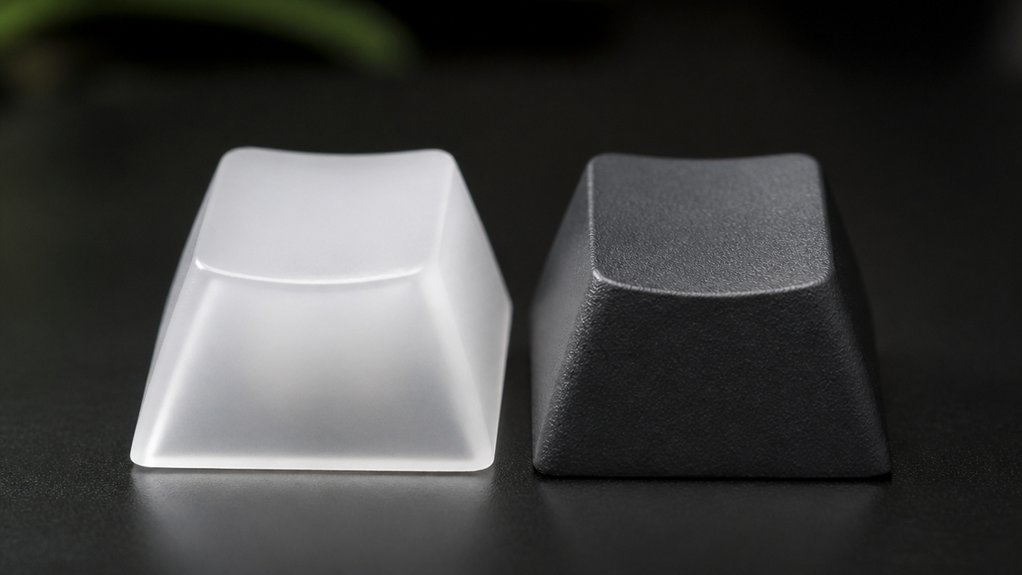
When comparing POM and PBT keycaps, you’ll notice POM offers a smoother, silkier feel while PBT has a grippier, matte texture.
The sound profile also differs, with POM producing a higher-pitched “clack” and PBT delivering a deeper “thock.” Plus, PBT keycaps tend to be more durable, affordable, and easier to find than their rarer, pricier POM counterparts.
Surface Texture Differences
If you prefer a smooth, silky feel under your fingers, POM keycaps will likely catch your attention with their almost slippery surface texture. This keycap material offers a unique typing experience compared to popular PBT keycaps, which have a more textured and grippy finish.
Here’s how they differ:
- POM keycaps feel waxy and buttery smooth, while PBT keycaps are matte and provide tactile resistance.
- POM surfaces tend to remain consistently smooth over time, avoiding the shine PBT sometimes develops.
- POM keycaps are generally thinner, enhancing RGB lighting effects.
- The smooth texture of POM appeals to users looking for a slick typing feel.
- PBT’s slightly rougher texture offers better grip for those who prefer more control.
Choosing your keycap material depends largely on your preferred typing sensation.
Sound Profile Comparison
How do POM keycaps sound compared to popular PBT keycaps? When you type on a mechanical keyboard equipped with POM keycaps, you’ll notice a higher-pitched, clackier sound. It’s brighter and crisper than the deeper, “thocky” tone that PBT keycaps produce.
While POM’s sound is more resonant and muted than ABS, it lacks the rich, warm depth many enthusiasts seek in PBT sets. The smooth, low-friction surface of POM also results in a cleaner, less scratchy keystroke noise, often eliminating the need for extra lubrication.
If you prefer a lively, sharper audio experience, POM keycaps will stand out. But if you want that classic, substantial acoustic feel, PBT keycaps are usually the way to go on your mechanical keyboard.
Durability and Availability
Beyond sound, the durability and availability of your keycaps play a big role in your overall typing experience. POM keycaps hold up well over time, offering wear resistance similar to their PBT counterparts.
However, you might find POM caps harder to get and pricier since they’re mostly sold by niche vendors. Unlike the often matte, grippy PBT keycaps, POM caps feel silky smooth but offer less grip. Also, their milky, waxy surface limits color options compared to the vibrant variety available with PBT.
Keep these points in mind:
- Durable and wear-resistant like PBT counterparts
- Smoother but less grippy texture
- Limited color and design options
- Generally more expensive
- Harder to find outside specialty markets
What Are the Legend and Aesthetic Limits of POM Keycaps?
What happens when you want clear, colorful legends on your keycaps? POM keycaps are generally sold without legends, limiting their appeal if you rely on visible markings.
Applying sharp, durable legends is tough because common methods like dye-sub and double-shot don’t work well on POM’s milky, slightly translucent surface. This also means color vibrancy suffers compared to PBT keycaps.
Sharp, durable legends are hard to apply on POM due to its milky, translucent surface affecting vibrancy.
Plus, the smooth, waxy texture of POM keycaps reduces contrast, making any printed legends less clear. For these reasons, POM keycaps usually come blank or with minimalist designs.
You’ll find them favored in custom builds where feel and sound come first, while legend visibility and colorful aesthetics take a backseat. If you want vibrant, defined legends, POM keycaps mightn’t be your best choice.
How Do POM Keycaps Impact RGB Lighting Effects?
Why do POM keycaps make RGB lighting pop so well on your keyboard? Their thin profile lets light shine through brighter, while the milky white, translucent texture softens and spreads illumination evenly.
The low coefficient of friction gives POM a smooth surface, slightly reducing diffusion compared to rougher PBT keycaps, but still delivering striking visuals. Since POM keycaps often lack legends, RGB lighting plays a crucial role in key visibility and feel.
Here’s what you should know about how POM keycaps impact RGB lighting effects:
- Thinner design maximizes brightness
- Cloud white color tempers harsh contrasts
- Smooth surface gives a soft, clean glow
- Translucent nature improves light diffusion
- RGB enhances legends’ visibility or compensates when absent
Using POM keycaps means your backlight will look subtle yet vivid.
What Common Issues Affect POM Switch Stems?
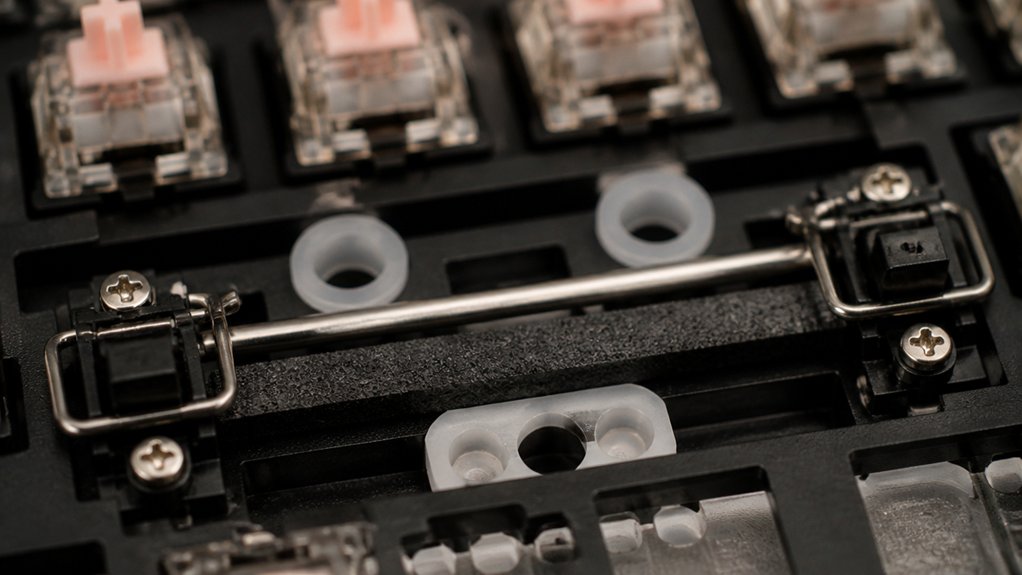
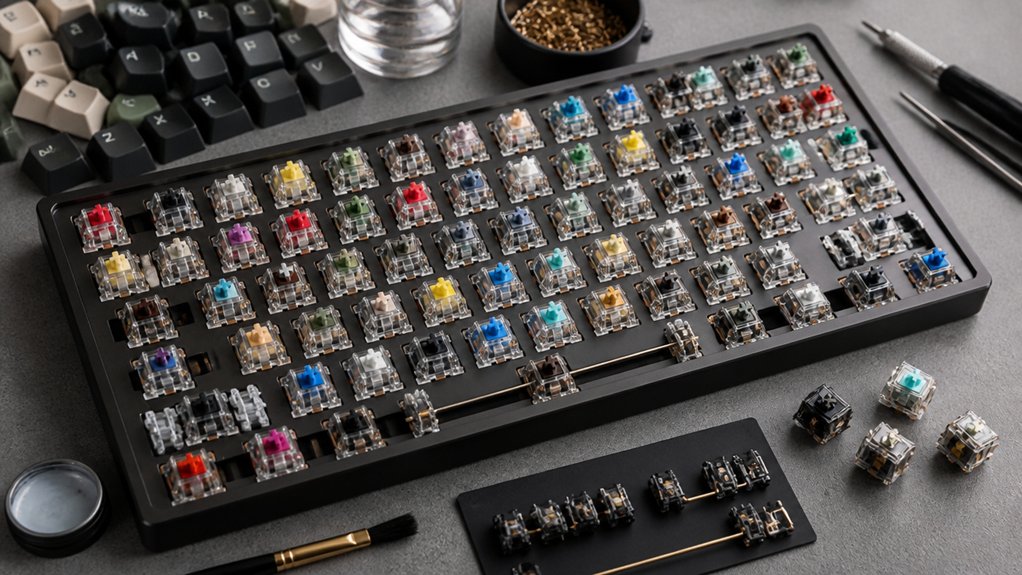
POM keycaps enhance your keyboard’s lighting and feel thanks to their smooth texture and thin profile, but the same low-friction properties that improve keypresses can lead to some common issues with POM switch stems.
POM keycaps deliver smooth, thin profiles that boost lighting and feel but may cause stem stability challenges.
One notable problem is stem wobble, where the stem fits slightly looser inside the housing compared to harder plastics. This increased wobble can affect key stability and overall typing feel.
While POM stems are resilient and typically experience less wear over time, occasional lubrication or fine-tuning may be necessary to maintain peak performance.
Less common issues include variability across switch models, so it’s important you research the specific POM switches you’re interested in to understand the trade-offs between smoothness and stem stability.
Why Is POM Still a Niche But Promising Keyboard Material?
How often do you come across keyboard keycaps that feel both silky smooth and offer a premium typing experience?
POM keycaps stand out in a market dominated by ABS or PBT options because of their unique texture and smoothness. However, they remain niche due to several factors:
- Higher cost compared to widely available PBT keycaps
- Limited availability and fewer legends for POM keycaps
- Silky, low-friction surface that offers a distinct typing feel
- A quieter, deeper sound profile favored by custom keyboard fans
- Polarizing waxy texture that isn’t for everyone
Despite their rarity and the niche appeal, growing interest from vendors and enthusiasts signals that POM could soon expand beyond its current niche, making it a promising material in the evolving keyboard landscape.
Frequently Asked Questions
Are POM Keycaps Good?
Yes, you’ll find POM keycaps great if you enjoy silky-smooth typing and durability. They feel unique but might be too slippery for intense gaming, so consider your typing style and preferences before choosing them.
What Are the Disadvantages of POM Plastic?
You’ll find POM plastic slippery and waxy, making fast typing tricky. It’s pricier, less common, often lacks legends, and is mostly milky white. Plus, stem wobble can annoy, so research before you buy.
Is POM More Durable Than PTFE?
Yes, POM is more durable than PTFE. You’ll find POM resists impact, wear, and moisture better, lasting longer under regular use. PTFE feels smoother but tends to degrade faster and is less structurally tough than POM.
Are POM Switches Better?
You’ll find POM switches smoother with less scratchiness and quieter sounds, but they’re not always more stable due to stem wobble. Whether they’re better depends on your preference for feel, sound, and switch availability.
In Summary
If you’re looking for smooth, durable keycaps that offer a unique typing feel, POM keycaps are worth considering. You’ll enjoy their silky surface and quieter sound, perfect for everyday use. Just remember, their legends can fade faster, and their compatibility with RGB lighting isn’t the best. While still a niche choice, POM keycaps stand out for quality and comfort, making them a promising option if you’re seeking something different from the usual plastic keycaps.