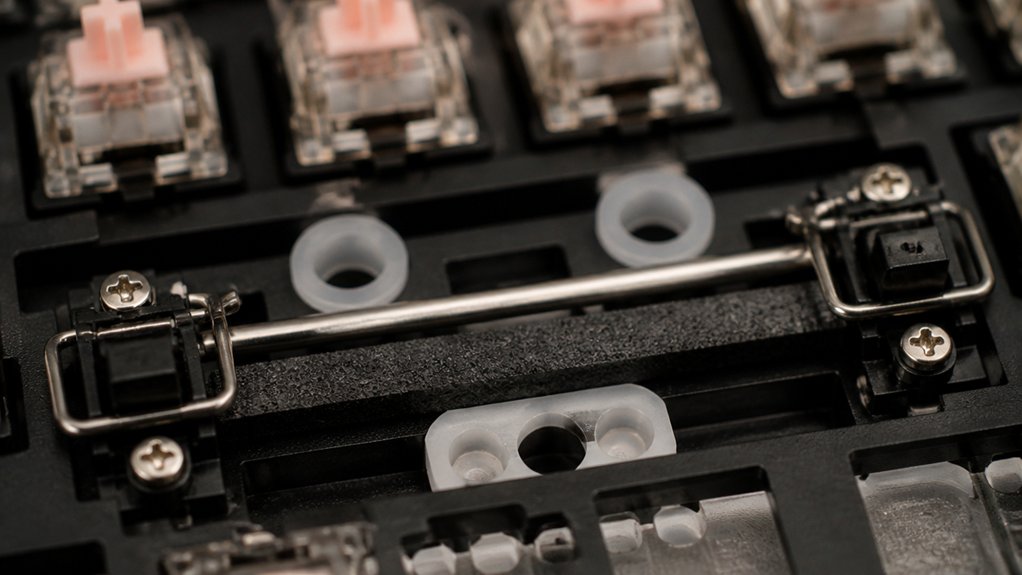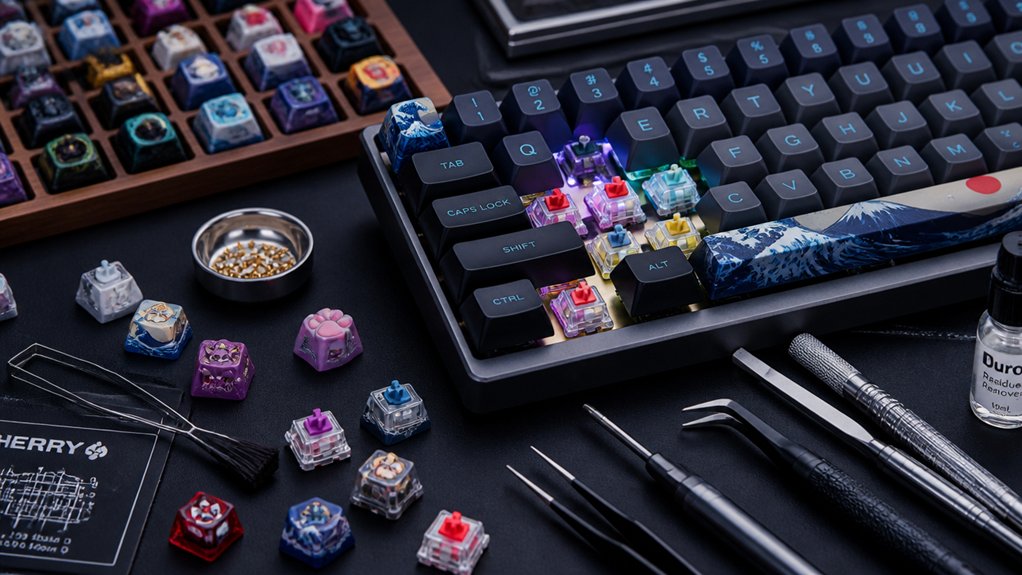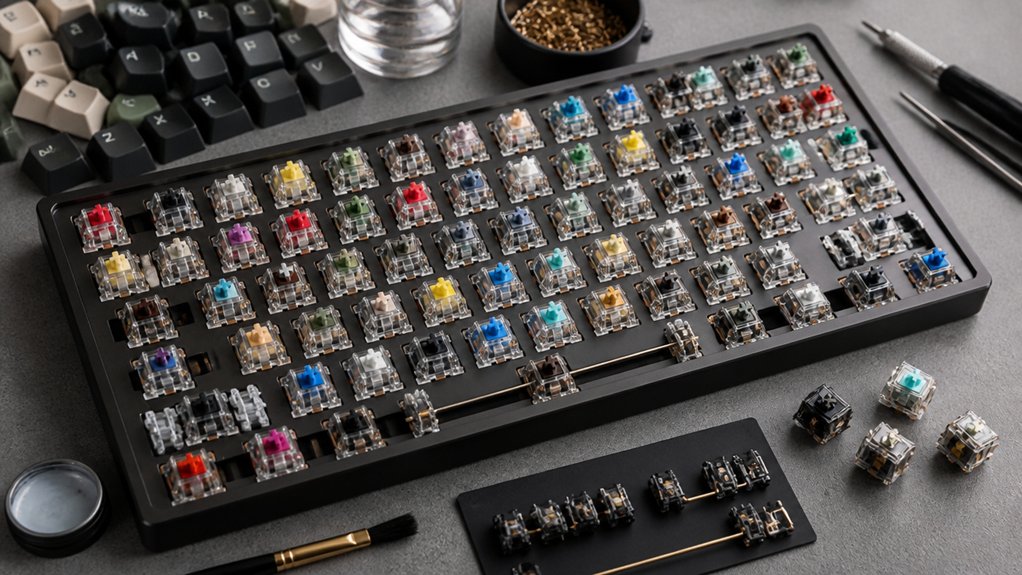

Using proper lubrication techniques for switches reduces friction and noise, making your keyboard smoother and quieter. It also prevents components from wearing out quickly, extending the life of your switches. By carefully applying the right type and amount of lubricant to specific parts like stems, rails, and springs, you guarantee consistent feel and sound. If you want to learn how to do it effectively and avoid common mistakes, there’s more to discover below.
How to Lubricate Mechanical Switches: A Beginner’s Guide

Are you new to switch lubing? Start by carefully disassembling your mechanical keyboard switches with a switch opener. This allows you to separate each component for precise lubrication.
Begin by gently opening your switches with a switch opener for accurate, mess-free lubrication.
Use a thin coat of lubricant—like Krytox 205g0 for linear switches or Tribosys 3203 for tactiles—applying sparingly to stem rails, housing rails, and spring guide tubes to reduce friction without losing tactility. A fine brush helps control the application, and bag lubing springs guarantees noise from spring ping diminishes.
Avoid lubing tactile switch legs to keep feedback intact, and stay clear of metal leaf contacts to protect electrical performance.
Once reassembled, test your switch’s smoothness and responsiveness to confirm the lube improves feel and sound without creating mushiness. Application tools such as precision brushes and stem holders can enhance coverage and prevent uneven lubing.
Why Lubrication Makes Your Switches Smoother and Quieter
Lubrication enhances your keyboard switches by reducing the plastic-on-plastic friction that causes scratchiness and resistance during keystrokes. With switch lube, lubing switches like linear switches becomes easier, allowing you to achieve smoother, quieter keystrokes.
A light application of lubricant on the stem, housing, and even the legs helps reduce friction without sacrificing tactility. The viscosity of the lubricant plays a key role—using a consistent, appropriate lube minimizes resistance and dampens unwanted noise.
When you lube the stem, housing, and spring guide tube, it smooths the stem’s movement and reduces the spring ping, resulting in quieter, more consistent sound. Proper lubing balances smooth operation with quieter acoustics, elevating your typing experience.
Choosing the Best Lubricant for Your Switch Type

Choosing the right lubricant for your switches hinges on understanding their specific characteristics and how different lubricants influence their feel and sound. Linear switches benefit from thicker lubricants like Krytox 205g0 grease, which smooths the stem’s motion without diminishing the switch’s linearity. In these cases, lubricants with high temperature stability and appropriate viscosity, such as the heavy-duty Lucas Oil stabilizer or WD-40 White Lithium Grease, can provide durable and consistent lubrication.
Tactile switches need lower viscosity lubricants like Tribosys 3203 or Krytox 203 oils to preserve tactile feedback while reducing friction. Clicky switches generally require minimal lubrication—just a light application of Krytox GPL 105 to dampen spring ping without softening the click. Proper lubrication also involves considering material compatibility, ensuring that the lubricant won’t degrade plastic components over time.
Greases are ideal for lubricating the housing and stem because they’re easier to control, while oils work best for springs due to their even coating. Proper lubricant choice balances viscosity and switch compatibility, enhancing feel, sound, and durability.
How to Apply Lubricant Properly to Achieve the Best Results
Applying lubricant correctly is essential for optimizing switch performance and feel. When lubing, use a fine brush—size 00 works well—to apply a small amount of lubricant precisely on stem rails, switch housing, and spring guide tube areas. This prevents over-lubrication that can dull tactile feedback or cause mushiness. Additionally, focus on the pre-lubed switches and apply only enough lubricant to enhance the existing smoothness without diminishing the switch’s intended sound profile. Avoid applying lubricant on tactile switch legs; instead, focus on slider parts and friction points identified through marker testing. For springs, bag lubing offers efficient, controlled coverage without excess buildup. Lightly lubricate interior switch tops and side rails to reduce scratchiness and friction during keystrokes, ensuring smoother, quieter keypresses. Regular testing helps fine-tune the lubricant amount, maintaining responsiveness and preventing sluggishness caused by excess lubricant.
Common Mistakes When Lubricating Switches: and How to Avoid Them

Even with careful application, common mistakes can undermine your efforts to improve switch performance. One mistake is applying too much lube, which can cause mushy keystrokes and diminish the tactile bump. Using a fine brush helps control the amount of lubricant, ensuring you don’t over-lubricate.
Avoid lubricating tactile switch legs, as excess lube on the legs dampens feedback. Be cautious to prevent lubricant contact with metal electrical contacts, which can interfere with signals.
Focus on lubricating the stem rails and housing rails at friction points, rather than just one part. Using the wrong viscosity also causes issues—low viscosity lubricants like Tribosys 3203 are ideal for tactile switches, while higher viscosity greases like Krytox 205g0 suit linear switches. Proper lubrication preserves switch feel and tactility.
How to Maintain and Reapply Lubrication for Long-Lasting Performance
Regular maintenance is essential to guarantee your switches stay smooth and responsive over time. To reapply lubrication, carefully disassemble the switches and clean off gummed-up residue with isopropyl alcohol.
When applying lube, focus on parts of the switch like the stem and housing, especially friction points such as stem rails, housing rails, and spring guide tubes. Use a lubricant with lower viscosity if needed to maintain smooth travel. Be cautious to avoid over-lubrication, which can cause mushy keystrokes or dull sound. Always match the lubricant to the original type, like Krytox 205g0 for linears. Additionally, utilizing a dedicated lubing station can streamline the process and ensure better organization during re-lubing.
After re-lubing, reassemble the switch and verify smooth, noise-reduced operation. Regular inspection and consistent reapplication extend switch lifespan and performance.
Troubleshooting Switch Lubrication: Fixing Sticky or Noisy Keys

Have you noticed some keys feeling sticky or producing unwanted noise? To troubleshoot, first make sure you identify the problem.
Sticky keys often result from over-lubrication with a thick coat of grease on the stem holder or certain types of switch legs, so remove excess lubricant carefully.
For noisy keys, check if springs are pinging or if there’s friction between the stem and housing rails; targeted lubrication with appropriate oils like Krytox 105 can help.
Focus on applying thin coats to the stem rails and contact surfaces to guarantee consistent resistance. Don’t forget to lube the inside of the spring guide tube and stem center post to reduce friction.
Test the switch after each step, adjusting lubricant as needed to restore buttery smooth action without applying much pressure on the keys.
Proper modding tools, such as switch pullers and precision screwdrivers, can also make the lubrication process more precise and prevent damage.
Frequently Asked Questions
Why Do People Lube Their Switches?
People lube their switches to make keystrokes smoother and quieter, reduce friction and noise, improve consistency, increase comfort, and extend switch life, all of which enhance your overall typing experience and accuracy.
Does Lubing Improve Switch Feel?
Yes, lubing improves switch feel by reducing friction and scratchiness, resulting in smoother keystrokes. It creates a more consistent, comfortable experience, especially when applied selectively on contact points, preserving tactility and ensuring a uniform typing experience across your keyboard.
What Do You Lube Switches With?
You lube switches with specialized lubricants like Krytox 205g0 for linear switches, Tribosys 3203 for tactile ones, and Krytox GPL 105 for springs. Use fine brushes for precise application, avoiding contact with metal parts.
What Lube Do You Use for Switches?
You use Krytox 205g0 for linear switches because it’s smooth and lasts long. Tribosys 3203 works well on tactile switches to keep feedback, while Tribosys 3204 balances both types. Krytox GPL 105 oil reduces spring ping noise effectively.