
Cleaning between your mechanical keyboard keys is essential to prevent dust, dirt, and oils from building up, which can cause keys to stick, slow down response, or even damage internal components. Regular cleaning helps maintain peak performance, prolongs your keyboard’s lifespan, and keeps it looking hygienic and professional. Using proper tools and techniques makes the process easier and safer. Keep going to discover more effective ways to keep your keyboard clean and in top shape.
Why Does Dirt and Dust Collect Between Your Keyboard Keys?

Have you ever wondered why dust and debris seem to hide effortlessly between your keyboard keys? It’s because the gaps between the keycaps create ideal pockets for dirt to settle.
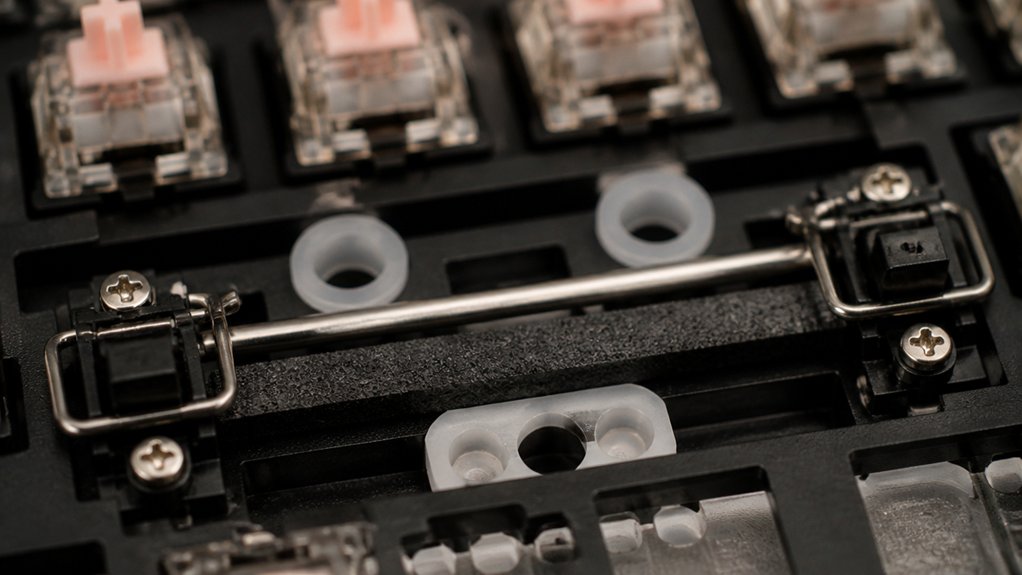
Regular finger contact transfers skin oils, sweat, and crumbs, which attract more dust, making those spaces even harder to clean. Mechanical keyboards often have uneven spaces and crevices where debris easily lodges, especially near stabilizers and textured surfaces. Environmental factors like eating at your desk, pet hair, and indoor dust only increase buildup.
To keep your keyboard in top shape, use a keycap puller for thorough cleaning, and regularly employ an air duster to blow out trapped particles. Skipping regular cleaning allows dust and debris to accumulate, affecting performance and hygiene over time.
Additionally, bristle firmness plays a crucial role in how effectively you can remove stubborn dirt and debris without damaging delicate components.
How Dirt and Debris Hurt Your Keyboard’s Performance and Longevity
Dirt and debris lodged between your keyboard keys can quickly clog switches and obstruct the plate, causing keys to stick or register multiple inputs.
Dirt and debris between keys can cause sticking, misfires, and degraded keyboard performance. Regular cleaning is essential.
Over time, accumulated dust and particles reduce typing accuracy and speed by leading to missed keystrokes.
Organic materials like food crumbs and skin oils promote bacterial growth, which can degrade mechanical components inside the keyboard. If left unchecked, this buildup can corrode internal parts, resulting in irreversible damage.
Such deterioration shortens the lifespan of your mechanical keyboard and hampers its performance.
To preserve switch performance and guarantee peak functionality, regular cleaning between keys is essential. Removing dirt and debris prevents malfunction, maintains smooth key presses, and keeps your keyboard looking clean and hygienic. Keeping your keyboard environment cleaning solutions free of flux residue and grime can also help prevent long-term corrosion and electrical issues.
How Regular Cleaning Keeps Your Keyboard Sending and Looking Its Best

Regular cleaning keeps your keyboard hygienic by removing dust, oils, and germs that can accumulate over time. It also guarantees your keys stay responsive and look new, preventing sticky or faded legends. Staying on top of cleaning helps your keyboard perform at its best and last longer. Incorporating microfiber cloths ensures a gentle yet effective wipe, preventing micro-scratches and maintaining surface quality.
Enhanced Device Hygiene Practices
Maintaining a clean keyboard regularly is essential for both hygiene and performance. Proper cleaning practices help eliminate bacteria, viruses, and grime, reducing health risks.
Using tools like compressed air removes dust and crumbs from between keys, preventing clogs that can cause sticky or double responses. A dry cotton swab carefully around switches clears oils and sweat stains, preserving the keyboard’s appearance.
Regular cleaning not only maintains a professional look but also prolongs your mechanical keyboard’s lifespan by preventing buildup that hampers key responses. Ensuring your keyboard remains free of dirt and debris helps it function accurately and reliably over time.
Incorporating these hygiene practices promotes a healthier workspace while keeping your device in top condition, ensuring it sends and looks its best.
Improved Keyboard Performance
Consistently cleaning your keyboard guarantees each key press remains accurate and responsive. When you clean a mechanical keyboard regularly, you remove debris, dust, and grime that can cause key sticking or double typing. This simple practice guarantees smooth switch movement, translating to faster, more precise typing. Using appropriate cleaning products, like high-purity isopropyl alcohol, ensures safe and residue-free maintenance for PCB cleaning. Regular maintenance also prevents internal damage by keeping contaminants away from delicate components, extending your keyboard’s lifespan. Deep cleaning helps reach hidden dirt that regular surface wipes might miss, preserving both functionality and appearance.
By staying diligent, you not only improve performance but also maintain a sleek, professional look. Proper cleaning routines are easy, and they greatly impact your overall experience, guaranteeing your keyboard sends every command accurately and looks its best.
Easy and Safe Ways to Remove Dust and Debris From Between Keys
| Step | Method |
|---|---|
| Remove loose debris | Use compressed air |
| Dislodge dirt | Gently brush with anti-static brush |
| Clean stubborn grime | Cotton swab with isopropyl alcohol |
| Maintain safety and cleanliness | Ensure proper ventilation and moisture-free formulas during cleaning |
Tools and Products That Make Deep Cleaning Your Mechanical Keyboard Easier

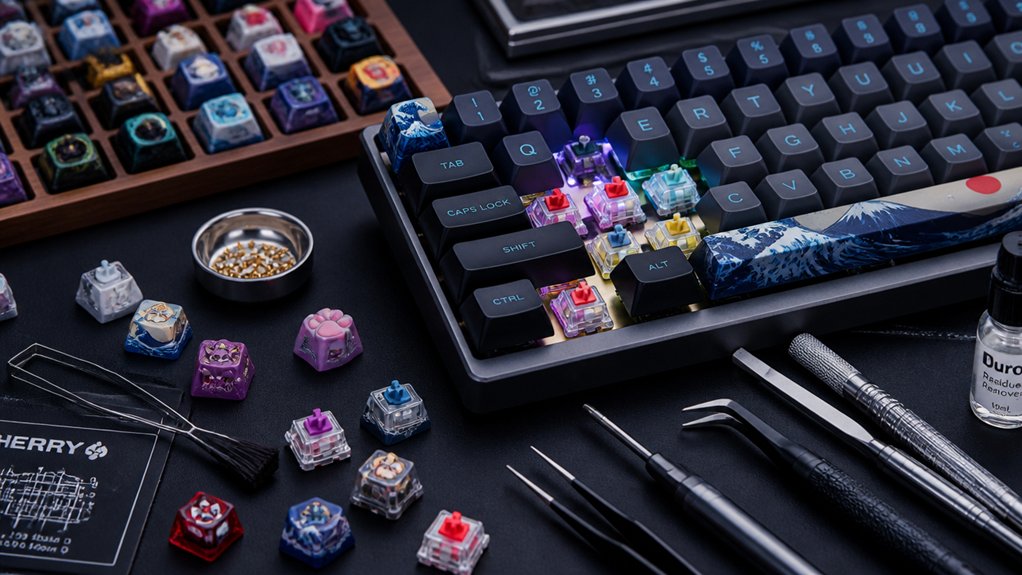
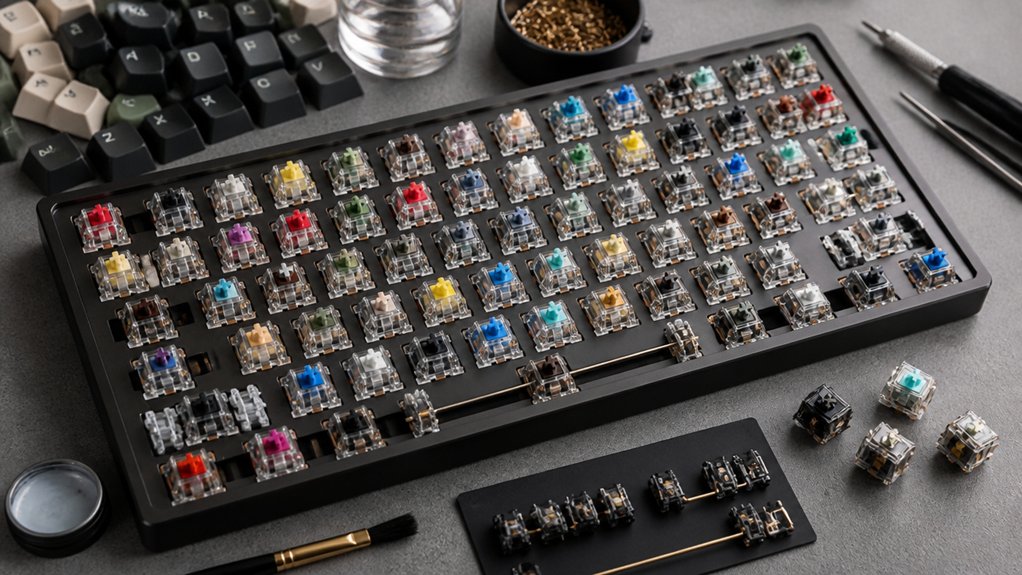
Using the right tools and products can greatly simplify the process of deep cleaning your mechanical keyboard. Make sure to have a keycap puller to safely remove keycaps, especially larger ones with stabilizers, giving access to clean underneath.
Use Compressed air to blow out dust from hard-to-reach areas—just take a picture of your keyboard first to remember key placements. Anti-static cleaning brushes are excellent for dislodging dirt without static risks.
Cotton swabs soaked in 70%+ isopropyl alcohol are perfect for detailed cleaning around switches and plates, ensuring no lint or residue is left behind. After cleaning, let them dry thoroughly before reassembling.
Additionally, selecting a static brush material that prevents electrostatic damage will help protect your keyboard’s internal components during cleaning. These tools streamline the process and keep your keyboard in top shape.
Simple Habits to Keep Your Keyboard Cleaner Longer
To keep your keyboard cleaner for longer, developing simple daily habits can make a significant difference. Start by regularly shaking out loose debris by inverting your keyboard—this prevents buildup between keys.
Regularly invert your keyboard to shake out debris and prevent buildup between keys.
Use a vacuum cleaner with gentle suction or compressed air in short bursts and a zigzag pattern to quickly remove dust trapped between the keys before it settles. Wipe the keyboard surface weekly with a slightly damp microfiber cloth to reduce residue and sweat buildup under the keys.
For spot cleaning, employ keyboard cleaning gels or anti-static brushes to target hard-to-reach spaces. Regularly using keycap pullers to carefully remove keys for deeper cleaning can help maintain your keyboard’s hygiene and prevent grime accumulation. Try to take care of your keyboard at least once a week and avoid eating or drinking nearby to prevent sticky spills and crumbs.
These small habits help guarantee a thorough clean and keep your keyboard fresh longer.
Frequently Asked Questions
What Is a 96% Keyboard Missing?
A 96% keyboard misses a dedicated navigation cluster, a separate function row, some multimedia or macro keys, and often has compressed or integrated numpad sections, making it more compact but less feature-rich compared to full-sized keyboards.
Can Cleaning Improve Keyboard Performance?
Cleaning can definitely improve your keyboard’s performance by removing dirt, dust, and debris that cause sticking and double presses. This maintenance guarantees smoother key travel, reduces wear, and enhances responsiveness, helping your keyboard function reliably over time.
Is 84 Keys 75%?
Yes, an 84-key keyboard typically falls into the 75% layout category. You get a compact design with most essential keys, combining space efficiency with functionality, making it popular for those wanting a smaller, yet complete, keyboard.
How Often Should You Deep Clean Your Mechanical Keyboard?
You should deep clean your mechanical keyboard at least once a month if you use it heavily or have dust, food, or pet debris around. Weekly cleaning is ideal for eating near the keyboard or pet owners to prevent buildup.
In Summary
Keeping your mechanical keyboard clean between the keys isn’t just about aesthetics. It helps maintain peak performance, prevents long-term damage, and guarantees a better typing experience. Regularly removing dust and debris with simple tools and habits can extend your keyboard’s lifespan. So, take a few minutes to clean between the keys regularly—you’ll enjoy a smoother, more reliable keyboard that stays in top shape longer. Your typing you’ll thank yourself for!