
To guarantee switch compatibility with hot-swap keyboards, you need to match the switch pin layout and socket standards. Most hot-swap sockets are designed for Cherry MX-style switches with staggered metal pins, typically 3-pin or 5-pin configurations. Make sure the pins fit the socket and clip extra plastic pins if necessary. Be aware that low-profile, optical, and specialized switches often aren’t compatible. Keep exploring to learn more about perfecting your hot-swap setup.
Understanding Hot-Swap Sockets and Their Role in Compatibility

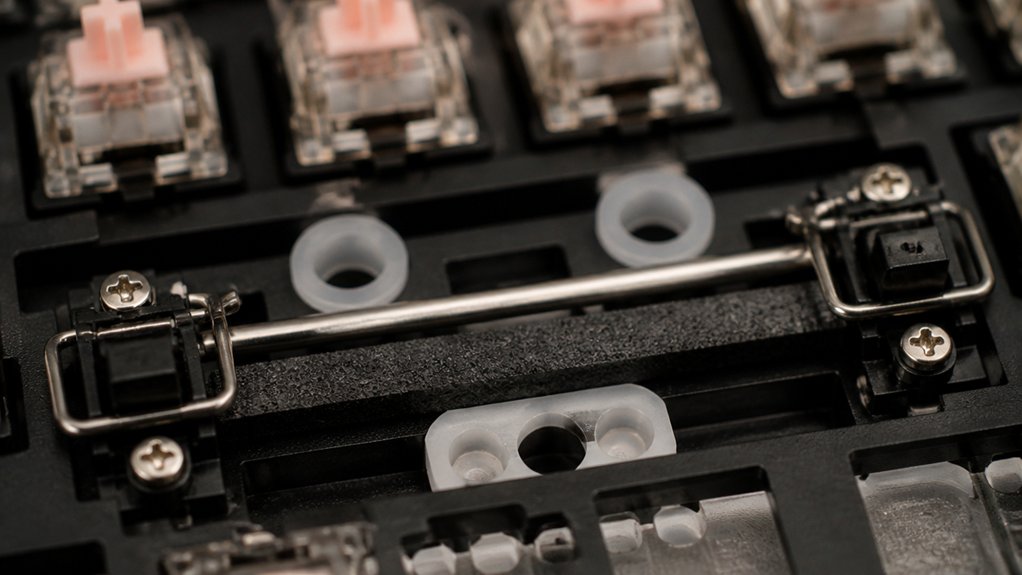
Hot-swap sockets are essential components that make changing switches on a keyboard quick and easy. These metal or plastic components, soldered onto a keyboard’s PCB, enable hot swappable switches without the need for soldering.
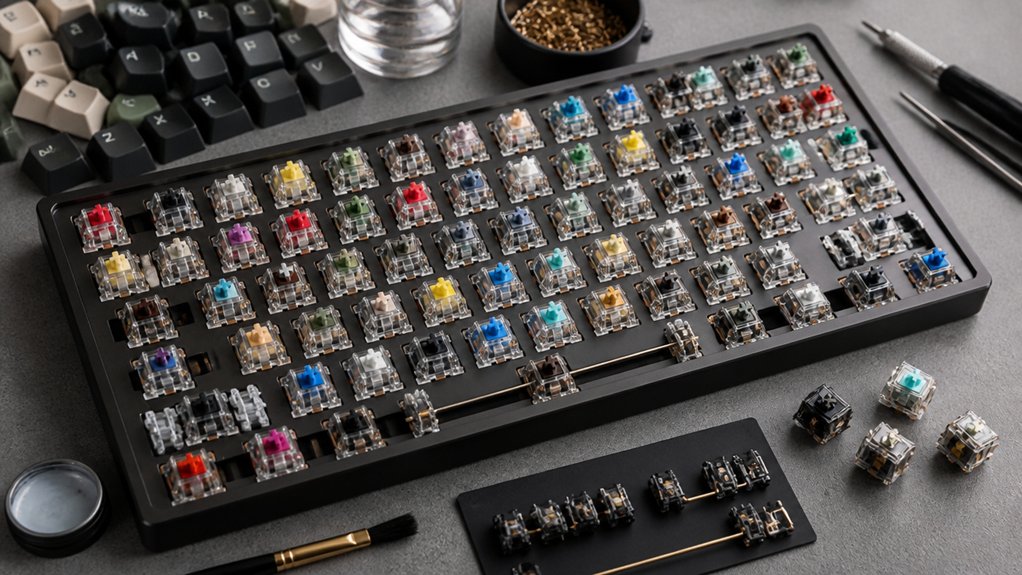
Your switch compatibility largely depends on the design of the Hotswap Sockets, which are typically made for Cherry MX-style switches with staggered metal pins. Since these sockets engage only the metal pins, the stem shape or type doesn’t influence compatibility—standard plus-shaped stems fit most MX-compatible sockets. Additionally, the electrical ratings of the sockets, such as voltage and current limits, are crucial to ensure safe operation and reliable performance. Most hot swappable connections support either 3-pin or 5-pin switch configurations; 5-pin switches often require clipping extra pins for proper fit. Note that low-profile, Hall effect, or optical switches usually don’t work with standard hot-swap sockets due to differing layouts.
Differences Between 3-Pin and 5-Pin Switches
3-pin and 5-pin switches differ mainly in their number of plastic pins that provide stability and mounting support.
3-pin switches have two metal electrical contacts and a center plastic post, making them simpler and easier to swap. In contrast, 5-pin switches add two extra plastic pins for enhanced stability and a more secure fit.
Here’s a quick picture:
- 3-pin switches work well with most hot-swap PCBs, especially when compatibility ignores the extra pins.
- 5-pin switches need clipping to fit into 3-pin sockets but offer a sturdier connection.
- Hot-swappable switches are flexible with PCB compatibility, but understanding the pin count helps guarantee a proper fit and stability.
Common Compatibility Challenges With Low-Profile and Specialized Switches

You may find that low-profile and specialized switches vary greatly between brands, making it tricky to guarantee compatibility. The pin layouts and sizes often don’t match standard hot-swap sockets, especially with non-MX designs. Additionally, variations in housing materials and mounting styles can lead to fitting issues, so verifying switch pin configurations before purchase is essential. To avoid surprises, always check manufacturer compatibility charts or test the switches on your specific keyboard model.
Compatibility Variability Across Brands
While most hot-swap sockets are designed around Cherry MX-style switches, compatibility becomes more complicated when dealing with low-profile or specialized switches from different brands. Variations in design mean a switch isn’t always compatible across all hot-swappable mechanical keyboards.
- Some low-profile switches may physically fit but have different pin placement or length, causing instability.
- Specialized switches like optical or magnetic types often don’t match standard socket configurations, requiring brand-specific checks.
- Variability in center post size and mounting methods can lead to unreliable actuation or premature socket wear, even if the switch is compatible in size.
Always consult manufacturer charts or test switches directly to guarantee switch options are compatible with your specific keyboard model. Additionally, understanding the switch support can help determine whether certain switches, especially those with unique features, will function properly in a given hot-swappable socket.
Pin and Size Compatibility
Compatibility issues often arise when trying to use low-profile or specialized switches in hot-swap sockets designed for standard Cherry MX-style switches. These mechanical keyboard switches typically have metal PCB pins with a specific spacing and layout that fit common 3-pin or 5-pin configurations.
While five-pin switches can be adapted by clipping extra plastic stabilizing pins, three-pin switches may feel less stable when used in five-pin sockets. Low-profile and specialized switches often differ in pin layout, size, or center post dimensions, making them incompatible with hot-swappable keyboards made for MX-style switches.
Material durability and precise dimensions are crucial factors influencing the success of switch compatibility in these setups. Optical, magnetic, Hall effect, and super short switches usually don’t meet the pin spacing standards, which means they can’t be easily removed and replaced in hot-swap sockets.
How Magnet Polarity and Strength Impact Hall Effect Switches
Magnet polarity and strength are essential factors that directly influence the performance of Hall Effect switches. If the north magnetic pole isn’t facing the sensor correctly, the switch mightn’t register properly, or become a faulty switch.
Variations in magnet strength can also cause issues, especially since PCBs are calibrated for specific magnet levels.
To guarantee proper operation, consider these points:
- The magnet in the stem must face the PCB’s sensor with the north pole aligned correctly.
- Using magnets with different strengths than specified can lead to detection errors.
- Mixing Hall Effect switches from different brands might cause incompatibility due to varying magnet orientations and strengths.
- Ensuring the correct gasket-mount kit material can help sustain magnetic properties under heat and vibration conditions.
Always verify magnet compatibility to avoid switch failure or inconsistent key registration.
How PCB Design and Socket Standards Ensure Switch Compatibility

Your keyboard’s PCB design sets the foundation for switch compatibility by using standardized pin layouts and socket arrangements that match Cherry MX-style switches. These standards guarantee that switches, whether 3-pin or 5-pin, fit securely and connect properly through the sockets. Attention to PCB trace routing and socket quality further guarantees reliable electrical contact and ease of switch swapping. Additionally, using durable hot-swap PCB sockets like Kailh and DUROCK ensures consistent performance and longevity in your no-solder builds.
Standardized Pin Layouts
Standardized pin layouts are the cornerstone of hot-swap keyboard compatibility, ensuring switches fit securely and function reliably.
Most PCBs use MX-compatible sockets designed to accept Cherry MX mechanical switches, featuring two electrical metal pins spaced in a staggered layout. These sockets support both 3-pin switches, with a plastic center post for stability, and 5-pin switches, which add extra plastic pins.
To visualize this:
- The metal pins fit precisely into holes aligned with the PCB’s design.
- The plastic pins help lock switches into place, especially towards the PCB.
- Switches must follow the standard ~14 mm housing size and pin spacing for seamless compatibility.
- The hot-swap sockets are typically solderless, making switch replacement quick and simple.
This uniformity guarantees your switch installs easily, maintains electrical contact, and prevents damage, making hot-swap functionality straightforward.
Socket-Talk Compatibility
The design of the PCB and socket standards directly influences whether your switches will fit and work correctly. A compatible hot-swap socket relies on matching the metal pin layout to guarantee proper connection.
Most PCBs feature holes designed for MX-compatible switches with staggered pin spacing, accommodating common 3-pin and 5-pin MX-style switches. The 5-pin switches include extra plastic pins for stability but can fit into 3-pin sockets if clipped, while 3-pin switches may fit less securely in 5-pin sockets. Proper alignment of pin spacing with socket holes guarantees electrical continuity and stable switching.
Keep in mind that low-profile or non-MX style switches generally don’t match MX-compatible sockets due to differences in pin layout and hole positioning, which can prevent proper fit and function. Additionally, understanding the hot-swappable PCB design helps ensure switch compatibility and ease of customization.
PCB Trace Considerations
Guaranteeing switch compatibility hinges on meticulous PCB trace design that aligns with the socket standards. Proper PCB traces confirm electrical signals from switch pins reach the correct pathways, supporting hot-swap functionality.
To visualize this:
- The pcb trace is tailored to MX-compatible sockets, with precise pathways that connect switch pins to the circuit.
- Spring-loaded metal contacts in hot-swap sockets complete the circuit when switches are inserted, relying on accurate PCB trace placement.
- Hole spacing and alignment are strict, allowing 3-pin and 5-pin switches to fit perfectly, with cutouts for plastic pins where necessary.
- The sound dampening layers and flexible mounting plates also influence how switches connect and operate smoothly within the PCB design.
These design details make sure the PCB trace accommodates switch actuation signals and LEDs, preventing compatibility issues between MX-style switches and hot-swap sockets.
Tips for Safely Installing and Removing Switches
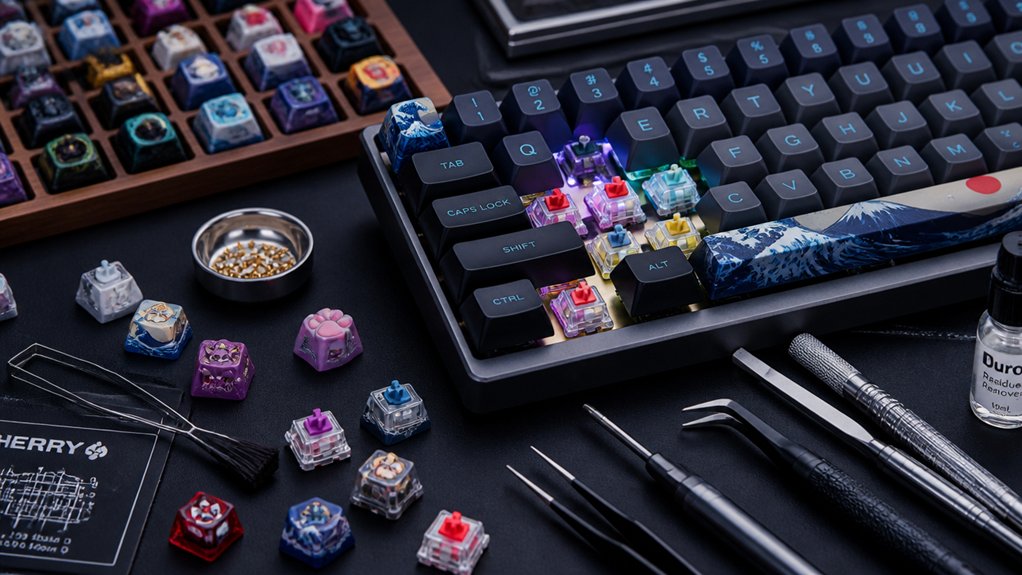
When installing or removing switches on a hot-swap keyboard, it’s crucial to power off the device first to prevent electrical damage. Use a switch puller to carefully remove switches by gently pulling straight upward—avoid bending pins or using excessive force.
When inserting the switch, make certain the pins are correctly aligned with the hot-swap socket holes, especially for plate-mounted switches, which need proper positioning. For switches with five pins, fit any stabilizers into the PCB or clip them before installation.
Always follow keyboard manufacturers’ guidance and avoid forcing switches into sockets, as improper alignment or pressure can damage delicate sockets or cause key chatter. Taking these precautions helps preserve your hot-swap sockets and ensures reliable switch performance. Additionally, paying attention to switch types and their compatibility with your socket can prevent damage and ensure optimal operation.
Troubleshooting Switch Compatibility Problems and Next Steps
Switch compatibility issues often stem from mismatched pin configurations, sizes, or socket types. If you’re facing problems, start by confirming that your switches without, or with, Cherry MX-style pin spacing and layout, are compatible with the keyboard PCB’s socket.
Ensure switch pin configurations and sizes match your keyboard PCB for compatibility.
Next, verify if the switch is 3-pin or 5-pin: 5-pin switches can be clipped to fit 3-pin sockets, but 3-pin switches might feel less stable in 5-pin sockets.
Finally, check size and pin orientation because low-profile, optical, magnetic, or Hall Effect switches often don’t fit standard MX sockets.
In summary:
- Confirm switches have Cherry MX-style pins and layout
- Identify if the switches are 3-pin or 5-pin
- Make certain size and pin orientation match the keyboard PCB
If problems persist, consult compatibility charts or contact support.
Frequently Asked Questions
Are All Hot-Swappable Switches Compatible?
Not all hot-swappable switches are compatible. You need switches with Cherry MX-style pins and layouts, mainly MX-compatible, as switches with different pin arrangements or non-MX designs, like optical or Hall effect, aren’t universally compatible.
Can You Change the Switches on a Hot-Swappable Keyboard?
Yes, you can change the switches on a hot-swappable keyboard easily by pulling out the current switches and pressing in new MX-compatible ones. Just make certain the new switches match the socket type and pin layout for compatibility.
Can You Use a Magnetic Switch With Any Hot-Swappable Keyboard?
You can’t use magnetic switches with any hot-swappable keyboard unless it’s specially designed for them. Standard hot-swap keyboards use MX sockets that only support mechanical switches, and magnetic switches need custom PCBs with magnetic sensors.
What Are the Downsides of Hot-Swap?
The downsides of hot-swap include increased cost, potential socket wear, and damage risk from improper handling. You might also face limited switch compatibility, and dust or debris can cause intermittent issues, requiring careful installation and maintenance to guarantee reliable performance.
In Summary
Understanding hot-swap keyboard switch compatibility helps you build your perfect setup with ease. By knowing socket types, pin configurations, and PCB standards, you can avoid common issues and guarantee your switches fit and function correctly. Always handle switches carefully during installation and removal, and troubleshoot promptly if problems arise. With these tips, you stay confident in customizing your keyboard to match your preferences, making the entire experience smoother and more enjoyable.