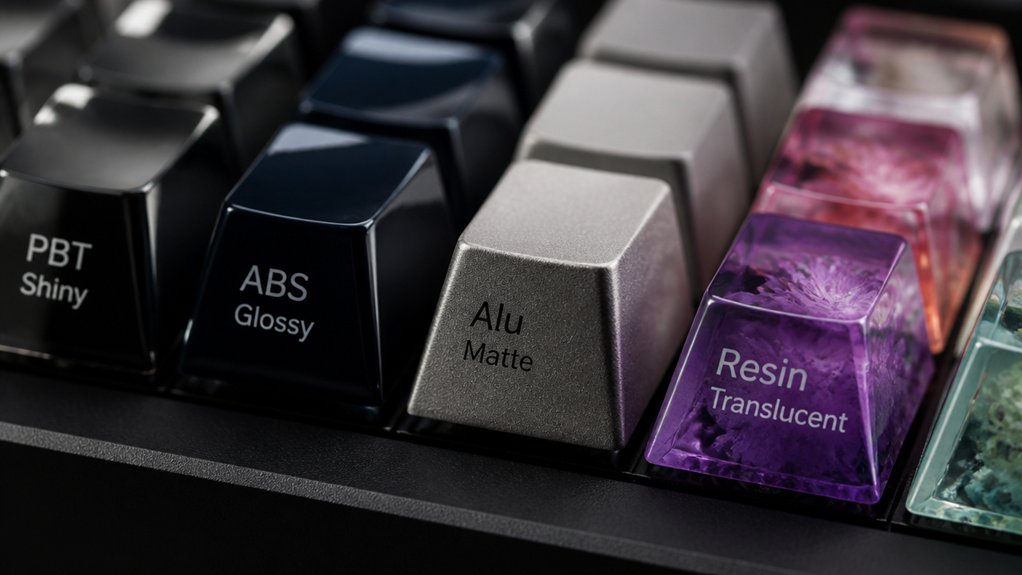
The keycap material you pick dramatically shapes your keyboard’s sound. Denser materials like PBT give you a deeper, thockier tone, while ABS keycaps tend to produce sharper, higher-pitched clacks. Thickness and profile also matter—thicker, taller caps add warmth and resonance, while thinner ones sound crisper. Your typing style can influence the best choice to match your preferences. Keep exploring to uncover how these factors blend to craft your perfect typing sound.
What Keycap Materials Mean for Your Keyboard’s Sound

When choosing keycap materials, you’ll notice how much they shape your keyboard’s sound. PBT keycaps, with their porous structure and density around 1.3 g/cm³, give you a deeper, thockier, and more muted typing sound compared to lighter ABS keycaps.
ABS keycaps, being less dense (1.0–1.2 g/cm³), produce a sharper, higher-pitched clack that’s distinctively “clacky” but less dense. The material affect on sound goes beyond just PBT and ABS; for example, rubber-coated keycaps absorb high frequencies, greatly dampening noise for a quieter keyboard experience. In a mechanical keyboard, this dampening alters the typing sound noticeably.
Understanding how keycap materials influence the acoustic signature helps you pick keycaps that fit your preferred sound profile while factoring in keycap thickness and overall build.
How Thickness and Profile Shape Keycap Acoustics
Because keycap thickness and profile considerably affect sound, you’ll notice that thicker keycaps produce a deeper, more muted “thock” by increasing stiffness and mass. This shifts resonance to lower frequencies, reducing high-frequency sharpness.
Tall profiles, like SA keycaps, have larger internal cavities that amplify bassy, longer-lasting resonance, adding warmth and fullness to your typing sound. In contrast, medium-height profiles such as the OEM profile strike a balance, offering a cleaner, slightly crisp tone with shorter decay.
Materials like PBT and ABS influence texture and durability but paired with thickness and profile, they shape acoustics uniquely. Understanding how thicker keycaps and keycap profile interplay helps you customize the sound to match your preferences, creating a typing experience that’s both satisfying and sonically distinct.
How ABS, PBT, and Ceramic Keycaps Sound Differently
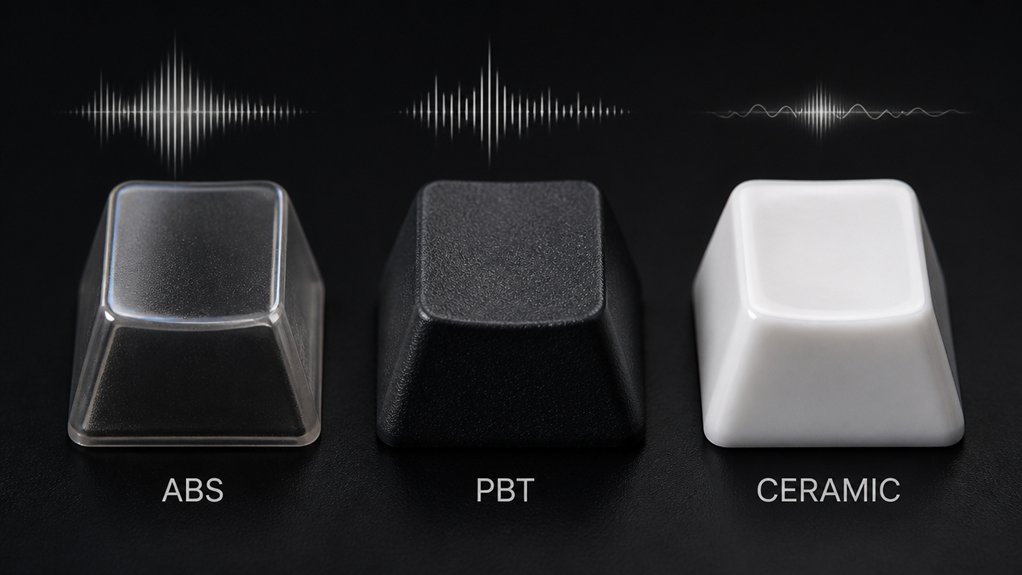
Though keycap thickness and profile shape the overall sound, the material you choose plays a crucial role in defining your keyboard’s acoustic character.
ABS keycaps, with their lower density around 1.0–1.2 g/cm³, deliver a high-pitched clack that’s sharp and bright—though their wear over time can alter this acoustic signature. In contrast, PBT keycaps, denser at about 1.3 g/cm³, produce a thocky sound characterized by a deeper, warmer tone due to better internal damping and thicker walls.
Ceramic keycaps stand apart with their high density near 4 g/cm³, offering a loud, rich sound marked by sharp attack and distinctive bell-like resonance. Each material’s unique density and rigidity clearly shape your keyboard’s sound, giving you diverse acoustic signatures to take into account when selecting keycaps.
Choosing Keycaps for Your Ideal Sound
Selecting keycaps for your ideal sound means balancing material, thickness, and profile to match your acoustic preferences. If you want a deep, thocky sound, choose thicker keycaps made from dense PBT, especially with tall profiles like SA. Their higher density and wall thickness produce rich resonance and longer decay.
For a sharper, clackier typing noise, thinner ABS keycaps with profiles like SA or OEM highlight bright, high-pitched tones due to their lower density.
If you prefer something balanced, moderately thick PBT keycaps in an OEM keycap profile offer a medium-pitched sound with clear feedback. Remember, keycap materials affect not just sound but also durability, so your preferred typing noise stays consistent over time when using high-density, wear-resistant PBT keycaps.
Tips for Matching Keycap Sound to Your Typing Style
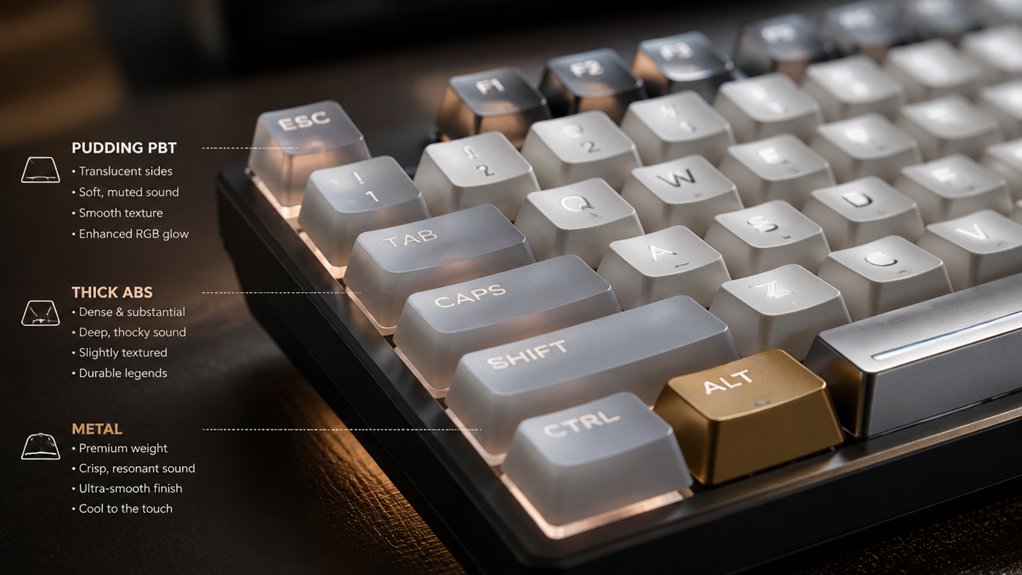
Matching your keycap sound to your typing style can enhance your overall keyboard experience and satisfaction. Keycaps affect both the sound and feel, so choosing the right material and profile is essential.
For heavy typists, thicker keycaps made from PBT plastic with tall profiles like SA produce a deep, thocky sound that complements your style. If you type fast and prefer a lighter clack, thin ABS plastic keycaps with sculpted profiles such as SA or OEM emphasize crispness.
Balanced typists should opt for medium-thickness PBT keycap profiles like OEM or Cherry to achieve a clean, muted tone. Tall profiles amplify sound, while double-shot or dye-sublimated legends maintain sound clarity over time.
Tailor the sound of your keyboard by matching keycap materials and profiles to your unique typing style.
Frequently Asked Questions
Does Keycap Material Affect Sound?
Yes, keycap material directly affects sound. You’ll notice denser materials create deeper, thocky sounds, while lighter ones produce sharper clicks. Choosing different materials changes your typing experience’s tone, volume, and overall feel considerably.
What Is the Best Keycap Material for Sound?
The best keycap material for sound depends on what you like. You’ll want PBT if you prefer a deep thock, ABS for a sharp clack, or ceramic if you crave a rich, resonant, bell-like tone while typing.
What Keycaps Make Keyboard Sound Better?
You’ll find thicker PBT or double-shot PBT keycaps make your keyboard sound fuller and warmer. If you want a deeper, premium tone, try metal keycaps. Ceramic keycaps give you a clear, resonant bell-like sound.
Is ABS or PBT More Thocky?
PBT is more thocky than ABS because it’s thicker and denser, giving you a deeper, bassy sound. ABS tends to produce a sharper, higher-pitched clack that lacks that satisfying thock you want for typing.
In Summary
Now that you know how keycap materials, thickness, and profile shape your keyboard’s sound, you can pick the perfect match for your typing style. Whether you prefer the crisp click of ABS, the muted tone of PBT, or the unique ring of ceramic, your keycaps play a big role in your typing experience. Choose wisely to enjoy every keystroke and make your keyboard truly sound like you want it to.