
To lubricate switches externally, you can use a fine paintbrush to apply light, precise coats of lubricant like Krytox GPL205-G0 on contact points such as stem rails and housing sides. Alternatively, shaking springs in a sealed bag with a small amount of oil guarantees even coverage and reduces noise from spring ping. Using these methods allows you to improve smoothness and sound without full disassembly. Keep going to discover the best techniques and tips for perfect external lubrication.
Why External Switch Lubrication Improves Feel and Sound

External switch lubrication improves feel and sound by directly targeting friction points that cause scratchiness and uneven keystrokes. When you lube the legs of the switch or apply lubricant to the switch housing surfaces, you effectively reduce noise and improve smoothness. This approach dampens high-pitched scratches and rattles, boosting the acoustic quality of your keyboard. Additionally, using the right lubricant with proper viscosity ensures a balanced sound and responsive feel. Lubricating the outside contact areas, such as the stem sides and switch housing, minimizes stickiness and irregular resistance caused by factory imperfections or wear. While it doesn’t offer as precise an effect as internal lubing, external lubrication is accessible and safe, addressing key feel and sound without risking damage. This method makes your switches feel more consistent and sound more refined during every keystroke.
The Best Methods to Lubricate Switches Outside
To lubricate switches externally, you’ll want to focus on precise application methods like brushing or using a small lubricant bag. The brush lubrication technique allows you to target friction points carefully, while the bag method offers a quick way to coat multiple switches evenly. Both methods help you improve switch feel without fully disassembling your keyboard. Additionally, using an organized setup with dedicated compartments can streamline your lubrication process and prevent leaks or messes.
Brush Lubrication Technique
Using a fine, thin paintbrush—typically a size 00—allows you to precisely apply a light layer of lubricant directly onto the switch’s stem rails and contact points without opening the switch. This method, known as brush lubrication, is ideal for quickly smoothing out linear switches by targeting visible friction areas.
It helps reduce scratchiness and maintain a smooth keystroke without over-lubricating. Carefully brushing the lubricant guarantees even coverage while avoiding excess buildup, which can cause sluggishness. Only apply a thin coat of switch-friendly lubricant like Krytox GPL205-GDO to prevent affecting the switch’s feel. Keep the brush steady and focus on internal contact points.
This technique is especially effective for linear switches that rely on smooth, frictionless movement. Proper application can also help prevent excess buildup that might attract dust and debris, ensuring consistent performance over time.
Bag Lubricant Method
The bag lubricant method offers an efficient way to lubricate multiple springs simultaneously, saving you time and effort. With this technique, you place springs into a sealed plastic bag, add a few drops of thin lubricant like Krytox 105 or Tribosys 3204, and shake vigorously to coat the springs evenly. This approach guarantees consistent coverage while minimizing lubricant waste compared to brushing.
Typically, 0.1 to 0.15 mL of lubricant per 100 springs is enough to reduce noise and spring ping without over-lubbing. Keep in mind, the bag lubricant method is ideal only for springs and isn’t recommended for stems or housings, as uneven distribution and excess lubricant may occur. Overall, it’s a quick, clean way to prepare springs for a quieter keyboard. Leveraging factory pre-lubrication can further reduce the need for external lubrication, making switches ready to use right out of the box.
When Should You Use Brush Lube Versus Bag Lube?

Deciding whether to use brush lubing or bag lubing depends on the specific part of the switch you’re working on and the type of lubricant involved.
Choose brush or bag lubing based on switch part and lubricant type for optimal performance.
Use brush lubing when you need precise, targeted application on switch housings, stems, or friction contact points to enhance smoothness. It’s particularly useful for thick greases like Krytox 205, where control and minimal waste matter. Avoid using brush lubing for springs, as it can lead to uneven coverage and lubricant waste.
Bag lubing is best suited for springs, allowing quick, uniform coverage by shaking them in a sealed bag with a small amount of lubricant. It’s ideal when lubricating many springs efficiently. Additionally, assembly compatibility is improved when components are properly lubed, ensuring consistent feel across all switches.
Each method complements specific switch parts, ensuring peak performance and feel.
Picking the Right Lubricants for External Switch Lubbing
Choosing the right lubricant depends on your switch type and desired feel, especially regarding viscosity and formulation. You should consider thin, switch-friendly options like Krytox GPL205-G0 for housing and stem areas, and low-viscosity oils like Krytox 105 for springs, to achieve smooth, quiet movement. Additionally, selecting lubricants with proven compatibility, such as those designed for long-lasting durability, helps ensure the switches maintain their performance over millions of keystrokes. It’s also important to select compatible brands, avoiding thick household greases, to maintain ideal tactility and performance.
Lubricant Viscosity Options
Selecting the right lubricant viscosity is essential for effective external switch lubing, as it directly influences how smoothly and responsively the switch feels. Thinner oils, like Krytox 105 or Tribosys 3203, help maintain tactility in lubed switches, making them ideal for tactile switches. Thicker greases, such as Krytox 205g0, are better suited for linear switches, providing a thick coat that maximizes smoothness. Lubricants with higher viscosity (like the 20x series) deliver lasting smoothness but need careful, minimal application to avoid sluggishness. Meanwhile, lower viscosity oils (10x series) are easier to apply with a brush or dip, ensuring even coverage without buildup. Versatile greases, like Tribosys 3204, strike a balance between smoothness and tactility. Additionally, choosing lubricants with desired sound profile can help achieve the preferred acoustic signature for your build.
Suitable Lubricant Types
When it comes to external switch lubing, using the right lubricant type is crucial for achieving the desired feel and performance. For switch housings and top housing components, thin, switch-friendly lubricants work best. Krytox GPL 205g0 grease or Tribosys 3204 grease are excellent choices, providing smoothness and peak viscosity. If you’re lubricating springs externally, oils like Krytox 105 or Tribosys 3203 are preferred because they coat evenly without causing sluggishness. Avoid household greases or thick lubricants, as they can hinder keypress feel or damage switch parts. Lower viscosity oils, such as Tribosys 3203, are ideal for tactile switches to preserve tactility, while higher viscosity greases like Krytox 205g0 benefit linear switches by promoting smoother keypresses. Choosing the right lubricant guarantees durable, quiet, and responsive switches. Additionally, selecting lubricants with appropriate material compatibility ensures the longevity and effectiveness of the switch components over time.
Brand and Compatibility
Using the right brand and verifying compatibility are essential steps to guarantee your external switch lubing delivers peak results.
When selecting lubricants, opt for switch-friendly options like Krytox GPL205-GPLD0 or Tribosys 3204, ensuring they won’t damage switch plastics. The keyboard community emphasizes matching viscosity to switch type: thicker greases for linear switches and thinner oils for tactiles.
Avoid household or dielectric greases, as they can degrade plastics or cause performance issues. Brands like Kailh respond well to external greasing on sliders and housings, while premium switches like Tealios benefit from thinner, compatible oils.
Be sure to check your switch opener’s recommendations and verify compatibility with your switch material to avoid unnecessary issues during external lubing. Additionally, understanding the durability of your switches can help determine the appropriate amount and type of lubricant to use without compromising longevity.
Tools and Materials You Need for External Lubrication
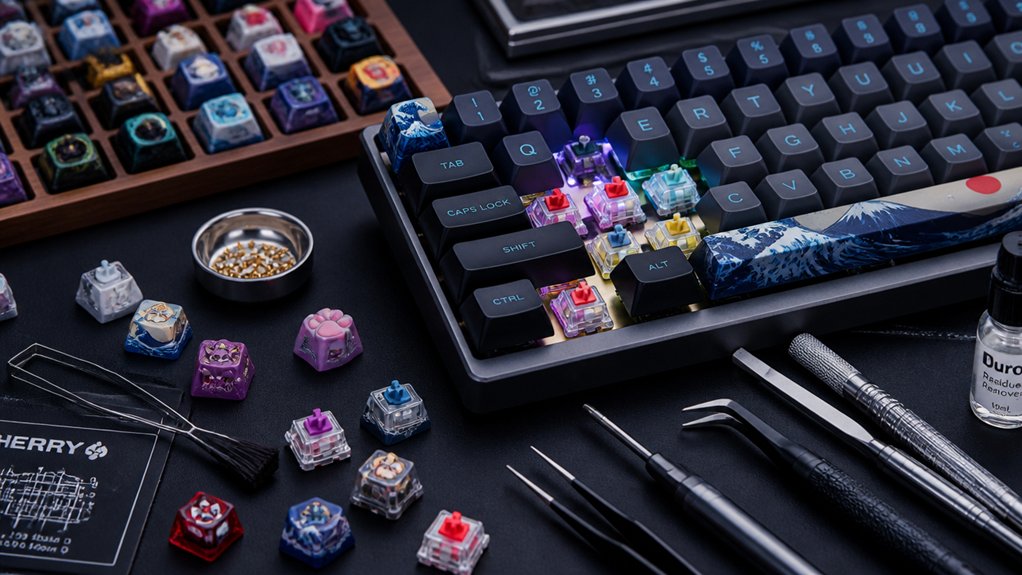
To effectively lubricate switches externally, you’ll need a few specialized tools and materials. First, choose a thin, switch-friendly lubricant like Krytox GPL205-GD0 or Tribosys 3204, applied carefully to the stem and bottom housing surfaces. Essential tools include a small fine paintbrush (size 00) for precise application and a keycap puller to remove keycaps safely. A switch opener helps disassemble switches, exposing parts like the stem and housing edges for external lubrication. Non-BBQ tweezers or jeweler’s claws aid in holding the stem securely during application. Using small containers organizes switch parts and prevents mixing. Additionally, understanding the importance of switch compatibility can ensure you select the right lubricant and tools for your specific switch types.
How to Brush Lube Your Switch Housing and Stem Effectively

Begin by preparing your brush and lubricant, guaranteeing the brush’s bristles are fine and soft—size 00 works best—and dip it lightly into the Krytox GPL205-G0, just enough to pick up a thin film of lubricant.
Focus on applying to the bottom housing rails and all four sides of the stem to reduce friction where the stem contacts the housing.
- Use steady, smooth strokes to spread lubricant evenly
- Target the bottom housing rails for smoother bottom movement
- Lightly coat the stem’s sides, avoiding the legs if tactility is desired
- Focus on friction points around the stem’s contact area
- Optional: add a light coat to the top housing rails for improved stroke consistency
This technique guarantees effective lubrication without over-saturating the stem or causing sluggishness.
How to Bag Lube Springs for Quieter Switches
To bag lube springs effectively, start by preparing a small amount of lubricant, like Krytox 105 or Tribosys 3204, and gather your springs.
Place the springs and lubricant in a sealed bag, then shake vigorously to coat them evenly. Be sure to use the right quantity—about 0.1–0.15 mL per 100 springs—and let them dry briefly before reassembling.
Preparing the Lubricant and Springs
Preparing the lubricant and springs properly is essential for effective bag lubing. To start, use a small amount of a thin lubricant like Krytox 105 oil—about 0.1-0.15 mL per 100 springs—dropping it into a resealable plastic bag. Seal the bag tightly, leaving some air inside, then gently shake it to coat the springs evenly without excess buildup.
This method guarantees the springs are lubricated uniformly, reducing noise and rattling. Make sure to use a high-quality, thin oil designed for springs, such as Tribosys 3203 or Krytox 105. Remember to begin with a small amount, testing switch sound and feel before adding more.
Proper preparation helps achieve quiet, smooth switches with minimal waste or uneven lubrication.
- Use a small amount of oil in the bag
- Seal tightly with air inside
- Gently shake the bag for even coating
- Select thin, high-quality spring lubricant
- Start with minimal drops, test, then add if needed
Shaking for Even Coating
How can you guarantee that your springs are evenly coated with lubricant? The key is shaking for even coating.
After placing the springs in a sealed plastic bag with a few drops of thin lubricant like Krytox 105 or Tribosys 3204, gently shake the bag. This distributes the lubricant uniformly across all springs. Using around 0.1-0.15 mL of lubricant per 100 springs is enough for proper coverage without risking over-lubrication.
The shaking process guarantees the lubricant penetrates all parts of the springs, reducing spring ping and rattling.
Optimal Quantity Application
Ensuring the right amount of lubricant when bag lubing springs is essential for achieving quieter switches without sacrificing responsiveness.
Use only a small bit of grease—about 0.1-0.15 mL per 100 springs—applied evenly through shaking, not excess. Start with minimal drops to prevent sluggishness.
Too much lubricant can cause the spring to stutter, affecting feel and sound. Remember, bag lubing is best for oils, as they spread smoothly over the springs.
Avoid applying lubricant to the housing and stem components, as this leads to uneven coverage. Focus solely on the springs for peak results.
- Use just a small amount of lubricant to prevent sluggishness
- Shake gently to distribute the oil evenly
- Focus on the springs, not the housing or stem
- Add more lubricant in tiny increments if needed
- Stick to oils instead of greases for a smoother coat
Common Mistakes When Lubricating Switches and How to Avoid Them
Lubricating switches externally can greatly improve their feel and sound, but it’s easy to make mistakes that can lead to worse performance. One common mistake is over-lubricating, which creates a whitish grease on moving parts and causes sluggish switch action. Make sure to apply a thin, even coat only on friction points like stem rails and housing areas. Avoid lubricating switch legs on tactile or clicky switches externally, as this dulls the tactile bump. Using household or incompatible greases can damage plastic parts and impair switch function. Here’s a quick picture:
| Mistake | How to Avoid |
|---|---|
| Over-lubing | Use light, sparing amounts on friction points |
| Applying on switch legs | Focus on the stem and housing, not legs |
| Using inappropriate lubricants | Stick to thin, switch-friendly lubricants |
| uneven coating | Guarantee even, gentle application |
Tips to Make Consistent External Lubrication for Multiple Switches

Consistent external lubrication across multiple switches depends on a systematic approach that emphasizes precision and organization. To achieve uniformity, keep each switch part separated in trays or bowls, ensuring you lube each component—stem, top housing, bottom housing—individually.
Use a fine, thin paintbrush (size 00 or similar) to apply a controlled, minimal amount of lubricant, focusing on external friction points like stem rails and housing guides. Apply the lubricant in thin layers, about 1-2mm on the brush tip, to prevent over-lubrication, which can cause sluggishness.
Always use the same type and batch of lubricant for all switches to maintain consistent feel. Set up a clean workspace with good lighting and avoid touching the lubricant with bare hands for best results.
- Use a fine paintbrush for precise application
- Organize parts to streamline lube process
- Apply thin, even layers to prevent sluggishness
- Standardize lubricant type and batch
- Maintain a clean and well-lit workspace
Troubleshooting Sticky or Over-Lubricated Switches
Noticing a switch feels sticky or sluggish? Sticky or over-lubricated switches often result from applying too much thick grease, making keypresses sluggish and reducing responsiveness.
To troubleshoot, carefully disassemble the switch with a switch opener. Use isopropyl alcohol and a lint-free cloth or brush to clean excess lubricant from the stem rails and housing, especially around the slider rails and spring area where buildup causes drag. Removing the excess lube restores smooth actuation.
When reapplying lube, use a minimal, thin coating of an appropriate switch lubricant like Krytox GPL205-G0 or 3204, applying it evenly to avoid sticky or over-lubricated switches. Also, forget about lubing stem legs on tactile or clicky switches, as it can dampen the tactile bump and cause sluggishness.
Maximizing the Benefits of External Lubrication: Final Tips

To get the most out of external lubrication, focus on precise, even application of a thin layer of lubricant like Krytox GPL205-GD0 on exposed keyboard switch surfaces. Concentrate on the top housing and rails—these are key friction points—and avoid over-lubricating to maintain top tactile feedback.
Use fine tools like a small brush or micro-swab to control the amount applied, preventing excess grease that could cause sluggish keypresses. Remember, don’t lubricate switch legs externally on tactile switches to preserve tactility.
After applying, let the switches “break in” with normal typing, which helps the lubricant distribute evenly. This guarantees your keyboard switches feel smooth and responsive without compromising their original feel.
- Focus on switch housing rails for better smoothness
- Use minimal, precise amounts of lube
- Avoid over-lubricating to prevent sluggishness
- Use fine tools for controlled application
- Allow switches to break in naturally
Do You Need to Re-Lubricate? Maintenance Tips for Longevity
Wondering if your switches need re-lubrication? Usually, if you’ve already lubed your switches, the lubricant should last about a year under normal use without needing reapplication.
You may notice a slight decrease in smoothness over time, but most users don’t see significant performance issues. Routine maintenance isn’t necessary because the lubricant tends to stay in place within the switch housing and on moving parts—it doesn’t drip or evaporate easily.
If your switches become scratchy or noisy after prolonged use, it’s time to re-lube your switches. To do this, disassemble them and apply a light, thin coat of lubricant to friction points. Avoid over-lubricating initially, and keep switches in a clean environment to maximize their lifespan.
Frequently Asked Questions
What Can You Lube Switches With?
You can lube switches with thin, switch-friendly greases like Krytox GPL205-G0 or oils such as Krytox 104 and 106. Tribosys 3203 or 3204 are affordable options, applied carefully on sliders and housing for smooth, quiet keystrokes.
Can You Use WD40 to Lube Switches?
You shouldn’t use WD40 to lube switches because it damages plastics, attracts dust, and can cause long-term electrical issues. Instead, use dedicated lubricants like Krytox GPL205-G0 or Tribosys oils for safe, effective switch lubing.
How to Lubricate an Electrical Switch?
You should disconnect power, turn off the switch, and apply a small amount of dielectric grease to the moving parts using a fine applicator. Operate the switch several times to distribute the lubricant evenly, ensuring smooth, reliable functioning.
Can I Use Dielectric Grease to Lube Switches?
You shouldn’t use dielectric grease to lube switches because it’s too thick, can cause sluggishness, trap debris, and interfere with contacts. Instead, opt for switch-specific lubricants like Krytox or Tribosys for smooth, reliable performance.