
Lubricating your mechanical keyboard switches reduces friction, making key presses smoother and more comfortable. It dampens noise, decreasing ping and chatter, so your typing remains quiet and less straining. Proper lubrication also prevents scratchiness and gritty feels, boosting overall performance. It helps keep the switches stable and responsive, extending their lifespan. If you want to learn how to get the most out of your switches and avoid common mistakes, keep exploring the details below.
Why Lubricate Your Mechanical Switches? Essential Benefits Explained

Ever wondered why many enthusiasts prefer lubing their mechanical switches? Lubed switches offer a smoother key travel, reducing friction between moving parts. This results in a more comfortable typing experience, as the keys feel lighter and effortless.
Proper switch lube minimizes scratchiness and gritty sensations, making each keystroke more consistent. Additionally, lubing helps dampen internal vibrations, lowering noise like switch ping and chatter. It also stabilizes the switch components, preventing unwanted sounds and improving overall sound quality.
Applying switch lube to springs and stems decreases finger fatigue during long typing or gaming sessions, allowing for lighter, more fluid keystrokes. Using the right application tools ensures even coverage and prevents excess lubricant buildup. Overall, lubed switches deliver a refined feel and a deeper acoustic profile, especially in linear and tactile switches, enhancing your typing comfort and experience.
Choosing the Right Lubricant for Your Switch Type
Selecting the appropriate lubricant for your mechanical switches is essential to achieving the desired typing feel and sound. If you have linear switches, Krytox 205g0 is your best choice because its thin consistency provides smooth, non-sticky keystrokes without sacrificing responsiveness. For tactile switches, Tribosys 3203 is recommended as its medium viscosity preserves tactile feedback while reducing scratchiness. Oil-based lubricants like Krytox 205g0 work well on stems and springs, giving them a smooth glide. Additionally, using compatible lubricants ensures that your switches perform optimally without damaging delicate components. Avoid over-lubricating, and focus only on stem-slider rails and springs to prevent mushiness. For stabilizers and clicky switches, grease lubricants help maintain crisp feedback and reduce noise. Choosing the right switch lubricant tailored to your switch type guarantees peak performance and a satisfying typing experience.
How Lubrication Smooths Keys and Dulls Noise

Lubrication works by reducing friction between the plastic stem and slider rails inside your switches, which allows keys to travel more smoothly and effortlessly. When you apply a quality lubricant, it minimizes scratchiness and grittiness, resulting in a more consistent and pleasant typing experience.
The lube helps dampen vibrations from springs and housing components, effectively dulling the high-pitched or pinging noises often heard in non-lubed switches. Properly lubricated stems and springs absorb mechanical impacts and micro-vibrations, making keystrokes quieter. Additionally, factory pre-lubrication ensures that switches are already smooth and silent right out of the box, saving you valuable time and effort.
Using a thin, quality lubricant like Krytox 205g0 guarantees smoothness without mushiness, maintaining switch responsiveness while considerably lowering noise levels. Overall, lubrication smooths your keys’ motion and dulls noise, enhancing both feel and sound for a better typing experience.
How to Lubricate Switches Like a Pro
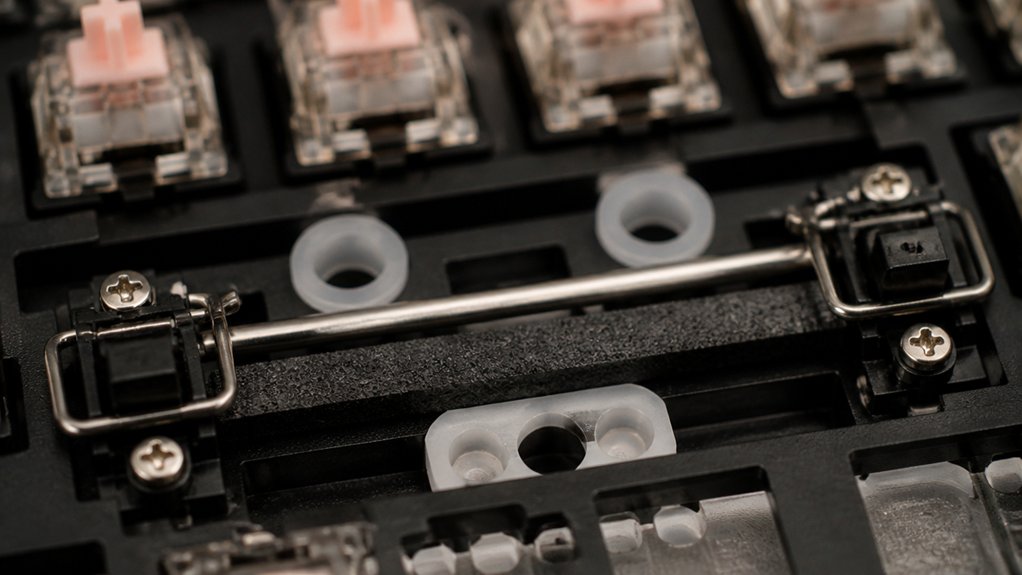
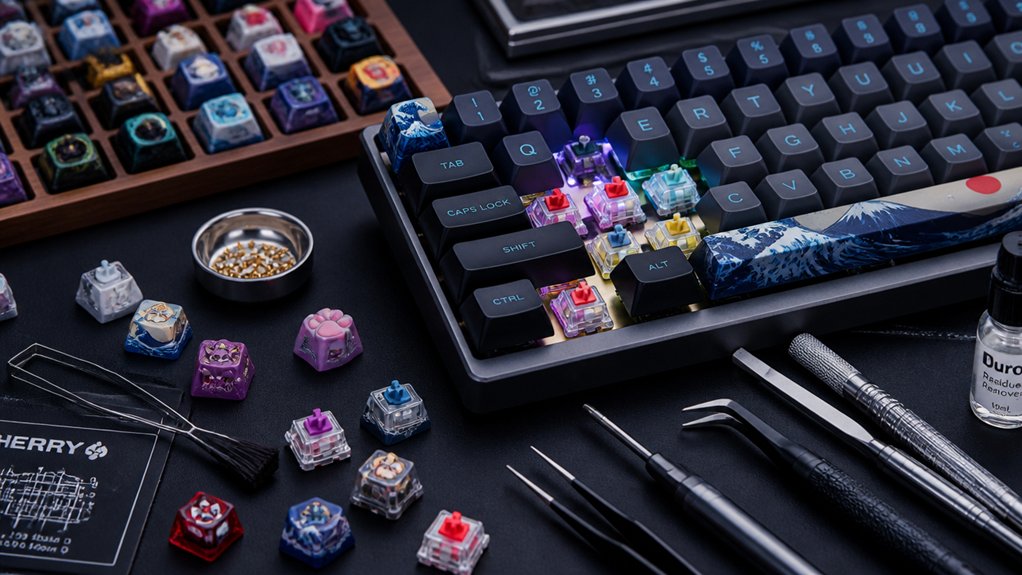
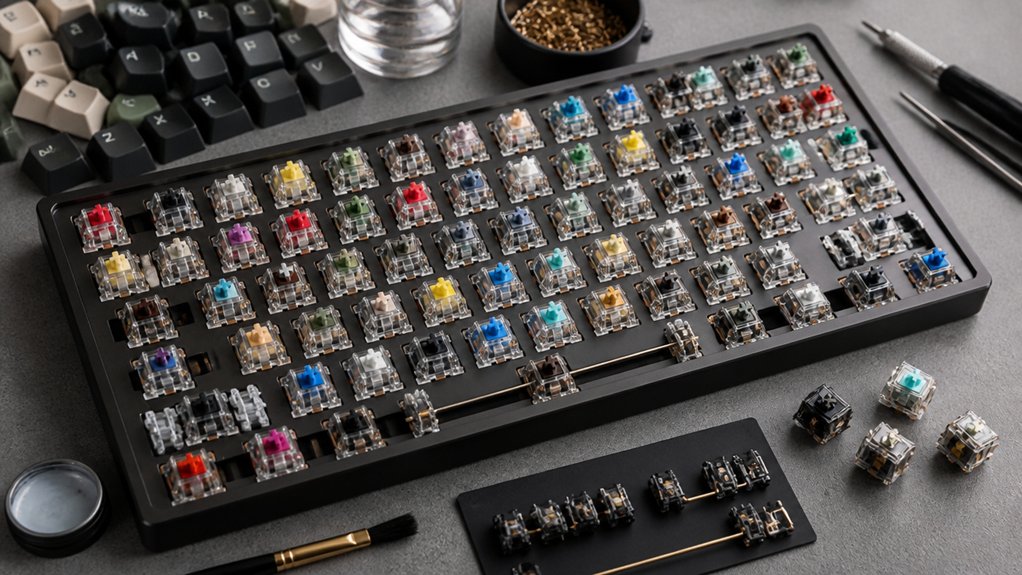
To lubricate switches like a pro, start by carefully disassembling each switch using a switch opener or a small flathead screwdriver. Separate the top housing, stem, spring, and bottom housing for precise application of lubricant. Use high-quality products like Krytox GPL205-G0 for linear switches or Tribosys 3203 for tactile switches. Apply lubricant sparingly to stem rails and the slider floor to reduce friction without mushiness. For springs, either brush them lightly or shake inside a lubed bag with GPL 105 to minimize ping and improve smoothness. Reassemble by placing the spring and stem into the bottom housing, then snap the top housing firmly. Always test the switch feel, wipe excess lubricant, and guarantee proper alignment. Proper organization of tools and components during the process can further enhance efficiency and reduce the risk of damage compatibility considerations.
Common Lubrication Mistakes and How to Avoid Them

While lubricating your switches can greatly improve their feel, common mistakes can undo those benefits or even cause damage. Applying too much lubricant results in a mushy, sluggish feel, so use small amounts mainly on stem rails and springs.
Avoid lubing tactile switch contact leaves or click bars unless you have linear switches, as this can mute essential tactile feedback. Thick grease instead of thin oils like Krytox 205g0 can hinder smooth switch travel and increase resistance, so stick to lighter lubricants on moving parts.
Failing to clean dust or debris before lubing traps contaminants inside the switch, leading to inconsistency and key chatter. Additionally, using switch films improperly or installing them with incorrect alignment can alter the switch’s feel and acoustic profile, so careful installation is essential.
Finally, reassembling the top housing incorrectly or misaligning the stem, spring, and housing can cause mechanical issues—so double-check alignment after lubrication for peak performance.
Frequently Asked Questions
Do I Need to Lube Mechanical Keyboard Switches?
You don’t necessarily need to lube your switches if you like their current feel and sound. However, if you want smoother, quieter keystrokes or more personalized feedback, lubrication can improve your typing experience greatly.
What Happens if You Don’t Lube Your Keyboard?
If you don’t lube your keyboard, your switches will feel scratchy and gritty, noise levels will increase with sharp clicks, and you’ll experience higher actuation resistance, leading to finger fatigue and inconsistent, less smooth typing over time.
Can I Use WD-40 on Keyboard Switches?
You shouldn’t use WD-40 on keyboard switches because it isn’t designed for that purpose, can attract dust, degrade plastics, and cause damage. Use dedicated lubricants like Krytox 205g0 for safe, effective switch lubrication.
What Happens if You Lube Clicky Switches?
Lubing clicky switches softens the tactile bump and reduces the sharp click, making keys feel less crisp and quieter. Over-lubrication can cause mushiness, diminishing the switch’s signature feel and sound, so apply carefully to preserve their character.