
To build a silent mechanical keyboard, choose cases made from polycarbonate or POM, as they absorb vibrations and dampen sound naturally. Metal cases like aluminum or brass can amplify noise unless you add sound-absorbing features like foam or gasket mounts. Design elements like foam layers, gasket mounts, and internal dampening greatly cut down vibrations and echo. Keep exploring to discover specific materials and tweaks that can make your keyboard quieter and more refined.
How Case Materials Affect Silent Mechanical Keyboard Sound and Feel
The material of your keyboard case plays a crucial role in shaping its sound and feel, especially when aiming for a silent mechanical keyboard.
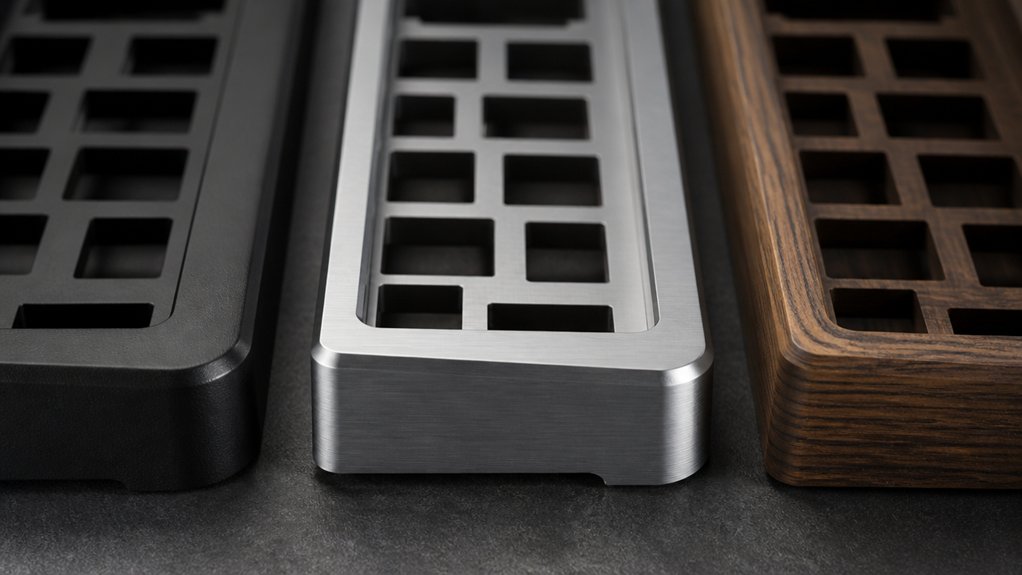
Keyboard case materials like aluminum or brass create a deeper, more stable sound with less vibration, making typing quieter and more solid. Softer plastics such as polycarbonate or POM absorb vibrations effectively, resulting in muted, lower-pitched sounds ideal for quiet builds.
Aluminum and brass cases produce stable, deep sounds, while soft plastics like polycarbonate absorb vibrations for quieter typing.
Acrylic cases can produce bright, hollow tones unless combined with sound dampening materials like case foam. The rigidity of metal cases enhances typing precision but may generate sharp sound peaks, so pairing with sound-absorbing elements like gasket mounts is essential.
Your choice of case material directly impacts vibration transmission, affecting the overall sound profile and quietness of your mechanical keyboard. Additionally, considering the use of foam inserts can further dampen unwanted noise, contributing to a quieter typing experience.
Common Materials for Quiet Mechanical Keyboard Cases
When designing a quiet mechanical keyboard, selecting the right case material is essential because it directly influences vibration dampening and sound absorption.
The best options for silent keyboard builds include:
- Polycarbonate cases – These are flexible and soft, effectively dampening vibrations for a quieter, lower-pitched typing experience.
- POM (polyoxymethylene) cases – Known for absorbing vibrations well, POM produces deep, muted sounds and smooth keystrokes, ideal for silent switches.
- Acrylic – Offers RGB diffusion but tends to be hollow, so internal dampening is often necessary to reduce keyboard sounds.
- Metals like aluminum and brass – Provide durability but can produce brighter or resonant sounds, often requiring additional dampening for quietness.
Design Features That Minimize Keyboard Noise
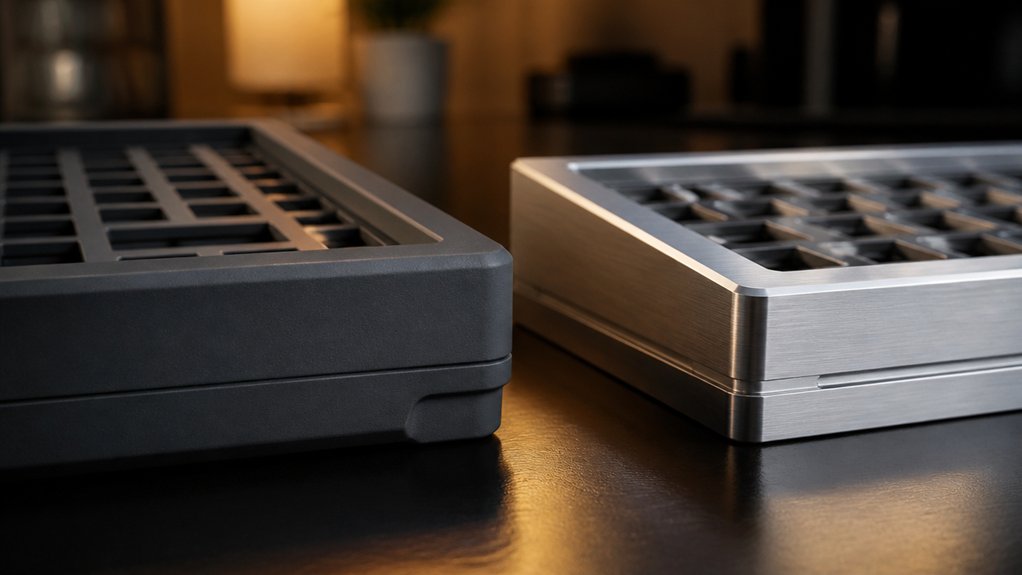
Implementing thoughtful design features can greatly reduce the noise generated by a mechanical keyboard. Choosing the right keyboard cases with gasket mounting systems isolates the plate from the case, minimizing vibration transmission and softening the typing sound. Inside the case, foam dampening or silicone dampening layers absorb internal resonance and rattling noises, enhancing sound and feel. Using a polycarbonate or POM material for the plate offers natural vibration reduction and absorbs keystroke impact noises, further lowering volume. Cases with thicker, tighter-fitting chassis help contain echoes and vibrations. Opting for case materials that naturally dampen vibrations, like polycarbonate or POM, guarantees a quieter acoustic profile compared to rigid metals. Additionally, incorporating foam materials such as gasket foam or sound-absorbing panels can significantly enhance vibration isolation and noise reduction. These design features work together to create a more peaceful typing experience while maintaining satisfying feedback.
Choosing the Best Case Material for a Silent Keyboard
Are you seeking a case material that keeps noise levels low without sacrificing durability? Choosing the right material is key to achieving a silent tactile or silent linear typing feel. Consider these options:
- Polycarbonate: Known for vibration-absorbing qualities, it dampens sound and reduces resonance, making it excellent for silent keyboards.
- POM (Polyoxymethylene): Offers soft, muted keystrokes, ideal when paired with gasket mounting styles for enhanced dampening.
- Acrylic: Visually appealing but naturally bright and hollow-sounding, so you’ll need extra foam or dampening layers.
- Metals like aluminum or brass: While robust and providing deep ‘thock,’ they tend to amplify noise without additional internal dampening.
Selecting a plastic material like polycarbonate or POM with vibration-absorbing features greatly improves silence, especially with soft mounting styles. Furthermore, the material quality and surface finish play a vital role in ensuring both durability and noise reduction in aluminum keyboard cases.
Tips for Modding and Damping Your Keyboard for Extra Silence

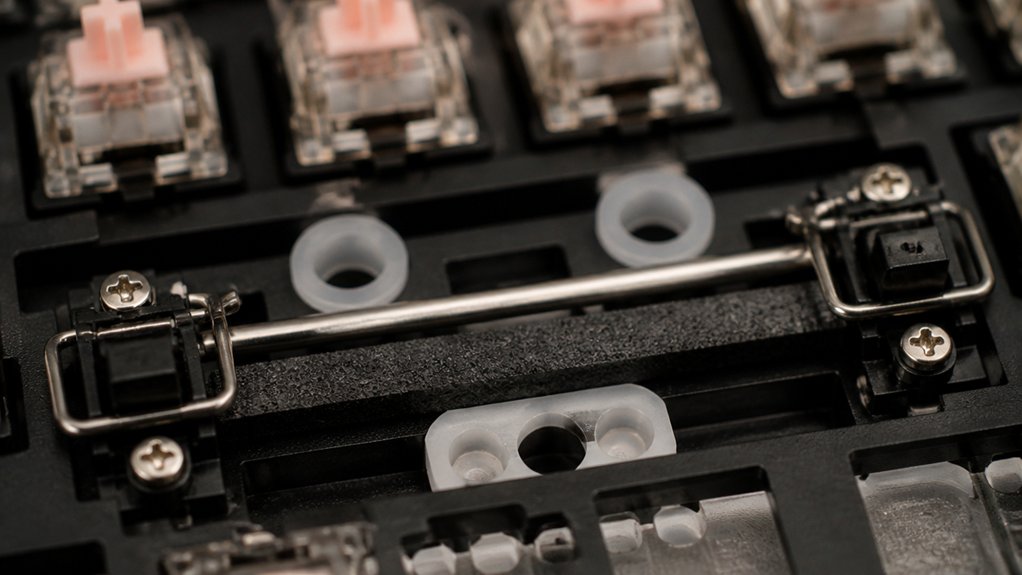
To maximize silence, start by adding foam layers inside the case and between the plate and PCB, as these absorb vibrations and cut down on resonance. Using a gasket mount system isolates the plate from the case, creating a softer, quieter typing experience with less impact noise. Regularly lubing stabilizers with thick lubricant like 3204 or XHT-BDZ G.5 reduces rattle and scratchiness, improving build quality and silence. Applying medium-thin lubricant to switches also smooths keystrokes and lessens noise harshness, especially in silent tactile or linear switches. Adding silicone or shelf liner dampeners inside the keyboard cavity and behind the PCB further prevents echo and rattling. Incorporating foam dampeners optimized for vibration control and resonance reduction can significantly enhance the quiet operation of your custom mechanical keyboard.
Frequently Asked Questions
What Is the Quietest Keyboard Case Material?
You’d find POM (Polyoxymethylene) plastic cases the quietest because they’re dense, absorb vibrations, and produce deep, muted sounds with a smooth, silent keystroke. Pairing them with internal dampening boosts noise reduction even more.
What Is the Quietest Type of Mechanical Keyboard?
The quietest mechanical keyboard uses silent linear switches, are built with dampening materials like polycarbonate or POM for cases and plates, and include internal foam or silicone layers to absorb vibrations, ensuring minimal noise during typing.
What Makes a Mechanical Keyboard Silent?
A mechanical keyboard stays silent by using dense, vibration-absorbing case materials like brass and POM, soft mounts like gaskets, internal damping layers, and soft plates, all designed to isolate impact and reduce resonance and echo.
What Is a 96% Keyboard Missing?
A 96% keyboard is missing dedicated navigation cluster keys, extra macro or function keys, and some media controls, which are usually found on larger or extended keyboards. It retains most keys in a condensed layout, saving space.
In Summary
Choosing the right case material and design can make your mechanical keyboard significantly quieter and more satisfying to use. Think about how different materials affect sound and feel, and consider adding dampening features or modding your case for even better silence. With a little customization, you can enjoy a peaceful typing experience without sacrificing performance or aesthetics. Take your time, experiment, and you’ll find the perfect setup to keep your workspace quiet and comfortable.