Metal and plastic keyboard cases differ in several ways. Metal cases are sturdier, last longer, and offer sharper sound and a heavier feel, ideal for heavy typing or gaming. Plastic cases are lighter, more colorful, and quieter, perfect for casual use or portability. While metal costs more upfront, its durability can save money over time. To discover more about which material fits your style and needs, keep exploring the details below.
What Materials Are Commonly Used for Mechanical Keyboard Cases?
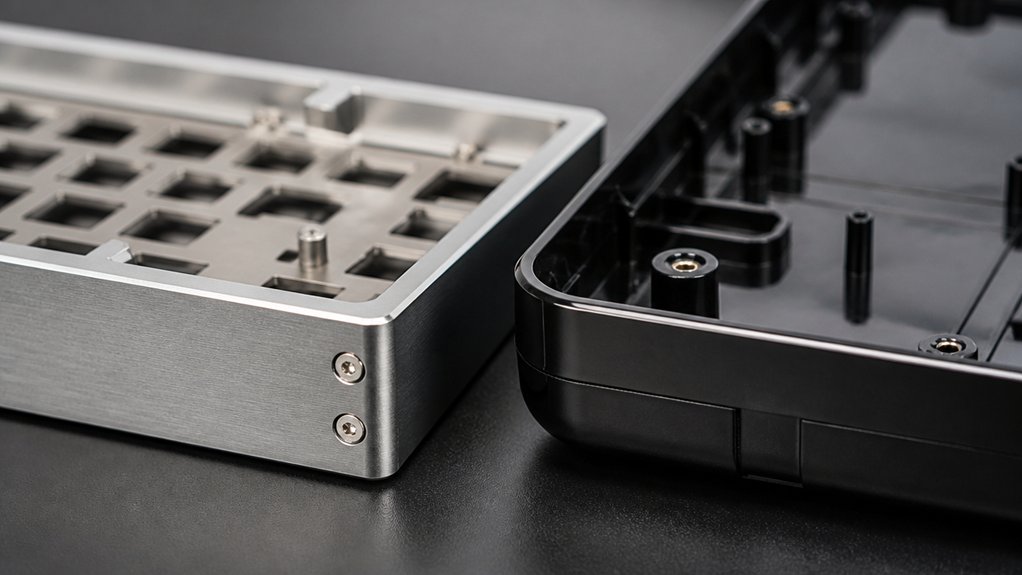
Have you ever wondered what materials make up the cases of mechanical keyboards? Most commonly, you’ll find plastic and metal, especially aluminum.
Most mechanical keyboard cases are made from plastic or aluminum, balancing weight, durability, and cost.
Plastic keyboard cases, often made from ABS or specialized polymers, tend to be lightweight—around 1 kg—making them easy to carry and ideal for budget or travel keyboards.
Aluminum cases offer greater durability, usually weighing between 1.5 and 2.5 kg, and provide a solid, premium feel. Metal, especially CNC-machined and anodized aluminum, enhances heat dissipation and build quality, offering excellent longevity.
Material Quality and Durability also play a crucial role, with high-grade aluminum alloy ensuring longevity, corrosion resistance, and heat dissipation for stable performance.
How Do Metal and Plastic Cases Differ in Strength and Longevity
Metal keyboard cases, especially those crafted from CNC-machined aluminum, tend to be considerably stronger and more rigid than their plastic counterparts. Metal cases excel in maintaining structural integrity under heavy use, preventing flexing and damage.
In contrast, plastic keyboard cases made from high-density ABS are lighter but more prone to cracking, warping, and wear within 1 to 3 years of intensive use. The sturdiness of metal cases provides a stable and reliable platform that resists physical stresses better, ensuring durability over time. Additionally, material impact resistance varies significantly, with metal offering superior protection against impacts and drops.
Aluminum cases can last 10 to 15 years or more with proper care, offering excellent longevity. Conversely, plastic cases typically have a shorter lifespan due to material degradation, making them less suited for prolonged, heavy-duty use.
How Do Case Materials Affect the Sound and Feel of Your Keyboard

Ever wonder how the material of your keyboard case influences your typing experience? The material impacts both sound and feel markedly. Plastic keyboard cases absorb vibrations and produce a deeper, lower-pitched “thock,” making typing quieter and softer, ideal for quiet office environments. Metal cases, like aluminum or steel, create a crisper, high-pitched, and sharper clack, enhancing acoustic clarity. The rigidity and mass of metal provide a firmer feel and stability, giving a heavier, more precise typing experience preferred by serious gamers. Plastic offers a softer, cushioned feel with lighter tactile feedback, while metal delivers a more stable, tactile feedback-rich sensation. These differences influence your overall typing sound and feel, shaping your keyboard’s personality. Additionally, the choice of solid wood cases introduces a warm, resonant acoustic profile, unique to natural materials, further customizing your typing experience.
What Is the Impact of Case Material on Heat Dissipation and Performance
The material of your keyboard case directly affects how well it manages heat during extended use.
Metal cases, like aluminum, conduct heat away quickly, helping prevent switch overheating and maintaining performance. In contrast, plastic cases trap heat inside, which can lead to higher temperatures and possible impacts on switch responsiveness over time.
Thermal Conductivity Differences
Because of its high thermal conductivity, aluminum cases excel at dissipating heat generated during intense or prolonged typing and gaming sessions, helping keep internal components cool. Metal keyboards, particularly aluminum cases with a thermal conductivity of around 237 W/m·K, offer superior heat dissipation compared to plastic keyboards, which have very low thermal conductivity (0.1–0.5 W/m·K). Aluminum cases actively transfer heat from mechanical switches, maintaining heat management and preventing overheating. Plastic cases, with poor heat conduction, tend to retain heat, potentially causing minor temperature buildup during extended use. This difference impacts keyboard durability and comfort, as metal cases stay cooler to the touch, while plastic cases may feel warmer and less comfortable over time. Additionally, the material composition of the case influences its overall heat management capabilities.
Heat Management Efficiency
Case material directly affects how effectively heat is dissipated from your keyboard during extended use. Metal keyboards, especially those with aluminum cases, have high thermal conductivity, enabling superior heat dissipation compared to plastic keyboards.
Metal cases help prevent heat buildup during intense typing or gaming sessions, reducing temperature rises around switches. This efficient heat dissipation maintains consistent switch performance and prolongs durability, making metal cases ideal for heavy, prolonged use.
In contrast, plastic cases act as thermal insulators, trapping heat and potentially causing minor temperature increases that can impact long-term reliability. While plastic cases offer a premium look and feel, metal options excel in heat management, providing a cooler experience and more stable performance over time. Additionally, the choice of case material can influence the overall material quality and finish, impacting longevity and aesthetics.
Impact on Switch Performance
Improved heat dissipation in metal keyboard cases directly benefits switch performance by preventing excessive temperature buildup during extended use. Metal keyboards provide superior heat dissipation because of aluminum’s high thermal conductivity (~237 W/m·K), unlike plastic cases (0.1–0.5 W/m·K). This keeps switches cooler, maintaining stable switch performance and responsiveness over time. The rigidity of metal cases guarantees consistent force transfer and reduces switch wobble, which improves tactile feedback. Plastic keyboards tend to absorb vibrations more, resulting in a softer, quieter typing sound but may cause inconsistent switch bottoming-out feel under heavy use. While case material doesn’t directly affect the electrical switch mechanism, metal cases support a longer-lasting, stable environment that enhances overall switch longevity and performance. Additionally, the thermal stability of metal cases helps in maintaining a consistent operating temperature, further safeguarding switch functionality.
What Aesthetic and Customization Options Do Metal and Plastic Cases Offer
Both metal and plastic keyboard cases offer distinct aesthetic and customization options, letting you personalize your setup to match your style.
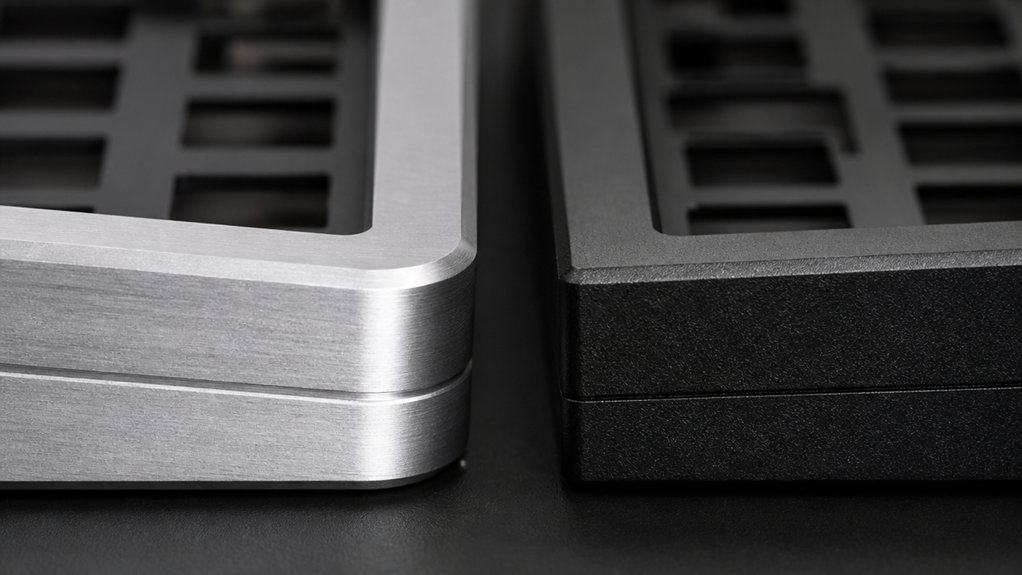
Metal cases usually feature sleek finishes and engravings, giving a premium, industrial look that lasts over time.
Plastic cases, on the other hand, provide a wider range of vibrant colors and creative finishes for more playful and bold designs.
Considering the material options, users can also select cases with different textured surfaces or finishes, further enhancing their ability to personalize their keyboard’s appearance.
Material-Based Design Variations
When it comes to aesthetic and customization options, metal and plastic keyboard cases each bring distinct advantages. Metal keyboard cases often feature polished anodized finishes that give a sleek, premium look, with color options like E-White, Navy, Olive, and Black that keep vibrancy over time. CNC machining allows for unique textures, engravings, and industrial-grade designs, enhancing personalization and durable construction. Plastic cases offer more diverse color options and finishes, enabling bold, creative aesthetics and versatile design flexibility. While plastic cases tend to be mass-produced, they still support custom keycaps and switches, adding to their customization potential. Additionally, the durability of metal cases makes them suitable for long-term use and high-end builds.
Customization Potential and Limitations
Metal and plastic keyboard cases both offer extensive customization options, allowing you to personalize your setup according to your style and preferences. The customization potential differs: plastic cases come in a wide range of bold colors and finishes, making them ideal for playful and creative design combinations. They’re flexible and support DIY customizations, making modifications easier.
Metal cases, often CNC-machined, feature intricate textures, engravings, and a refined surface, giving your keyboard a more polished, premium look that supports personal expression. While plastic options excel in variety and ease of modifications, metal cases allow for more detailed, intricate textures and long-lasting finishes.
Both materials support compatibility with custom keycaps and switches, but your choice ultimately depends on whether you prioritize versatile design or refined, detailed craftsmanship.
Is the Cost Difference Justified by Durability and Performance?
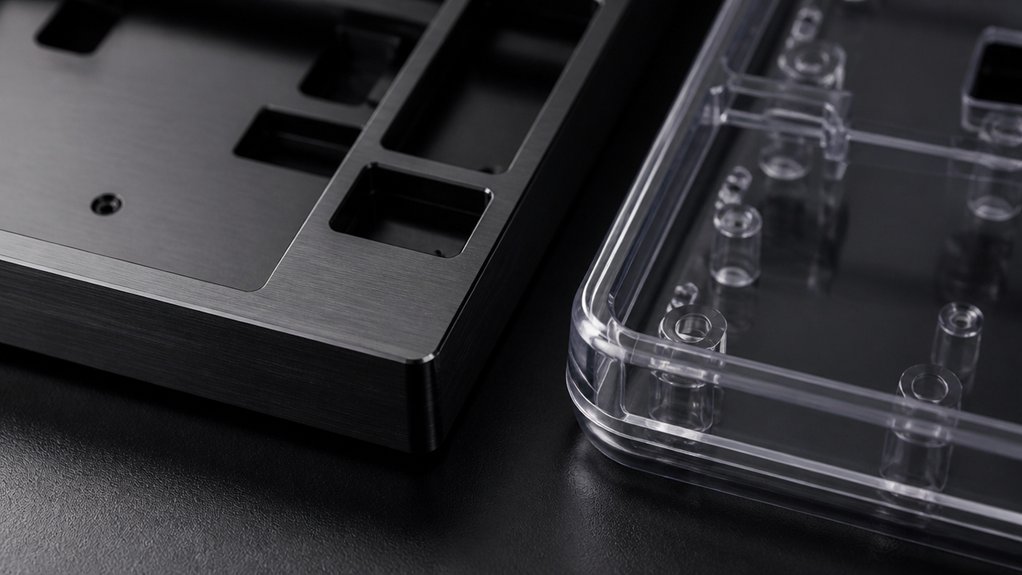
Although metal keyboard cases cost more upfront, their enhanced durability and performance often justify the investment. Metal keyboard cases made from premium materials like CNC-machined aluminum last 10–20 years, compared to the 1–3 years of plastic cases, reducing frequent replacements. The increased weight and rigidity improve typing stability, especially during heavy use or intensive gaming, supporting long-term performance. Metal cases also excel in heat dissipation, helping maintain peak switch function and extending keyboard lifespan. While plastic cases are more affordable and lightweight, they tend to flex and wear quickly, possibly leading to more costs over time. Overall, the higher cost difference is justified when factoring in durability, long-term use, and performance benefits, making metal cases a smarter investment for reliability-focused users.
- Greater longevity reduces replacement costs over time
- Superior heat dissipation supports sustained performance
- Heavy use demands the stability metal provides
- Material strength enhances aesthetic and durability
- Long-term use offsets higher initial expenses
Which Case Material Is Best for Your Gaming or Typing Needs?
Choosing the right keyboard case depends on whether you prioritize durability and stability or portability and customization.
Metal keyboard cases are best if you want superior durability, keyboard stability, and a premium feel, especially for heavy typing or competitive gaming. They provide a crisper, higher-pitched typing sound and tend to last 10–20 years with proper care. However, their weight reduces keyboard portability.
Plastic keyboard cases are lightweight, affordable, and offer softer keystrokes, making them ideal for casual use and long typing sessions. They also come in diverse colors and designs. While their keyboard lifespan is shorter, typically 1–3 years, plastic cases produce quieter, deeper “thock” sounds.
Additionally, material choices impact keycap wear and overall resistance to heat and shine. Choose based on whether you value a sturdy, long-lasting build or portability and customization.
Frequently Asked Questions
Are Metal Keyboards Better Than Plastic?
Yes, metal keyboards are better if you want durability, stability, and a premium feel. They last longer, produce a more satisfying typing experience, and stay steady during use, making them a smarter investment despite higher upfront costs.
What Material Is Best for Keyboard Covers?
For keyboard covers, silicone is best due to its flexibility, durability, and easy cleaning. It fits snugly, offers good spill resistance, and is soft enough for comfortable typing, making it ideal for protecting your keyboard effectively.
Do Gamers Prefer Membrane or Mechanical?
You prefer mechanical keyboards because they offer better tactile feedback, durability, and faster responses, essential for gaming. They allow customization and provide satisfying, audible feedback, making them the top choice over membrane keyboards for intense gaming sessions.
Is It Better to Use Plastic or Metal?
It’s better to use a metal case if you want durability, stability, and a premium feel, especially for long-term, stationary setups. If portability and affordability matter more, a plastic case suits your needs better.
In Summary
Choosing between metal and plastic keyboard cases depends on what you value most—durability, sound, look, or budget. Metal cases offer longevity, a premium feel, and better heat dissipation but often come at a higher price. Plastic cases can be lighter and more affordable, with plenty of customization options. Consider your gaming or typing needs carefully to select the best material that balances performance, aesthetics, and cost for you.