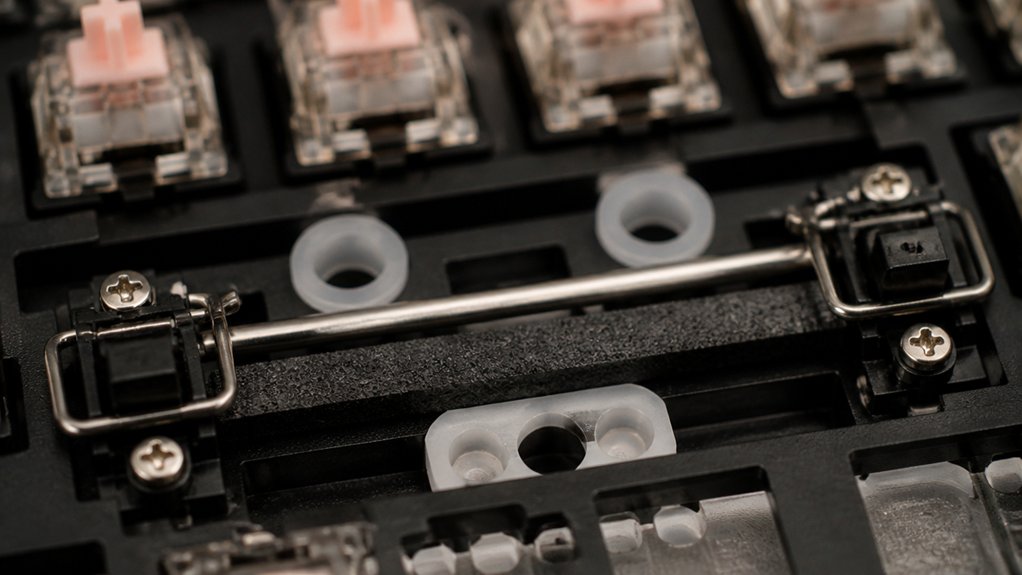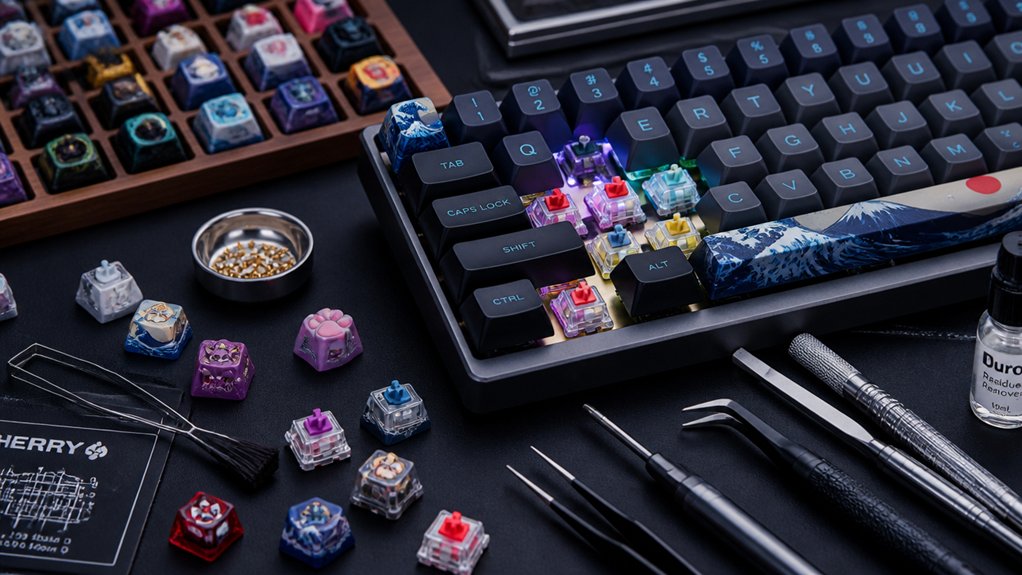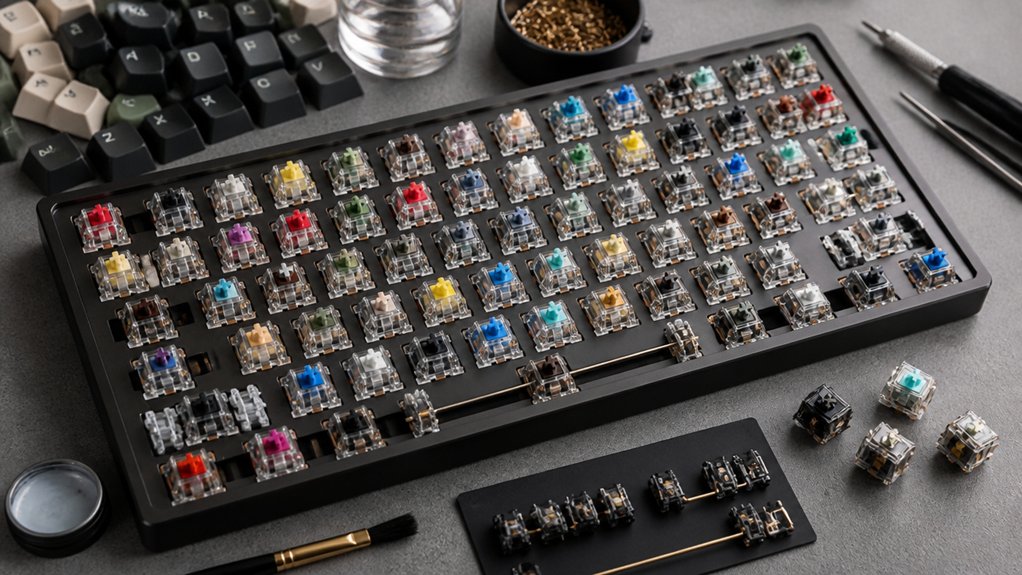
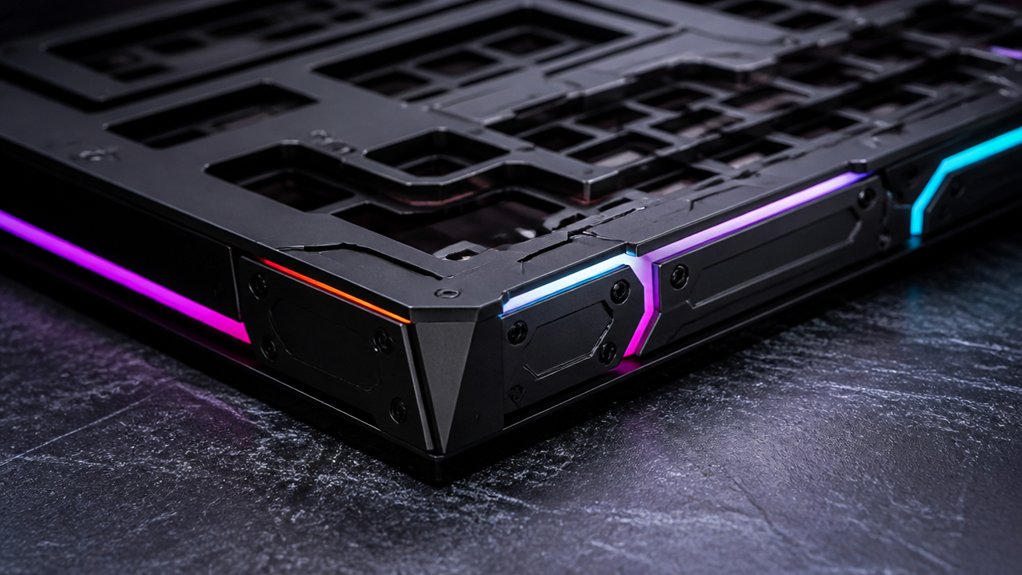
Modular mechanical keyboard case designs let you swap out parts like the top, bottom, and mounting plates to customize your keyboard’s size, sound, and feel. You can choose from different layouts like 60%, TKL, or full size, and select materials such as aluminum, polycarbonate, or acrylic to influence performance and aesthetics. With standardized mounting options and easy assembly, these cases make upgrades simple. Keep exploring to discover how choosing the right components can boost your typing experience.
What Are Modular Mechanical Keyboard Cases and Why Do They Matter?
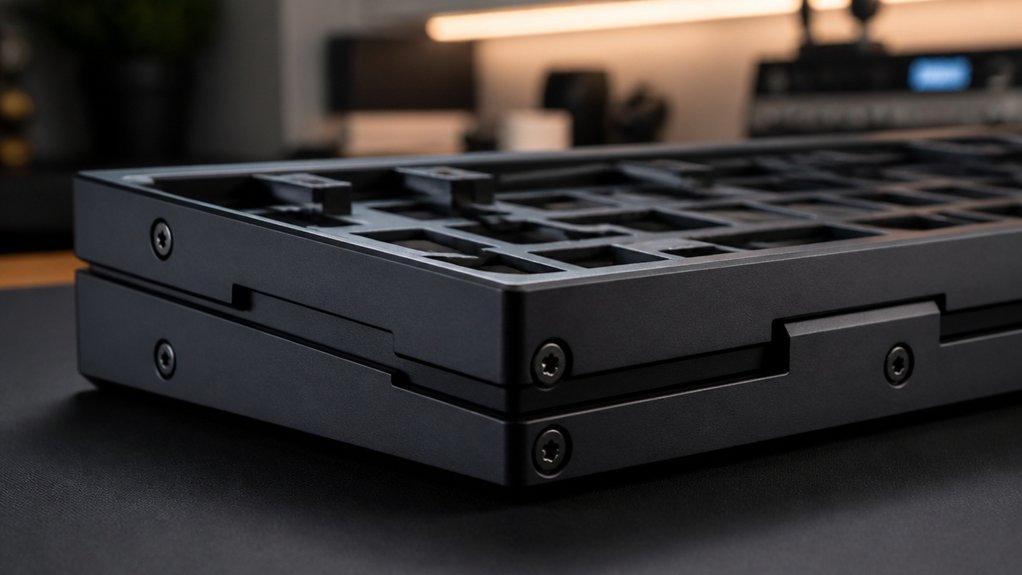
Have you ever wondered why some mechanical keyboards feel more personalized and easier to upgrade than others? That’s often thanks to modular mechanical keyboard cases. These cases are designed with interchangeable components, making customization simple—whether you want to swap out the top, bottom, or mounting plates.
They also support diverse layouts and sizes, accommodating different ergonomic needs. Modular designs improve your typing experience by letting you influence sound and feel through section separation, like sandwich or tray mounts. Additionally, these cases often feature stackable or modular designs that maximize space efficiency and ease of reconfiguration.
Plus, they boost durability, because it’s easier to repair or upgrade parts instead of replacing the entire keyboard. This approach promotes longevity, community-driven innovation, and reduces electronic waste, making modular mechanical keyboard cases a smart choice for enthusiasts seeking versatility and lasting quality.
Essential Design Features of Modular Keyboard Cases
The essential design features of modular keyboard cases revolve around their interchangeable parts and versatile mounting options, which enable easy customization and upgrades. A good modular mechanical keyboard case supports various mounting styles like sandwich, plateless, or tray mount, allowing you to tailor the typing feel and switch compatibility. These cases are designed to fit multiple keyboard sizes, such as 60%, 75%, or TKL, so you can swap or expand layouts without starting from scratch. Materials like aluminum offer durability, polycarbonate enhances resonance, and acrylic adds aesthetic flair—so you can mix components to customize sound and look. Standardized screw holes and bolting mechanisms simplify DIY keyboards assembly, ensuring compatibility with custom mechanical parts, PCBs, and plates for a truly personalized setup. Using full-size keyboard cases that support various configurations ensures the case can accommodate different layouts and size requirements.
How Material Choices Impact Modular Keyboard Performance
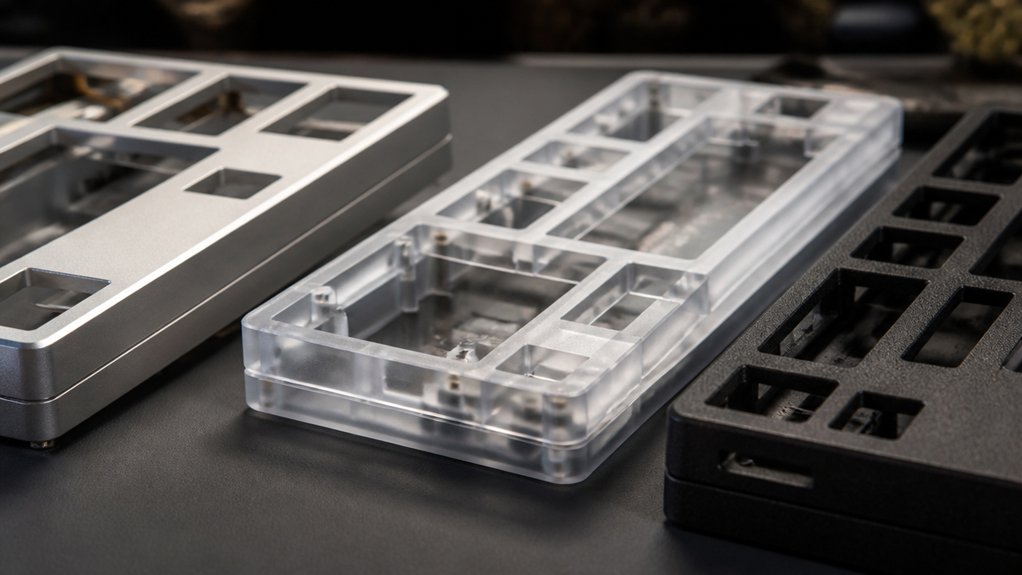
Material choices greatly influence the performance and feel of a modular mechanical keyboard. Your choice affects sound, durability, and how the internal components respond.
Material selection shapes your keyboard’s sound, durability, and feel, directly impacting overall typing experience and component response.
- Polycarbonate cases create a richer, deeper sound, enhancing keystroke resonance and giving your custom keyboard a more musical typing experience.
- Aluminum offers a sturdy, weighty feel with a high-pitched, crisp sound, making it ideal for durability and a premium experience.
- Wooden cases provide a warmer tone by absorbing vibrations, but they demand regular maintenance to prevent warping.
- When selecting a case material, consider the forged aluminum used in premium cases for improved impact resistance and heat dissipation, which can enhance long-term stability and performance.
While plastic is lightweight and cost-effective, it results in less resonance and sturdiness. Acrylic cases excel aesthetically but produce a brighter sound. Your selection impacts every aspect of mechanical switch response and overall keyboard performance.
How to Choose and Customize Your Modular Mechanical Keyboard Case
Deciding on the right modular mechanical keyboard case involves balancing size, material, and customization options to match your typing preferences and setup. First, consider the size—60%, TKL, or 75%—as it affects comfort and compatibility. Material choice influences sound and feel: polycarbonate for resonance, aluminum for durability, or wood for warmth. Modular cases support easy swapping, allowing you to upgrade switches or mounting styles like sandwich or plateless, which alter typing feel. To customize further, add sound-dampening materials like foam or o-rings for quieter, improved acoustics. Additionally, selecting a case with precise craftsmanship and finished with protective oils can enhance durability and aesthetic personalization. Use the table below to compare options:
| Size | Material | Customization Options |
|---|---|---|
| 60% | Polycarbonate | Foam, switch swaps |
| TKL | Aluminum | Mounting style |
| 75% | Wood | Support for modular parts |
Step-by-Step Guide to Building Your Modular Mechanical Keyboard
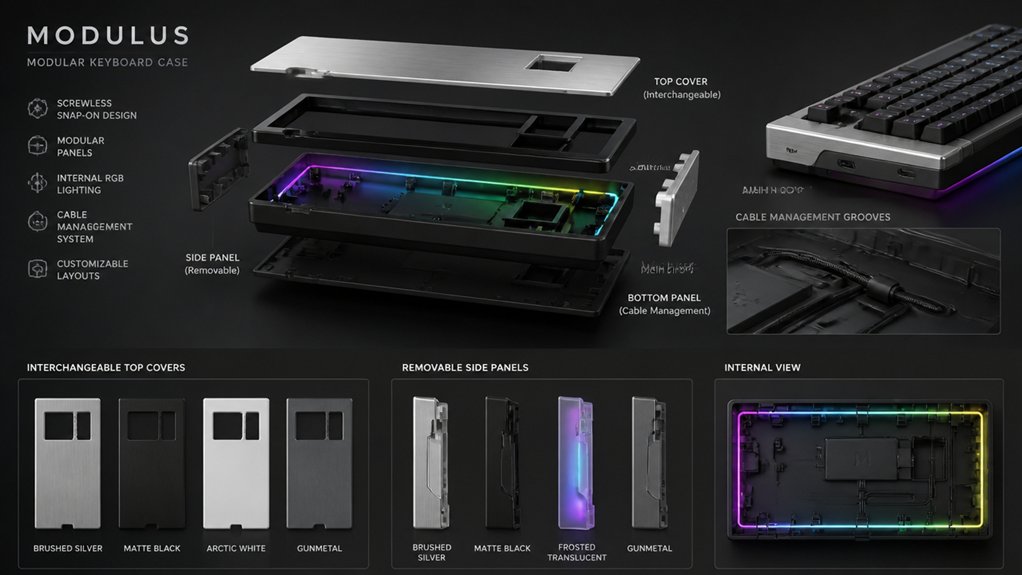
Building your modular mechanical keyboard begins with selecting a compatible case that aligns with your preferred materials and layout. Choose a modular case made from aluminum, polycarbonate, or stainless steel based on your desired acoustics and typing feel. Next, pick the case size—such as 60%, TKL, or full-size—to match your ergonomic needs and layout preferences, ensuring it supports your chosen mounting style. Then, assemble your custom keyboard by layering components like the top and bottom shells, plate, PCB, switches, and stabilizers. Secure everything with screws or bolts, following CAD guides for alignment. Finally, customize the sound and feel by adding foam or dampeners, testing switches and keycaps for compatibility and smooth operation before final assembly. Incorporating material selection details can help optimize protection, durability, and aesthetic appeal in your custom setup.
Frequently Asked Questions
What Is a Modular Mechanical Keyboard?
A modular mechanical keyboard lets you customize and upgrade parts like cases, switches, and keycaps easily. You can reconfigure layouts, improve repairability, and tailor your typing experience, making it perfect for enthusiasts who want a personalized, durable setup.
What Are the Different Types of Mechanical Keyboard Cases?
You can choose from various mechanical keyboard case types, including plastic, aluminum, acrylic, and wood. They come in different sizes and mounting styles, influencing durability, sound, and feel, helping you customize your keyboard to your preferences.
What Is a 96% Keyboard Missing?
A 96% keyboard is missing a dedicated navigation cluster and function row spacing found on full-size keyboards. It also doesn’t include extra macro keys, media keys, or specialized sections, maximizing space while keeping essential features intact.
Are There Keyboards for Carpal Tunnel?
Yes, there are keyboards designed for carpal tunnel. You can find ergonomic, split, tented, and adjustable models, often with wrist rests and customizable layouts. These features help reduce wrist strain and improve comfort during extended typing sessions.
In Summary
Ultimately, choosing a modular mechanical keyboard case lets you customize your setup for ideal comfort and style. By understanding essential design features and material options, you can create a build that fits your needs perfectly. With some planning and hands-on tweaking, you’ll enjoy a durable, functional, and personalized keyboard that enhances your typing experience. So, jump into the customization process and make a case that truly reflects your preferences. Happy building!