Sustainable materials for keyboard cases include recycled plastics, which offer durability and environmental benefits, and natural fibers like bamboo and wood, providing aesthetic appeal and biodegradability. Recycled metals like aluminum and magnesium balance strength with eco-friendliness, while biodegradable composites promote responsible disposal. Additive manufacturing or 3D printing enables customized, waste-reducing production. Exploring these options helps you choose eco-conscious choices that don’t compromise on performance or style, and you’ll discover how each material impacts design and sustainability.
What Are the Best Sustainable Materials for Keyboard Cases?
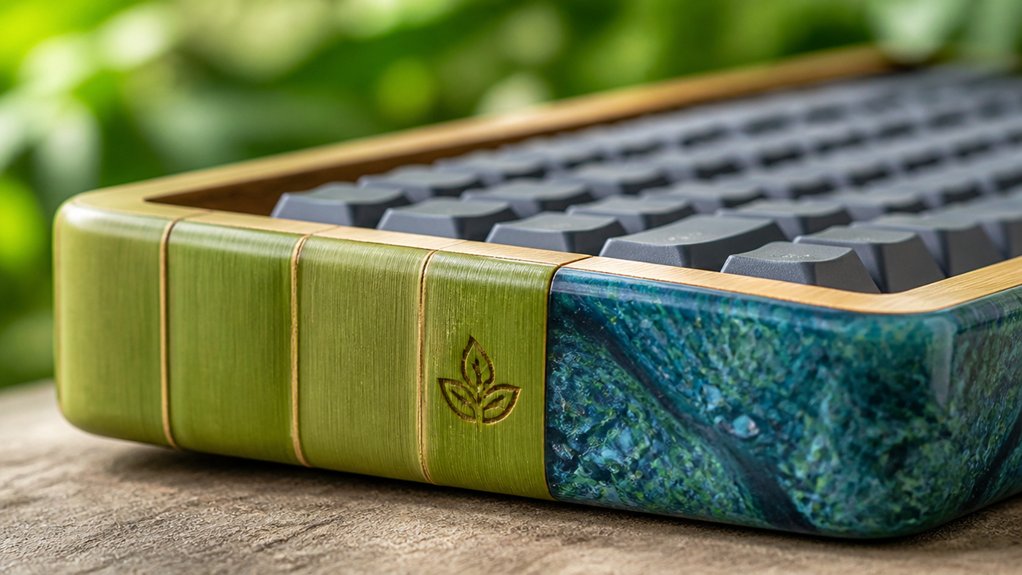
What makes a material truly sustainable for keyboard cases? Recycled plastics are a top contender. Since 2017, advanced resin formulations allow recycled plastics to achieve durability and vibrant color options comparable to virgin plastics. These materials reduce plastic waste by repurposing existing materials, lowering environmental impact.
Recycled plastics are lightweight, resistant, and capable of matching the performance of new plastics, making them ideal for keyboard cases that need both durability and eco-friendliness. Unlike materials that require extensive resource extraction, recycled plastics leverage waste streams, helping reduce landfill clutter.
When used alongside biodegradable keycaps and eco-conscious lubricants, recycled plastics contribute greatly to sustainable keyboard design. By choosing recycled plastics, you support an environmentally smarter option that balances function, aesthetics, and eco-awareness.
How Do Recycled Plastics Create Durable, Eco-Friendly Keyboard Cases?
Recycled plastics turn waste into strong, reliable materials that perform just as well as virgin plastics, supporting eco-friendly manufacturing.
Advances since 2017 have expanded color options and improved finishes, making recycled plastics more versatile for keyboard cases.
Enhancing Material Strength
Since 2017, advances in recycled plastic resins have enabled them to perform on par with virgin plastics regarding strength, making them an excellent choice for durable keyboard cases. These plastics now provide robust structural integrity essential for everyday use and long-lasting performance. Material quality and durability are further enhanced by innovations in manufacturing processes that improve the mechanical properties of recycled plastics. Incorporating recycled plastics not only extends the lifecycle of waste materials but also guarantees your keyboard case remains resilient under frequent handling. Additionally, the development of over 30 new color options demonstrates that recycled plastics can be both strong and customizable, without sacrificing durability.
Major consumer electronics industries have successfully integrated these plastics into products like keyboards, proving their ability to withstand high use. Using recycled plastics for your keyboard case supports durability and eco-consciousness, balancing strength with environmental responsibility.
Supporting Eco-Conscious Manufacturing
Advances in recycled plastics not only enhance material strength but also promote eco-conscious manufacturing practices. By repurposing post-consumer waste, recycled plastics help reduce environmental impact and decrease reliance on virgin materials.
Since 2017, progress has led to stronger recycled plastic resins available in over 30 color options, matching the durability and appearance of virgin plastics. Incorporating recycled plastics in keyboard case production greatly lowers the carbon footprint, with estimated savings of 19,000 tons of CO2 across product lifecycles. Additionally, material durability ensured by high-quality recycled plastics helps extend the lifespan of keyboard cases, making them more sustainable choices.
This shift supports circular economy principles by extending plastic lifecycles and easing end-of-life recycling. Collaborations between manufacturers and recyclers guarantee responsible sourcing and quality control, further reinforcing the eco-friendly foundation of sustainable, durable keyboard cases powered by recycled plastics.
Why Use Natural Fibers and Biodegradable Composites in Keyboard Designs?
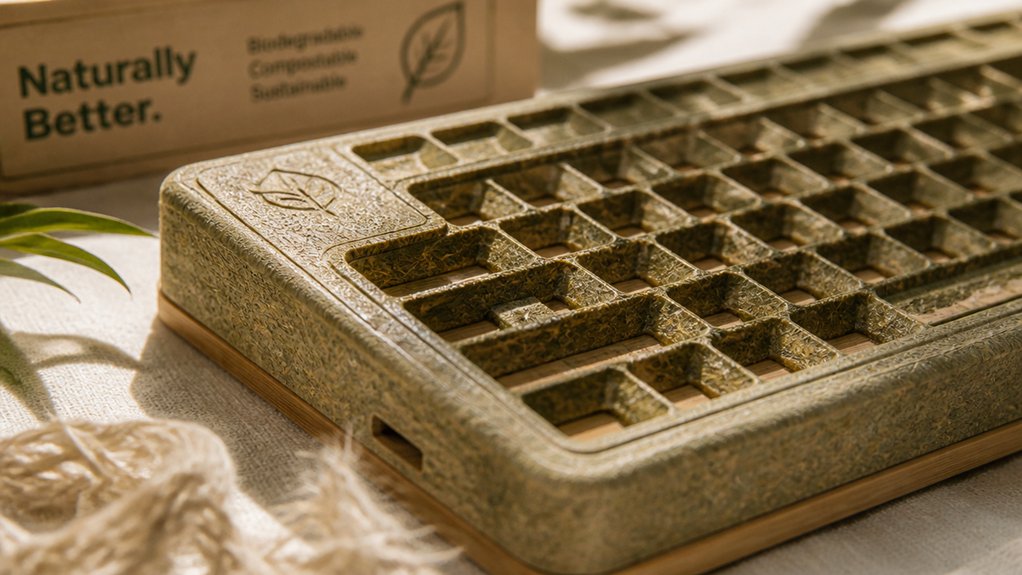
Have you ever considered how natural fibers and biodegradable composites can transform keyboard design? Using natural fibers like bamboo and wood offers renewable, eco-friendly alternatives to petroleum-based plastics, helping reduce environmental impact.
Natural fibers like bamboo and wood provide sustainable, eco-friendly options to reinvent keyboard design and reduce environmental impact.
These materials are biodegradable, meaning they naturally break down after disposal, lowering waste in landfills. Biodegradable composites decompose faster than traditional plastics, further minimizing waste accumulation.
Incorporating natural fibers not only supports sustainability but also enhances the typing experience, adding unique sound resonance and better acoustic properties.
Choosing these materials promotes responsible sourcing, reduces your carbon footprint, and aligns with circular economy principles. By opting for natural fibers and biodegradable composites, you contribute to a greener future while enjoying a high-quality, eco-conscious keyboard. Protective materials
Are Recyclable Metals Like Aluminum, Magnesium, and Titanium Good Options?
Are recyclable metals like aluminum, magnesium, and titanium good options for keyboard cases? Yes, they’re popular choices in keyboard case materials because of their durability, heat dissipation, and recyclability. Here’s what you should know:
- Aluminum is widely used, offering strength and a premium feel, especially when recycled, reducing carbon footprint.
- Magnesium provides a lightweight, strong option, but its sourcing impacts sustainability.
- Titanium is durable and corrosion-resistant but involves energy-intensive production.
- Recycled aluminum, in particular, supports eco-friendly practices, extending material lifecycle while maintaining performance.
Additionally, the material sustainability of these metals can vary depending on the sourcing process and manufacturing methods used.
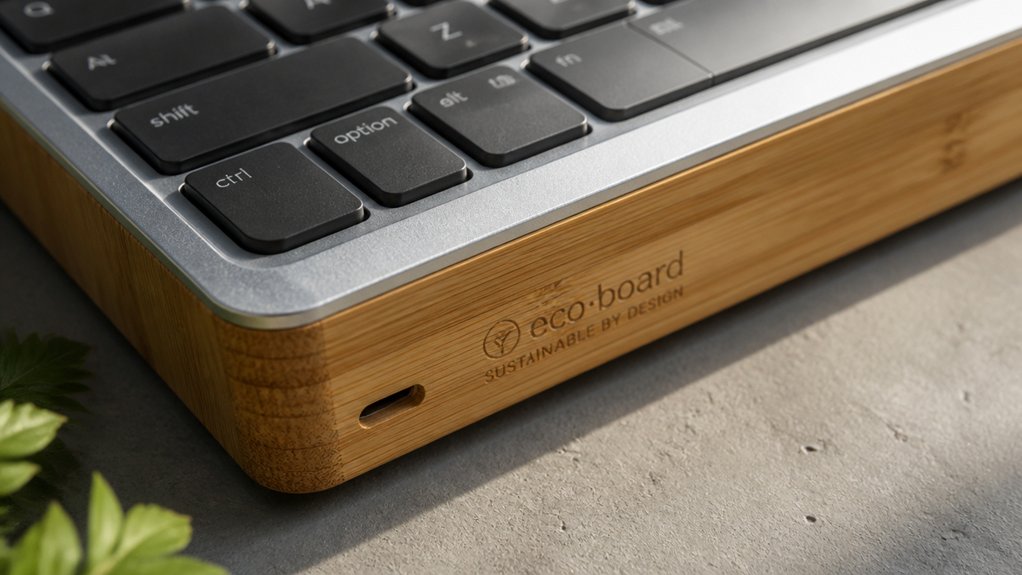
How Do Wood and Bamboo Make Green and Attractive Keyboard Cases?

Ever wondered why wood and bamboo stand out as eco-friendly choices for keyboard cases? These sustainable materials bring a natural, attractive look while reducing environmental impact. Wood offers biodegradable options and, when treated properly, becomes durable and visually striking, preserving its authentic grain. It also influences keyboard acoustics, providing warm, unique sound profiles that enhance your typing experience. Additionally, their impact resistance and aesthetic appeal make them popular among users seeking eco-friendly materials that combine style and sustainability. Bamboo is lightweight yet strong, making it easy to handle while supporting eco-friendly manufacturing practices. Its natural density contributes to distinctive tactile feedback. Both materials appeal to consumers seeking environmentally friendly tech products that blend craftsmanship with sustainability. Unlike synthetic case materials, wood and bamboo’s biodegradability helps lessen plastic waste, making them attractive, green alternatives that don’t compromise style or function.
What Role Does 3D Printing Play in Creating Sustainable Keyboard Cases?
3D printing allows you to quickly customize keyboard cases, minimizing waste by producing only what you need. With advanced materials like carbon fiber composites, it supports durability while reducing environmental impact. This technology also enables on-demand manufacturing, aligning with circular economy principles and sustainable supply chains. Additionally, the use of reliable connectors in custom cables complements sustainable design efforts by ensuring long-lasting and secure connections.
Rapid Customization Capabilities
Thanks to advanced additive manufacturing techniques, creating customized keyboard cases with rapid turnaround is now more feasible than ever. 3D printing allows you to craft complex, tailored materials with high precision—thanks to SLA technology achieving tolerances around 0.05mm.
Here are four key benefits:
- You can easily design unique geometries that match your style and ergonomic needs.
- Modern materials like carbon fiber composites and engineering-grade resins offer durability and sleek finishes, supporting sustainability.
- 3D printing reduces waste by only using the necessary materials, aligning with eco-conscious goals.
- Low startup costs and quick prototyping empower you to test and refine designs rapidly, making sustainable customization accessible and efficient.
- Additionally, the ability to select and develop sustainable materials directly influences the environmental impact of your custom build.
Material Innovation and Sustainability
Material innovation through additive manufacturing substantially advances sustainability in keyboard case production. 3D printing allows you to create complex internal geometries, reducing material waste and optimizing designs, especially when comparing to traditional aluminum cases. Additionally, utilizing foam materials in manufacturing can further enhance vibration dampening and acoustic performance, aligning with eco-friendly design principles. Modern materials like carbon fiber composites and engineering-grade resins offer durability and high-quality finishes, supporting eco-friendly design goals. Using SLA 3D printing, you can achieve precise tolerances of 0.05mm, enabling detailed customization while minimizing excess material. This process drastically cuts down on scrap, lowering environmental impact.
Additionally, 3D printing lowers investment costs and reduces prototyping time, promoting sustainable production cycles. It also facilitates rapid iteration and repair, extending the lifespan of keyboard cases and encouraging a circular economy mindset, making sustainable keyboard case production more accessible and efficient.
How Do Different Materials Affect the Sound and Feel of Your Keyboard?
Ever wondered how the choice of case material shapes the sound and feel of your keyboard? Different materials produce unique acoustic and tactile experiences. Using high-quality materials like graphite coatings or aluminum alloys can also enhance durability and influence the overall tone, especially when paired with appropriate mounting styles.
Choosing your keyboard case material deeply influences its sound and tactile feel.
Mounting styles, such as gasket versus top-mount, influence vibration and tone, blending with each material’s acoustic properties for personalized sound and feel.
How Can Sustainable Materials Extend Your Keyboard’s Life and Durability?
Using sustainable materials like recycled plastics, bamboo, and aluminum alloys makes your keyboard more durable and resistant to wear over time. A certified and heat-resistant cable sleeve, for example, helps protect internal components from environmental stressors, extending the overall lifespan of your setup. Modular designs allow you to easily repair or replace parts, reducing the need for full replacements. Plus, biodegradable keycaps and eco-friendly lubricants help maintain long-lasting, smooth functionality.
Enhanced Material Strength
Sustainable materials can greatly enhance the strength and durability of your keyboard case, freeing you from frequent replacements and repairs. This not only improves your typing experience but also guarantees your keyboard stays reliable over time.
Materials like recycled aluminum alloys, especially high-density options like 7075, offer superior durability and resist deformation. Bamboo and treated wood combine natural strength with biodegradability, providing long-lasting eco-friendly options.
Modern recycled plastic resins have been engineered since 2017 to match virgin plastic performance, increasing case strength while reducing environmental impact. Additionally, eco-friendly lubricants help preserve mechanical parts, indirectly supporting your keyboard’s overall longevity.
These enhancements make your keyboard more resilient, allowing it to withstand daily use and the test of time.
- Recycled aluminum alloys resist corrosion and deformation
- High-density aluminum alloys boost case durability
- Bamboo and wood improve natural strength
- Eco-friendly maintenance preserves components
Easy Repairability Features
Modular designs in keyboard cases made from sustainable materials make repairs straightforward, considerably extending their lifespan. These designs allow you to disassemble your keyboard easily, enabling quick component swaps without compromising durability or environmental benefits.
For instance, recycled plastics and biodegradable keycaps can be replaced individually, promoting repair over replacement. Recycled aluminum frames resist wear and damage, reducing the need for case replacements. Natural materials like treated wood or bamboo are also repairable with common woodworking techniques, maintaining their structural integrity through refinishing.
Additionally, eco-friendly lubricants and accessible mounting systems make switch replacements and maintenance simple, ensuring your keyboard remains functional longer. These features work together to maximize durability, helping you extend your keyboard’s life without compromising sustainability or performance.
Long-Term Wear Resistance
By incorporating durable, eco-friendly materials into your keyboard case, you can greatly enhance its longevity. These sustainable options offer superior wear resistance, helping your keyboard withstand everyday use and environmental factors.
Consider these materials:
- Recycled aluminum alloys like 6063, which resist corrosion and wear, extending your keyboard’s lifespan.
- Treated wood and bamboo that are durable and maintain their structure, resisting degradation over time.
- Advanced polycarbonate plastics with high structural integrity, protecting against scratches and impacts.
- Modular designs using sustainable materials enable easy repairs, reducing the need for replacement and prolonging durability.
Using eco-friendly coatings and biodegradable lubricants also reduces wear from friction, keeping your keyboard performing well longer.
What Are the Costs and Benefits of Eco-Friendly Keyboard Case Materials?
Have you ever wondered whether eco-friendly materials for keyboard cases are truly worth the investment? The case for sustainable options like bamboo and biodegradable plastics is clear: they reduce environmental impact through renewability and waste reduction while offering unique acoustic and ergonomic benefits.
However, eco-friendly cases often come with higher upfront costs, limited availability, and may lack customization options compared to traditional materials. Recycled aluminum balances durability and recyclability but consumes more energy during production and may be pricier. Polycarbonate plastic cases are lightweight, cost-effective, and environmentally friendly, providing a practical alternative that doesn’t sacrifice performance.
While natural materials like wood and bamboo give your setup a warm, aesthetic appeal, they require careful treatment for durability. Overall, eco-friendly case materials present a trade-off between initial costs and long-term environmental benefits.
What Are the Future Trends in Sustainable Materials for Keyboard Cases?
Are we on the cusp of a new era in sustainable keyboard case materials? Future trends focus on innovative manufacturing processes that improve both environmental impact and performance.
Emerging sustainable keyboard materials aim to enhance performance while reducing environmental impact through innovative, eco-friendly manufacturing.
Here’s what you can expect:
- Natural materials like bamboo and treated wood are favored for their renewable, biodegradable qualities and unique acoustic benefits.
- Advanced composite and biodegradable plastics are engineered for durability and sleek finishes, balancing performance with sustainability.
- 3D printing with engineering-grade resins and carbon fiber helps reduce waste and enables highly customizable, eco-friendly manufacturing.
- The increasing use of recycled plastics, supported by innovations such as Next Life Plastics’ high-quality resins, is shrinking the carbon footprint of keyboard case production.
These trends emphasize energy-efficient, ethical sourcing, and circular manufacturing processes that close the lifecycle loop.
Frequently Asked Questions
What Material Is Best for Keyboard Covers?
You should choose recycled plastics for a balance of durability, eco-friendliness, and variety, or opt for bamboo or wood for natural aesthetics and biodegradability, especially if you value authenticity and renewable materials in your keyboard cover.
Do Keyboards Have Microplastics?
Yes, keyboards can release microplastics as their plastic parts degrade or wear down over time. To reduce this, opt for biodegradable keycaps, recycled materials, and proper disposal methods, helping prevent microplastic pollution and extend your keyboard’s lifespan.
What Is the Best Material for a Keyboard?
Aluminum stands out as the best material for a keyboard, thanks to its durability, premium feel, heat dissipation, and recyclability. It offers a balanced blend of high performance, sustainability, and a sophisticated touch, making it ideal for most users.
What Is the Best Plastic for Keyboard Cases?
Polycarbonate is the best plastic for keyboard cases because of its excellent acoustic properties, durability, and cost-effectiveness. You’ll enjoy a deep, resonant sound, lightweight feel, and premium quality, making it ideal for long, satisfying typing sessions.
In Summary
Choosing sustainable materials for your keyboard case not only helps the planet but also guarantees durability and style. Recycled plastics, natural fibers, recyclable metals, and eco-friendly woods all offer viable options, each with unique benefits. By opting for these materials, you extend your keyboard’s lifespan and reduce environmental impact. Embracing future trends in sustainable design means you can enjoy a high-quality, eco-conscious device that aligns with your values and lifestyle.