
To effectively dampen keyboard noise, place high-density foam like Poron or EVA between the plate and PCB to reduce vibrations and metallic pinging. Use a snug layer of foam under the PCB to prevent hollow resonance, and add multiple foam layers for better sound dispersion. Proper placement guarantees switches stay stable without sacrificing feel. For more tips on quieter keyboards, stick around to discover additional solutions.
How Do Padding Materials Help Reduce Keyboard Vibrations?

Ever wonder how padding materials actually reduce keyboard vibrations? You can see how padding materials like Poron foam and EVA foam absorb vibrations by converting kinetic energy into heat, which helps reduce the resonance in the keyboard case and plate.
When you add dense, viscoelastic padding between the plate and PCB, it dampens vibrations, preventing unwanted rattling and pinging sounds. Thicker foams—3mm or more—enhance absorption, while multi-layer setups further cut down acoustic reverberations inside the chassis.
Proper padding also isolates switch impacts from the plate, minimizing the transmission of vibrations through mounting points. Plus, using non-conductive, resilient padding prevents damage to your electronics, making sure vibration dispersion stays effective for long-term sound dampening and reducing keyboard noise over time.
How to Apply Damping Layers for a Quieter Keyboard Experience?
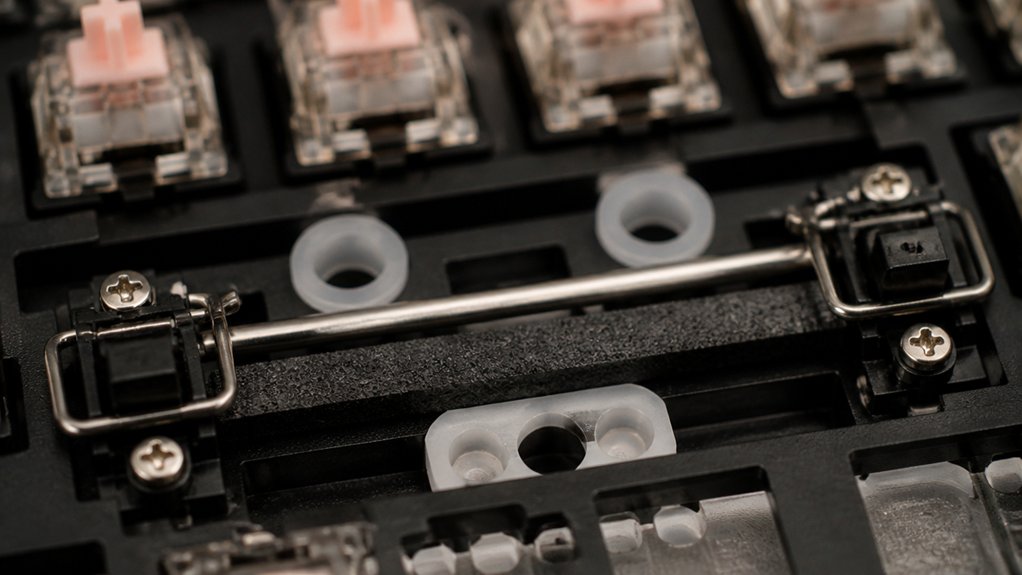
Looking to greatly reduce keyboard noise? Start by applying sound dampening foam, like Poron or EVA, between the keyboard plate and PCB. This layer minimizes vibrations and metallic pinging. Use thin, 3mm foam beneath the PCB as a backer to dampen hollow case resonance and internal echoes. Carefully position foam between the plate and PCB to block vibrations without affecting switch stability or key travel. Combining multiple foam layers, such as EVA switch foam with PCB back foam, provides balanced vibration dispersion and noise reduction. Make certain the foam fits snugly without compressing stabilizers or switches, preserving your typing experience while dampening sound.
| Foam Layer Placement | Benefits |
|---|---|
| Plate to PCB | Reduces vibrations and pinging |
| Under PCB | Mitigates hollow resonance |
| Multiple layers | Enhances overall noise reduction |
Which Underplate Cushions Are Best for Soundproofing Your Keyboard?

Choosing the right underplate cushion can greatly improve your keyboard’s sound profile by minimizing vibrations and echo. Poron foam, known for its high density and vibration dampening properties, is considered one of the best options for reducing mechanical keyboard sound and internal echo.
Using high-quality foam materials like Poron ensures better durability and consistent performance over time, preventing loss of damping effectiveness. Foam material properties such as density and elasticity are critical factors that influence noise reduction and overall acoustic performance.
EVA foam offers an affordable, effective sound absorption layer that softens keystroke noise and diminishes metallic pinging. Neoprene underplate cushions provide durable, flexible vibration isolation, effectively dampening both high- and low-frequency noises within the keyboard case.
Combining these materials in multi-layer setups enhances soundproofing by dispersing sound waves and absorbing vibrations. Properly sized and non-conductive underplate cushions not only protect the keyboard but also substantially cut down on bottom-out noise and internal echo, resulting in a quieter typing experience.
Frequently Asked Questions
How to Dampen Sound in Keyboard?
To dampen sound in your keyboard, place high-density foam like Poron or EVA between the plate and PCB, add foam sheets to reduce rattling, and use lubricated stabilizers with O-rings to quiet keystrokes.
What Is a 96% Keyboard Missing?
A 96% keyboard is missing a dedicated number pad, full-sized macro keys, a separate function row, and dedicated multimedia or system control keys. It combines navigation and editing keys, saving desk space but reducing some specific key options.
Is 84 Keys 75%?
Yes, an 84-key keyboard is typically considered a 75% layout. You’ll find it compact yet includes essential navigation and function keys, making it a versatile choice that balances size with full functionality.
Do Keyboard Sound Dampeners Really Work?
Yes, sound dampeners really work. They absorb impact, reduce vibrations, and lessen resonant noises, making your keyboard quieter. Properly installed dampeners, combined with lubricating stabilizers, greatly improve sound quality and overall typing experience.