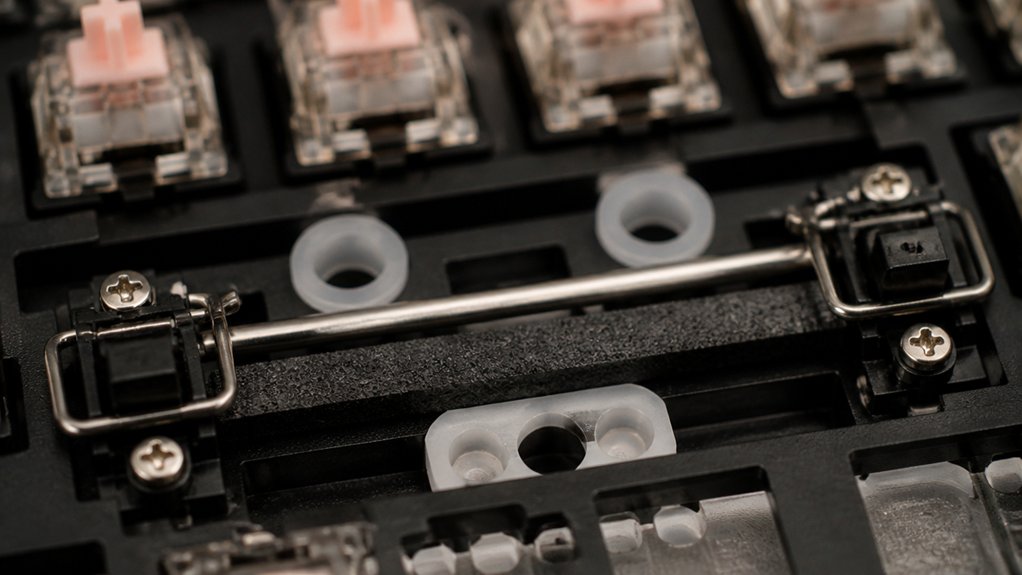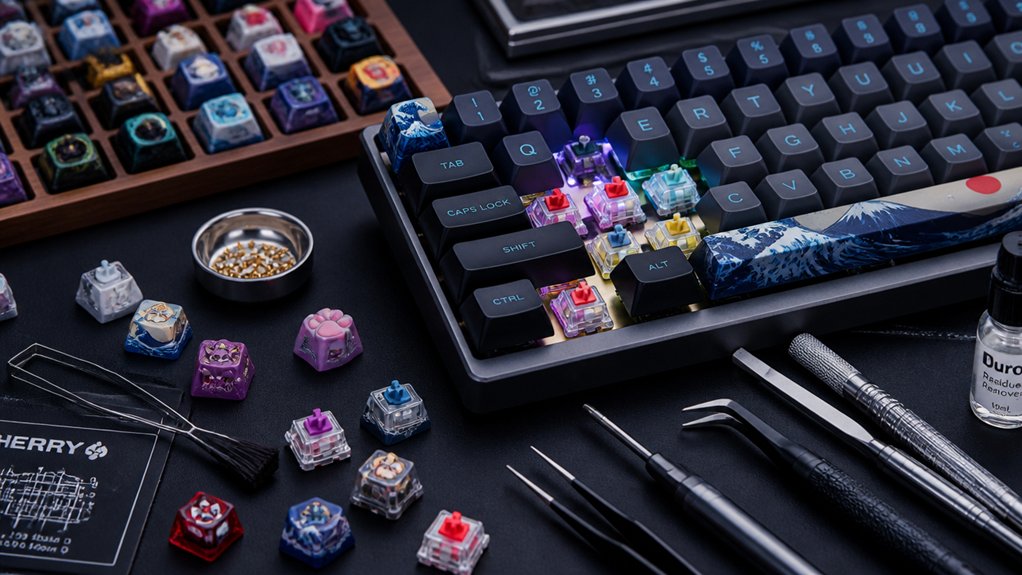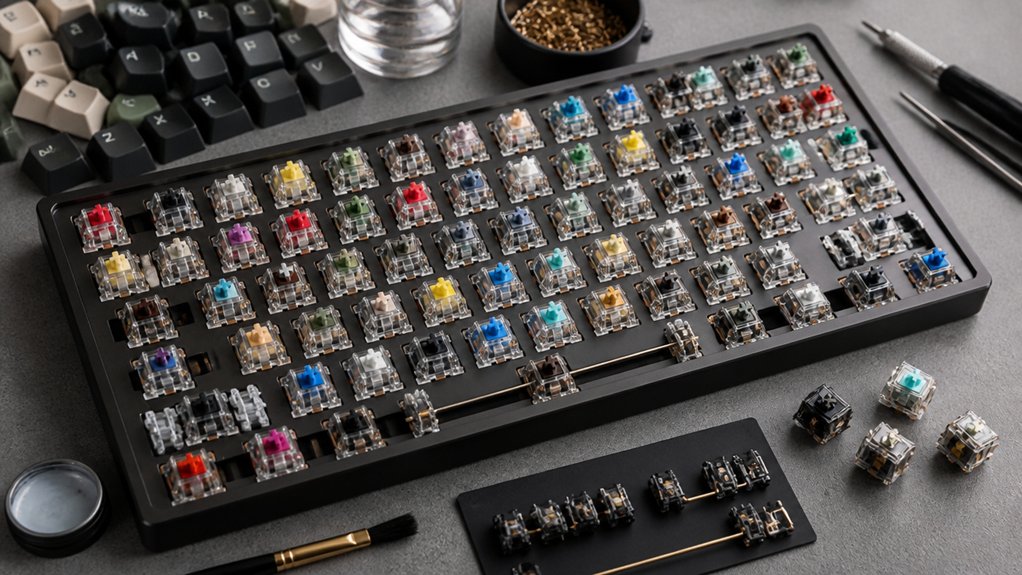

Switch films reduce sound by tightening the switch housing and filling gaps, which minimizes wobble and internal vibrations. They dampen high-frequency noises, soften clicky sounds, and can deepen the overall tone of your keystrokes. Thicker or softer films offer different effects, like more dampening or a fuller sound. Keep in mind, they mainly target housing noise and won’t eliminate bottom-out or stabilizer sounds. Want to learn how to optimize their use? Keep exploring for more tips.
Why Do Keyboard Enthusiasts Use Switch Films?
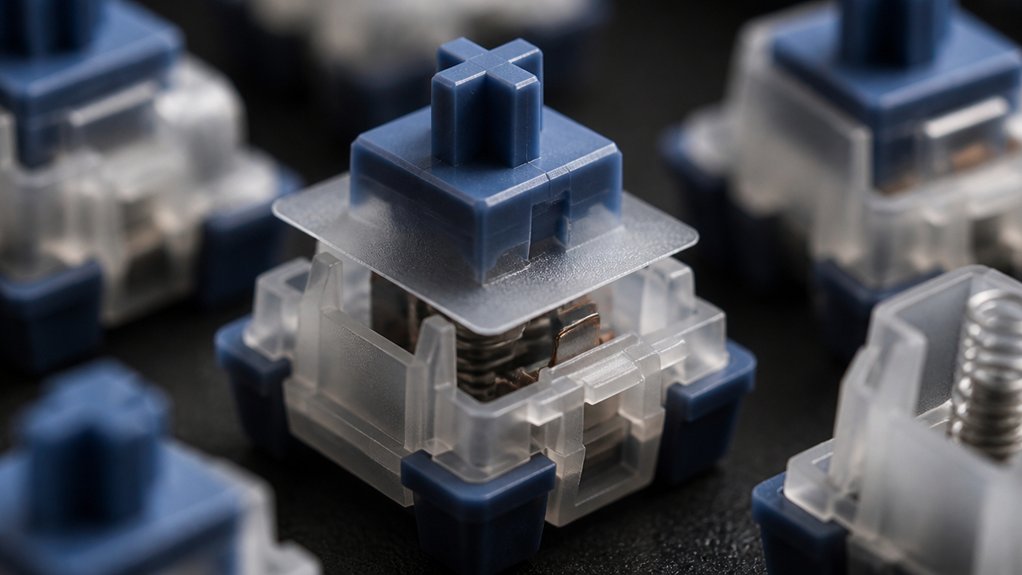
Have you ever wondered why keyboard enthusiasts often use switch films? They do it mainly to reduce wobble between the top and bottom housing of mechanical switches. This tighter fit minimizes top housing wobble, which can cause rattling and unwanted vibrations during typing. By securing the switch housing, switch films create a more stable and controlled typing experience. Additionally, different materials and thicknesses of switch films can influence the acoustic profile and overall feel, allowing users to customize their typing experience further.
They also subtly modify the sound profile, dampening internal movement noise without altering the bottom-out sound. Many users combine switch films with lubricants to further improve sound quality and reduce copper leaf rattle, resulting in deeper, more satisfying keystrokes.
How Do Switch Films Reduce Vibrations and Rattling?
You might wonder how switch films achieve such effective suppression of vibrations and rattling. Switch Films create a tight gasket-like seal between the top and bottom switch housings, preventing internal movement that causes vibrations and rattling noises.
By filling small manufacturing gaps and reducing housing wobble, these films limit micro-motions during key presses. This minimizes the secondary sounds produced by housing looseness, making the keyboard sound quieter overall.
When compressed within the switch, films dampen internal vibrations, controlling sound without affecting stem movement. Different materials and thicknesses, like Poron or MDI foam, influence how well they reduce vibrations. Additionally, selecting high-density silicone fillers can further enhance vibration absorption and sound dampening effectiveness.
How Do Film Material and Thickness Affect Keyboard Sound?
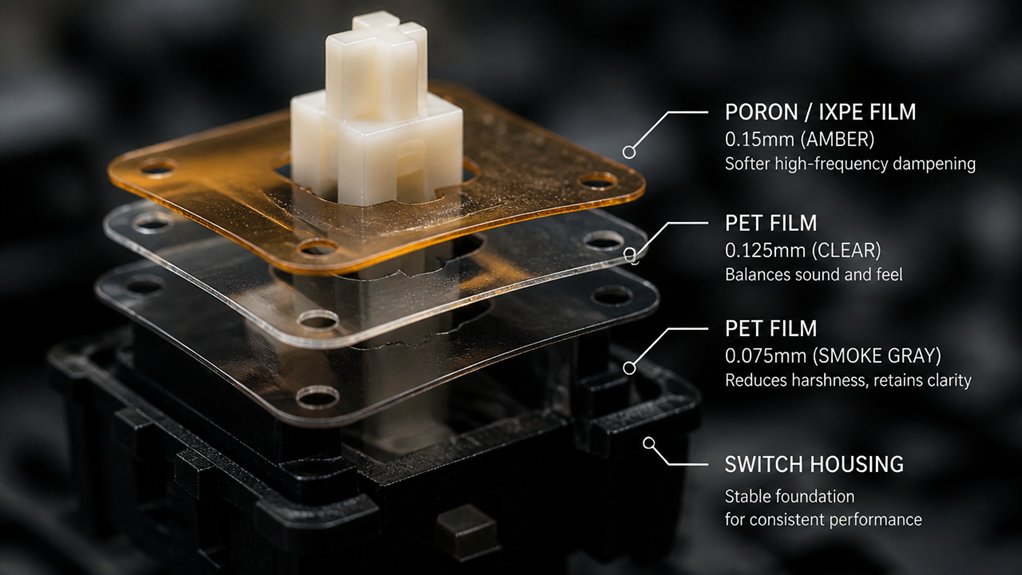
The material and thickness of switch films directly influence your keyboard’s sound profile. Thicker films add weight and deepen the tone, while softer materials absorb high-frequency noises for a gentler click. Additionally, the foam’s density and construction play a crucial role in vibration damping and overall acoustic clarity. Adjusting these factors lets you tailor your typing experience to be quieter or more resonant.
Sound Absorption Capabilities
Switch films greatly influence how sound is absorbed and controlled within a keyboard. Their ability to reduce unwanted vibrations helps create a tighter sound profile and stabilize the housing.
- Films are thin, but materials like foam or Poron substantially enhance sound absorption by dampening high-frequency noise and softening keystroke acoustics.
- Rigid films like polycarbonate (PC) press housings tightly together, reducing resonances and producing a “thockier” sound.
- The film material properties determine sound tuning—softer options (e.g., PE or foam) absorb more sound waves, lowering sharp click noises.
- The sound profile depends on the film’s thickness and material, making it essential to test different combinations to find the right balance between reducing wobble and altering the sound.
- Using high-density or specialized damping films can further optimize acoustic performance and achieve desired sound qualities.
Impact of Thickness
Thickness plays a significant role in how switch films influence keyboard acoustics. Thicker switch films add mass and improve housing stability, creating a deeper, “thockier” sound by dampening higher-pitched vibrations.
Polycarbonate (PC) films, typically between 0.125 mm and 0.25 mm, offer a harder feel and enhance noise reduction compared to softer materials like polyethylene (PE).
Thicker films, around 0.3 mm or more, can cause over-compression of switches, leading to wobble, friction noises, and compromised smoothness.
Softer films, such as Poron, focus more on sound absorption for muting high-pitched noises.
Material and thickness affect the acoustic profile unpredictably, so testing different film combinations on a few switches is essential for ideal sound tuning before full installation.
How Different Types of Switch Films Change the Acoustic Profile?
Different switch films reshape your keyboard’s sound by altering material and thickness, which affects damping and tonal qualities.
Thinner films soften sound moderately, while thicker ones add mass and reduce vibrations more substantially. Keep in mind, switch type compatibility influences how effectively each film improves your acoustic profile.
Material Impact on Sound
The material used in switch films greatly influences the keyboard’s acoustic profile, shaping the sound in distinct ways. Different switch films alter sound reduction, wobble, and typing feel based on their composition.
- Polycarbonate (PC) films, being more rigid and thicker, produce a cleaner sound with a tighter, less rattly profile, enhancing sound reduction.
- Poron and foam-based films, such as MDI foam, absorb high-pitched noises, softening keystrokes for a muted, dampened sound.
- Thicker films add mass to the switches, deepening the overall pitch and emphasizing the “thock” for a satisfying tactile experience.
- Softer films like polyethylene moderate wobble and create a subtler sound without overly dampening bottom-out noise, balancing sound and feel effectively.
Thickness and Damping Effect
Switch films of varying thicknesses have a significant impact on a keyboard’s sound profile by controlling how vibrations are absorbed and transmitted. Thicker switch films—like foam or Poron—offer strong damping, softening high-pitched keystroke noises and reducing wobble. Conversely, thinner films (around 0.125–0.150 mm, such as polycarbonate) tighten switch housings, producing a clear, “thocky” sound without muffling sound. Soft materials like polyethylene tend to moderately soften sounds and reduce wobble, while hybrid layers combine firmness and absorption for a balanced effect. Overly thick films can compress the housing excessively, causing friction and muffling the natural bottom-out sound. The choice of film thickness also influences the tactile feedback and overall typing experience. Material composition plays a critical role in how effectively the dampening is achieved; high-density materials tend to provide better vibration absorption and durability, leading to a more consistent acoustic profile.
Switch Type Compatibility
Since switch films interact directly with housing tightness and switch design, their impact on the acoustic profile varies considerably across switch types. For example:
- Polycarbonate (PC) switch films provide a harder feel and eliminate high-pitched noise, ideal for tactile switches and those with a switch top housing.
- Poron and foam-based films absorb vibrations, softening “clicky” noises in clicky switch types and reducing housing wobble.
- Thicker films (0.20mm–0.30mm), like foam or Poron, increase mass and dampen reverberations, creating deeper, “thockier” sounds for tactile switches.
- Thinner films (around 0.125mm) mainly reduce housing rattle without changing the sound much, suited for switches with minimal wobble.
- The choice of lubricant application and film thickness both play a role in optimizing sound dampening and stability.
Why Do Looser Switches Need Films More Than Tightly Fitting Ones?
Why do looser switches benefit more from films than their tightly fitting counterparts? Looser switches have more housing wobble, which causes internal vibrations and rattling sounds during typing. Switch films act like gaskets, sealing gaps in these loose housings and reducing housing wobble.
By stabilizing the switch components, films diminish rattling and secondary noise, resulting in a cleaner, more consistent typing sound. Tightly fitting switches already minimize housing movement, so adding films offers little improvement and can even complicate assembly or cause damage.
Because looser switches experience more movement and noise, switch films are especially effective for them, enhancing both sound dampening and feel. They help create a quieter, more pleasurable typing experience, making them essential for those with less snug-fitting switches.
How Placement and Installation Techniques Enhance Sound Dampening
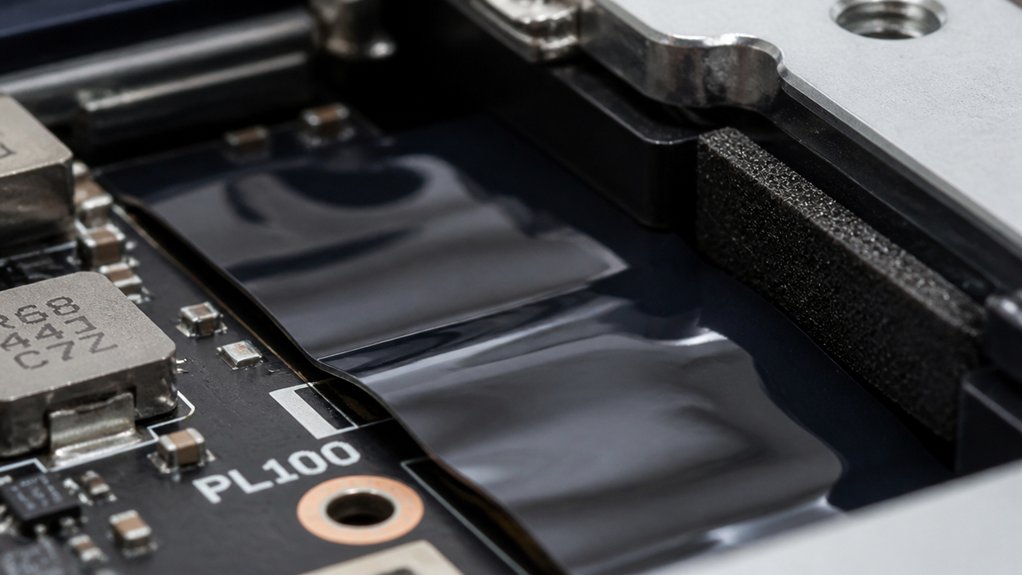
Proper placement and careful installation of switch films can make a significant difference in their ability to dampen sound.
To maximize sound dampening, focus on these key techniques:
- Place switch films snugly between the switch top and bottom housings to reduce housing movement and rattling.
- Use a switch opener and ceramic tweezers to guarantee accurate alignment, preventing friction and uneven pressure.
- Install films around the edges of the bottom housing for better vibration control.
- Pinch the non-legged sides of the top housing during resealing to improve film compression and stabilize stem wobble.
- Choosing the right dampening materials and understanding their impact can further enhance acoustic performance and soundproofing.
These steps enhance sound dampening and minimize secondary noises, helping your switches stay quieter and more stable during use. Proper installation guarantees consistent performance and improved typing experience.
What Are the Limitations of Using Switch Films for Noise Reduction?
While switch films can reduce certain noises, they have clear limitations in providing thorough sound dampening. Switch films help mainly by reducing housing wobble noise and internal vibrations. However, they can’t markedly dampen bottom-out or keycap impacts, and they don’t address stem wobble or stabilizer noise. The sound dampening effect varies depending on switch type and film material, so testing beforehand is essential. For tight switches with minimal wobble, switch films actually offer negligible benefits. Overly thick films risk over-compression, leading to increased friction and potential damage, which can worsen noise rather than improve it. Additionally, the material compatibility of switch films with different switch constructions influences their effectiveness in noise reduction.
Frequently Asked Questions
Is a Red or Brown Switch Quieter?
A red switch is quieter than a brown switch because it’s linear, producing less tactile noise, and switch films can further dampen internal rattle, enhancing sound smoothness. You’ll notice red switches sound softer and more subtle.
Does Switch Film Make a Difference?
Switch films can make a noticeable difference by reducing internal vibrations and rattling, resulting in a “thockier” sound. Your experience depends on switch type and film material, so testing a few switches is always a good idea.
Do Gamers Prefer Membrane or Mechanical?
You prefer mechanical keyboards because they offer tactile feedback, faster response, and customizable switches, enhancing your gaming experience with satisfying sounds. Although they’re louder than membrane keyboards, their durability and feel often outweigh the noise for enthusiasts like you.
Are Durock Switch Films Good?
Yes, Durock switch films are good; they effectively reduce wobble, dampen vibrations, and deepen sound quality, making your typing feel smoother and quieter. You’ll enjoy a more solid, satisfying keystroke with these high-quality films.