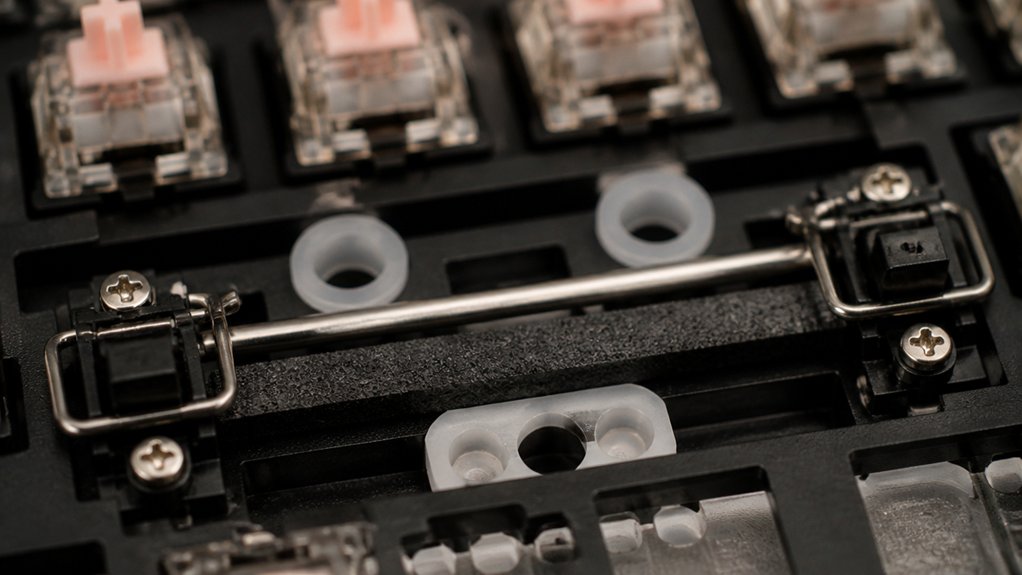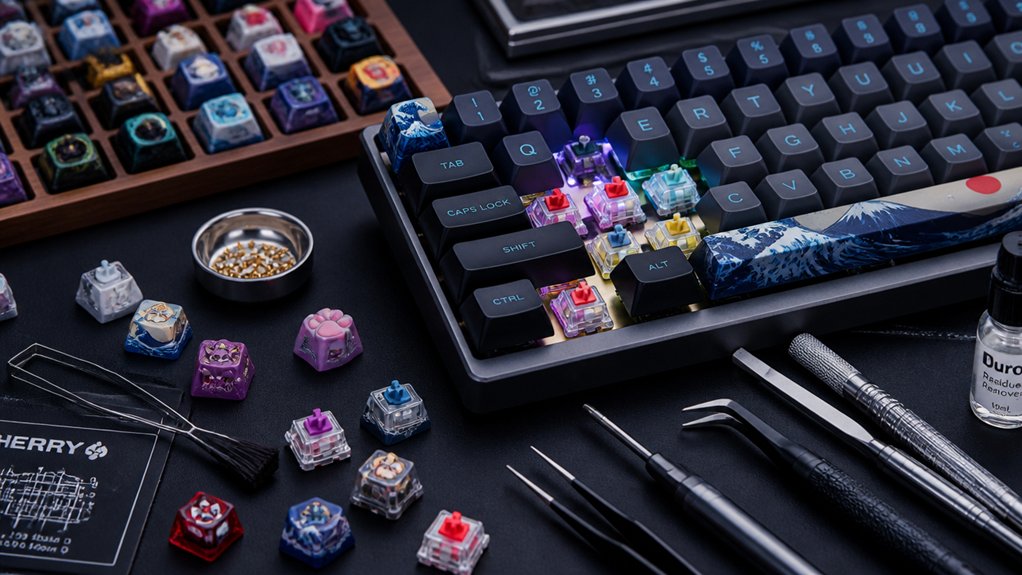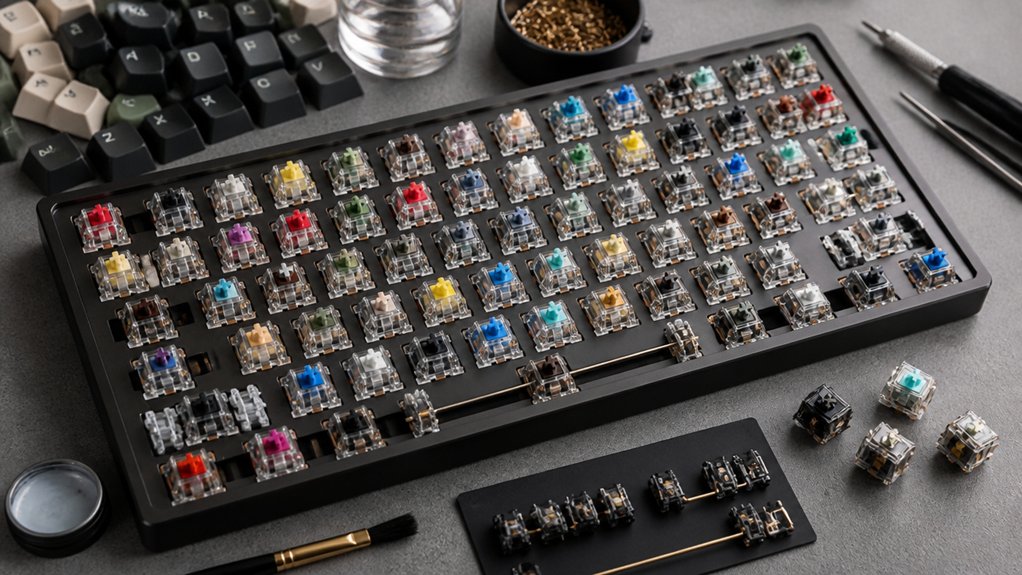

To lubricate linear switches effectively, focus on cleaning parts thoroughly before applying lubricants precisely to the stem rails, center post, and bottom housing guide rails using a fine brush. Lightly coat springs with oil and avoid excess lubricant on electrical contact points. Assemble carefully, then press switches multiple times to distribute the lubrication evenly. Keep your workspace organized and always test for smoothness and sound. If you keep practicing, you’ll master the perfect lubrication technique for silent, buttery switches.
Understanding How Linear Switch Lubrication Works
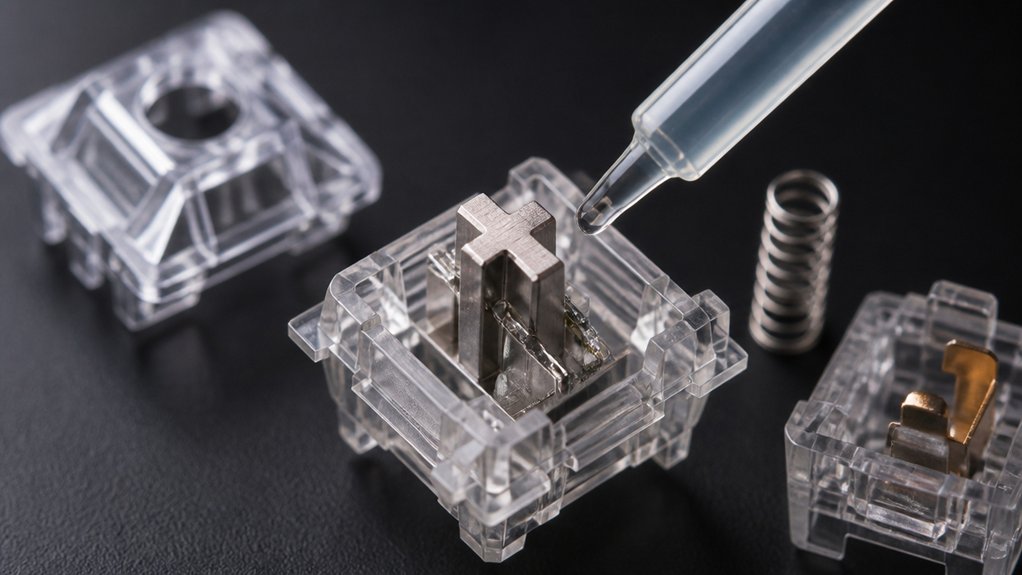
Understanding how linear switch lubrication works is key to optimizing their performance. In linear switches, lubing targets friction points like the stem walls, center post, and bottom housing rails to improve smoothness.
By applying the right lubricant, you reduce friction and prevent scratchiness, giving a buttery keystroke feel. Proper lubing diminishes spring and housing noise, helping eliminate spring ping and metallic rattle.
Applying the correct lubricant smooths keystrokes and reduces noise for a quieter, more refined typing experience.
You should apply lubricant evenly and sparingly, especially on the stem’s legs and inside the spring guide tube, to guarantee smooth transit without sluggishness. Thicker greases like Krytox GPL 205g0 can be used on sliders and springs for peak padding and responsiveness.
Bag lubing springs with oil or brush lubing housings maximizes noise reduction and overall switch performance.
Choosing the Best Lubricant for Linear Switches
Choosing the right lubricant depends on understanding its viscosity options and how they affect linear switch feel and sound. Analyzing the thermal and chemical stability of a lubricant helps ensure long-lasting performance without degradation or issues caused by temperature fluctuations. You need to take into account compatibility with your switch type to avoid any damage or performance issues. Applying lubricants properly—using thin, even layers with fine brushes—ensures smooth operation without sluggishness or over-lubing.
Lubricant Viscosity Options
Selecting the right lubricant viscosity is key to optimizing the performance of linear switches. For the best feel, higher viscosity lubricants like Krytox GPL 205g0 are ideal, offering a buttery smooth experience while reducing friction efficiently. Compatibility with various switch stems ensures that the lubricant performs well across different switch types and brands. Thick greases maximize smoothness for linear stems and housing sliders without dampening feedback. Krytox GPL 205g0, a favorite among enthusiasts, guarantees that your switch feels sleek and responsive. While oils like Krytox 106 are an option, they typically provide less smoothness and are better suited for springs or lighter lubrication needs. Tribosys 3204 serves as a versatile middle ground, balancing ease of application and smoothness.
Compatibility With Switch Type
The compatibility of lubricants with different switch components greatly influences their effectiveness and the overall feel. For linear switches, thicker greases like Krytox GPL 205g0 are ideal for lubricating the stem and housing rails, ensuring a smooth keystroke and reducing friction. Krytox 106 oil offers versatility, perfect for lubricating springs and stem parts without excessive slipperiness. Be cautious when lube the stem legs; lighter application may be preferred for faster actuation. Lubricants’ compatibility depends on switch design and desired feel. Use the table below to guide your choices:
| Switch Part | Recommended Lubricant |
|---|---|
| Stem and Housing | Krytox GPL 205g0 |
| Spring | Krytox 106 oil / Tribosys 3204 |
| Stem Legs | Light grease or skip |
| Spring ping | Krytox GPL 105 / Tribosys 3204 |
Additionally, understanding factors such as material compatibility is important to prevent damage and ensure long-term performance.
Application Techniques and Tips
Applying the right amount of lubricant is essential to achieve a smooth and responsive linear switch feel. When lubing linear switches, use a fine synthetic brush (size 00) to precisely apply high-viscosity greases like Krytox GPL 205g0 or Tribosys 3204.
Focus on the stem rails, center post, top housing, and bottom housing rails, ensuring even coverage without over-lubing, which can cause sluggish keys. For springs, bag lubing with light oils like Krytox 105 or Tribosys 3204 reduces noise while maintaining switch responsiveness. Additionally, pre-lubricated switches are designed to provide immediate smoothness, making lubing steps easier for beginners.
Make sure to evenly coat all friction points, including the stem legs and housing contact areas, for consistent smoothness throughout the switch travel. Always test a few switches first to adjust lubricant amounts before finishing the entire keyboard.
Preparing Your Switches for Lubrication
Before you start lubrication, it’s vital to carefully prepare your switches to guarantee the best results. Begin by using a switch opener to fully disassemble each switch, separating the top housing, stem, spring, and bottom housing. This gives you access to all lubrication points.
Next, clean off residual factory lube with isopropyl alcohol and a soft brush or cloth—it secures a consistent application and smooth operation later. Keep your components organized in small containers or trays to prevent loss and streamline the process.
Prepare a clean, well-lit workspace with your tools at the ready, including fine synthetic brushes, tweezers, and a stem holder. Proper preparation lays the foundation for effective lubrication and a long-lasting typing experience.
Lubricate the Switch Spring for Quieter Operation
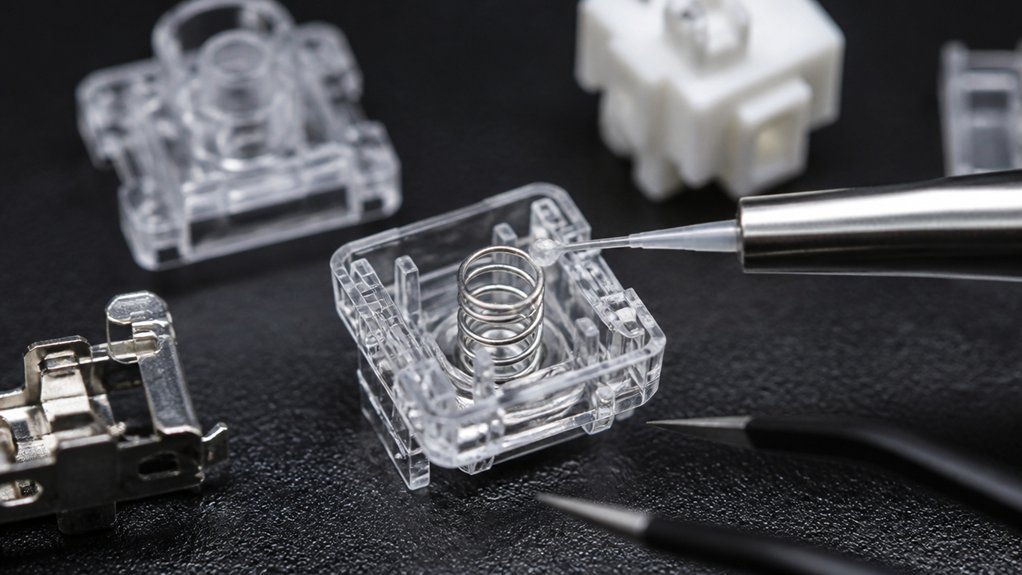
Lubricating your switch springs is essential for achieving quieter keystrokes, especially if you want to minimize spring ping and rattling sounds.
Bag lubing springs with a switch lubricant like Krytox GPL 105 or Tribosys 3204 creates a smooth, even coating that reduces spring noise. Applying lubricant with a fine brush along the entire spring length, especially the top and bottom coils, helps minimize spring-related noises without affecting tactility.
A light coat is all you need—typically around 0.1-0.15 mL per 100 springs—since heavier greases like Krytox 205g0 can be difficult to spread evenly and slow down the switch. Ensuring both ends of the spring are well-lubricated helps reduce friction and rattling during keypresses, creating a quieter typing experience. Pre-lubrication in switches significantly enhances smoothness and consistency, making your gaming and typing sessions more enjoyable.
Apply Lubricant to the Bottom Housing Guide Rails
Before applying lubricant to the bottom housing guide rails, verify they’re clean and free of debris using proper cleaning techniques.
Choose a suitable, high-quality grease like Krytox GPL 205g0, and apply it with a fine synthetic brush for maximum precision.
Press the switch multiple times afterward to evenly distribute the lubricant and achieve smooth, responsive keystrokes.
Proper Rail Cleaning Techniques
To guarantee ideal lubrication, start by thoroughly cleaning the switch housing’s bottom housing guide rails with isopropyl alcohol and a microfiber cloth or cotton swab. This removes factory residue and debris, securing peak lube adherence. Use a fine synthetic brush (size 00) to apply a thin, even layer of a thick grease lubricant like Krytox GPL 205g0, focusing on the rails while avoiding the metal contact leaf. Lubricate along the stem travel direction to guarantee smooth keypresses and reduce friction. Excess lubricant creates a whitish residue; start with minimal amounts and test, adding more gradually. Proper cleaning prevents gunk buildup and secures consistent switch performance. Additionally, selecting a high-purity IPA ensures quick evaporation and residue-free cleaning, which is vital for maintaining switch longevity.
Suitable Lubricant Selection
Choosing the right lubricant for the bottom housing guide rails directly impacts the overall feel and performance of your linear switches. For switch lubing, Krytox GPL 205g0 grease is preferred due to its thicker viscosity, which enhances smoothness and reduces scratchiness. Applying a thin, even layer on the guide rails minimizes friction where the stem slides, delivering a buttery keystroke without causing sluggishness. Use a fine synthetic brush (size 00) for precise application, avoiding excess buildup that could mute switch response. Lubricating the guide rails consistently in one direction guarantees uniform coating, preventing an uneven switch feel or sound. Additionally, selecting appropriate lubrication techniques ensures optimal performance and durability of the switches over time.
Application Precision and Method
Applying lubricant to the bottom housing guide rails requires careful precision to guarantee peak switch performance. Use a fine synthetic brush to apply a thin, even layer of lubricant like Krytox GPL 205g0 along the guide rails, avoiding contact leaves to prevent actuation issues. Before applying fresh lube, wipe off any factory lubricant residues to maintain consistency. Focus on coating only the rails to reduce friction and scratchiness, which improves key travel smoothness. Be cautious not to use excess lubricant, as it can cause sluggish key action. Start with a minimal amount and test the switch. If needed, add more lubricant gradually to achieve a smooth, buttery feel. Proper application technique guarantees the best switch performance and longevity. Additionally, paying attention to actuation force balance enhances responsiveness and comfort during prolonged use.
Lubricate the Switch Stem for Smooth Travel
Lubricating the switch stem is essential for achieving smooth travel and a satisfying keystroke. Proper lubrication minimizes scratchiness and guarantees a seamless typing experience.
When working with linear switches, you should apply lube carefully to the switch stem, focusing on the rails and slider surfaces. Use a thin layer of a thick grease like Krytox GPL 205g0 to reduce friction and enhance smooth movement. Be sure to cover both the sides and the center post without creating excessive buildup, which can cause sluggish keypresses.
Utilizing a fine synthetic brush (size 00) helps control application precisely. Additionally, lubricating the stem legs can further smooth the keystroke, but it’s optional. Choosing high-quality lubricants and applying them correctly directly impacts the switch’s durability and lifespan.
After applying, press the stem repeatedly to distribute the lube evenly and test for smooth travel.
How to Apply Lubricant Evenly Using a Brush
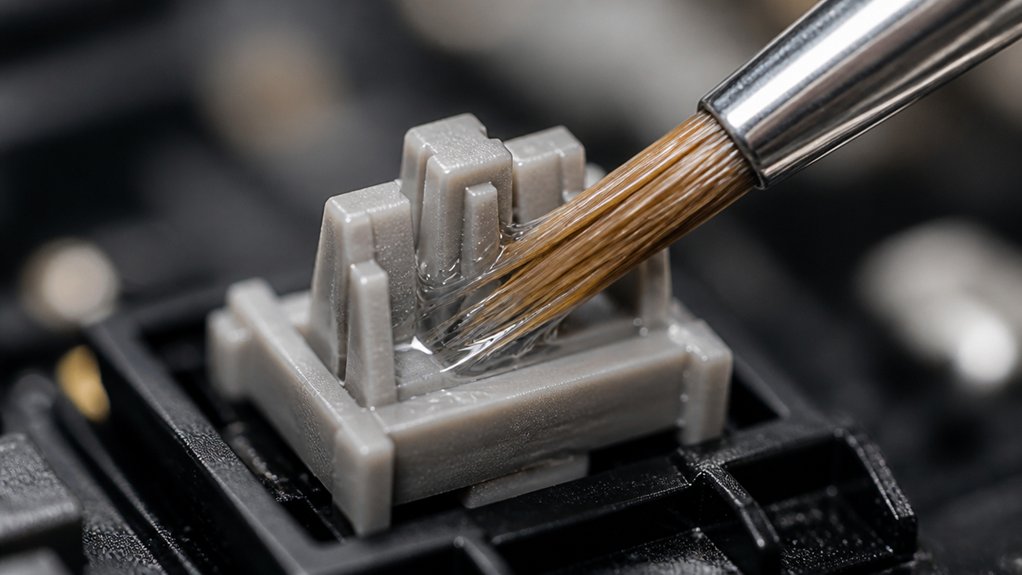
Choose a fine synthetic brush, like size 00, to apply thin, even layers of lubricant precisely on the critical contact points.
Keep your strokes consistent and gentle, brushing in one direction to avoid excess buildup or sluggishness.
Afterward, press the stem several times to guarantee even distribution and smooth operation.
Selecting the Right Brush
Have you ever noticed how the quality of your lubricant application depends heavily on the brush you use? Choosing the right brush is essential for effective switch lubrication, especially with linear and tactile switches.
A fine synthetic brush size 00 offers maximum control, helping you apply switch lubrication accurately to switch components. It allows you to target slider rails, stem sides, and bottom housing contact points while avoiding excess lube.
Use the brush to spread a thin coat of lubricant evenly, brushing in a consistent direction. Regularly cleaning the brush prevents buildup, ensuring smooth, uniform application.
Applying Thin, Even Layers
Using a fine synthetic brush, preferably size 00, helps you apply lube in thin coats across switch components.
Focus on applying a thin, controlled layer that covers the stem rails and housing sliders evenly. Use controlled horizontal strokes to prevent over-lubing, which can cause a whitish appearance and sluggish response.
Start with a minimal amount of lube, guaranteeing enough lube is applied only where high-friction areas like stem rails, stem center posts, and bottom housing rails need it. Avoid contact with switch legs and contact leaves.
After applying, press the switch several times to distribute the lubricant evenly. This guarantees the lube is evenly distributed and enhances smoothness without dulling tactility or causing sluggishness.
Reassemble and Test Your Lubricated Switches
Once you’ve lubricated the switch components, reassemble your lubricated switches carefully by placing the spring onto the bottom housing post, inserting the stem with prongs facing the metal leaf, and snapping the top housing evenly into place. This guarantees smooth movement and reliable contact.
After reassembling, press the switch several times to help distribute the lubricant evenly across moving parts. Conduct a sound and feel test on multiple switches to verify that the lubrication produces the desired smoothness and sound quality without sluggishness or scratchiness.
If the switches feel too heavy, sticky, or sound off, adjust the lubricant amount or technique before proceeding. Make sure the contact leaves stay free of lubricant during reassembly to maintain consistent responsiveness.
- Verify consistent keystroke feel across multiple switches
- Adjust lubrication to optimize sound and feel
- Observe switch responsiveness during testing
Common Mistakes to Avoid When Lubricating Precision Switches
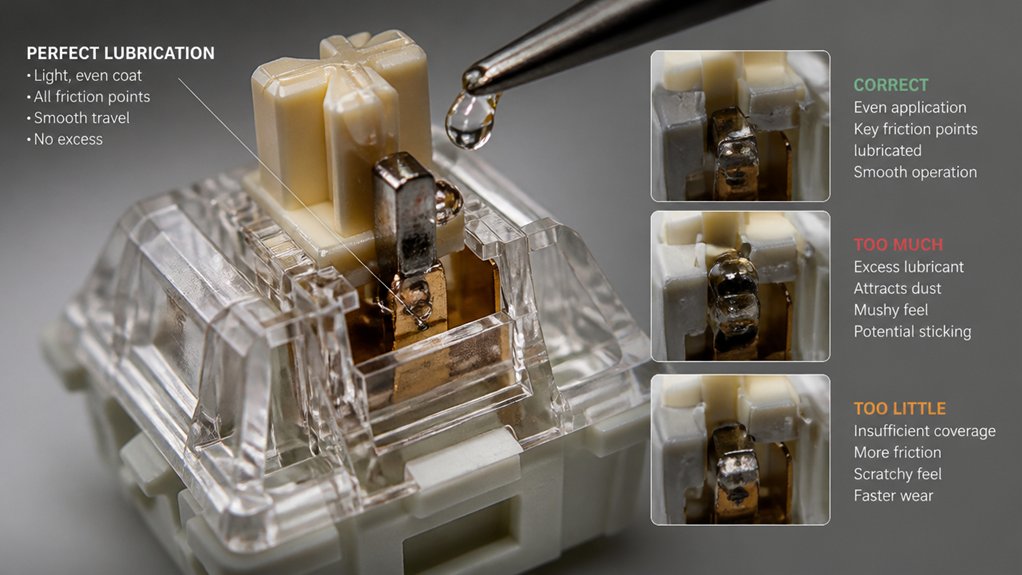
Proper reassembly guarantees your switches feel smooth and respond reliably, but even small missteps during lubrication can cause issues.
When lubing your switch, avoid using too much lube, especially on contact points, housing, and stem rails. Excessive grease, like Krytox 205g0, can make the key feel mushy and sluggish.
Be cautious not to apply lubricant to the contact leaf or electrical parts to prevent missed keystrokes.
When applying lubrication, focus on the side of the stem and the inside of the housing, using a fine brush to guarantee precise, thin layers.
For linear switches, don’t lube the stem legs—just the rails and sliders.
Always test a few switches after lubing to check for uneven application or excess lube before completing the process for all switches.
Maintaining and Re-Lubricating Your Switches for Long-Term Performance
To keep your switches performing smoothly over time, regular maintenance and re-lubrication are essential. Re-lubricate your lubed switches every 6 to 12 months, or when you notice increased friction, scratchiness, or noise.
Before re-lubing, thoroughly clean the switches with isopropyl alcohol and remove old lubricant residues to guarantee an even application and prevent buildup.
Use a thick, smooth lubricant like Krytox GPL 205g0 on stem rails and housing sliders to restore their characteristic smoothness without sluggishness. Lightly re-lube springs with Krytox GPL 105 or Tribosys 3204 via bag lubing to reduce spring noise and maintain silent operation.
Frequently Asked Questions
What Is the Best Lube for Linear Switches?
You should use Krytox GPL 205g0 for linear switches because it provides a smooth, buttery feel and reduces scratchiness, especially when applied to stem rails and contact points, enhancing overall switch performance and feel.
Do Linear Switches Need to Be Lubed?
Linear switches don’t inherently need lubrication, but lubing them improves smoothness, reduces scratchiness, and dampens noise. If you want a more consistent, premium typing experience, customizing with lubricant can make a noticeable difference.
Do Gamers Prefer Membrane or Mechanical?
Gamers generally prefer mechanical switches over membrane for their superior tactile feedback, faster response times, and durability, which enhance gaming performance. Membranes are quieter and cheaper but lack the precision and longevity that motivate gamers to choose mechanical options.
What Can I Use to Lube My Switches?
You can use Krytox GPL 205g0 grease for stem and housing lubrication, Tribosys 3204 for stems and springs, and Krytox GPL 105 or light oils for springs. Brush on thin layers for precise, smooth, responsive switches.