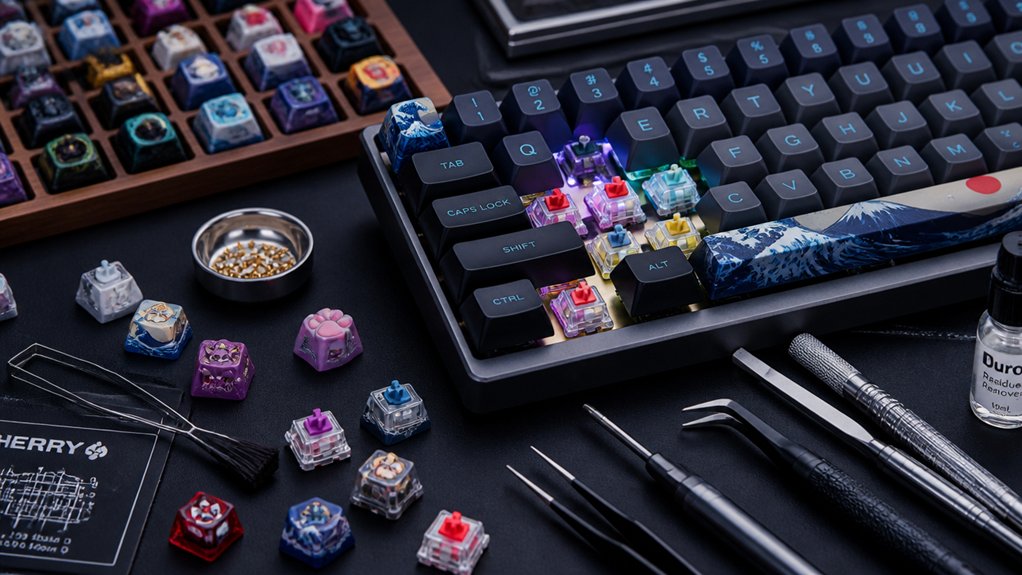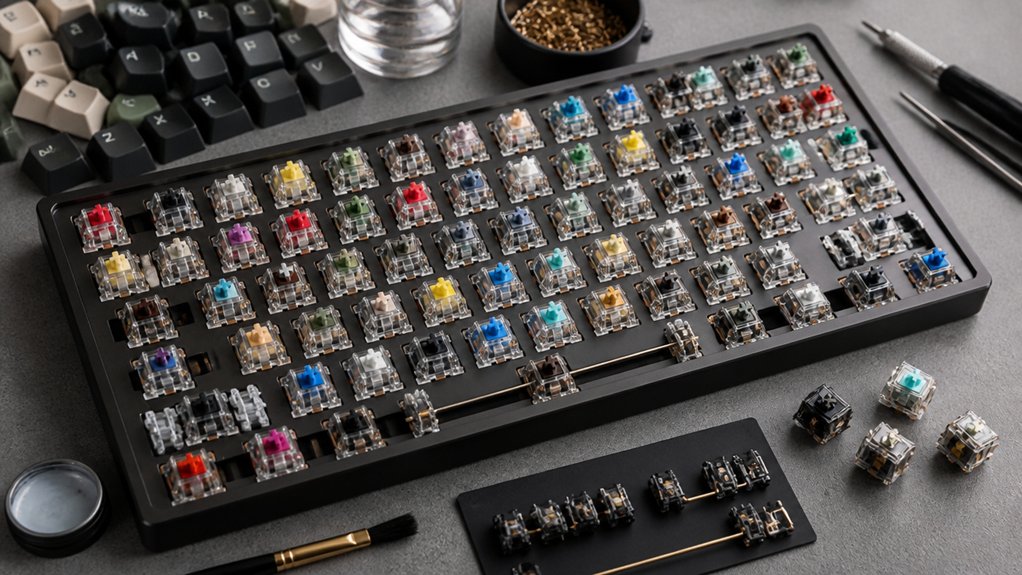

To clean switches before lubing, start by safely disassembling your switches using the right tools, like a switch opener and puller, and keep track of all parts. Use 90%+ isopropyl alcohol to thoroughly clean stems, springs, and housings, avoiding soaking housings to prevent damage. Dry everything completely for at least 8 hours to guarantee no moisture remains. For more detailed tips on proper cleaning techniques and tools, continue exploring to get the best results.
Why Cleaning Your Switches Before Lubricating Is Essential
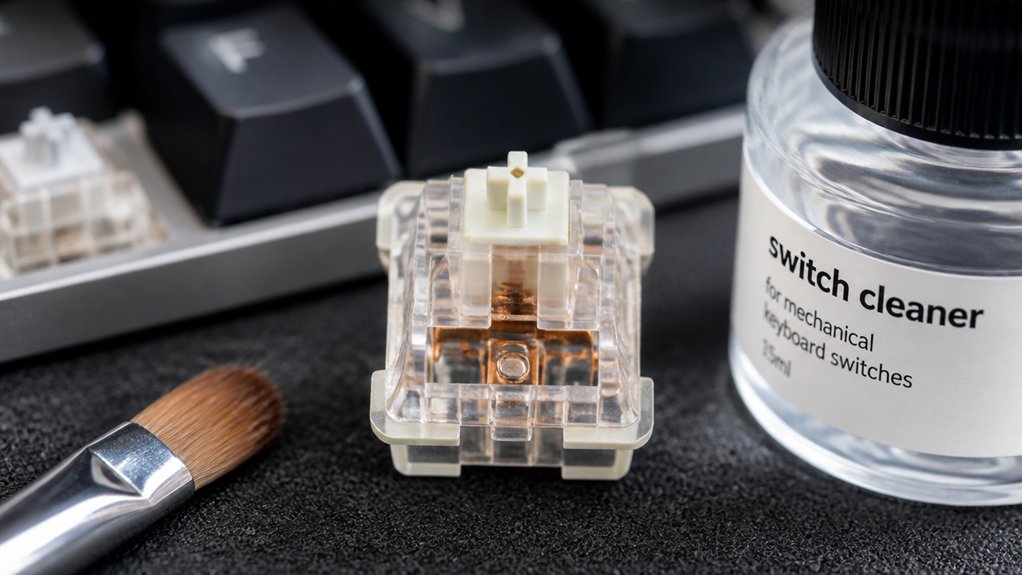
Cleaning your switches before lubricating is essential because it directly affects how well the switches perform. Using a proper cleaning agent, like 90% or higher isopropyl alcohol, helps remove dust, debris, and degraded lube from mechanical keyboard switches. When you disassemble switches with a switch opener, you can access and thoroughly clean each switch part, including contact leaves, which are vital for proper contact. Ensuring switches are thoroughly cleaned prevents stick keys, uneven tactility, and unwanted noise. Residual dirt and old lubricant can increase friction, causing faster wear. Proper cleaning residue-free evaporating cleaners extends the lifespan of your switches and maintains smooth, consistent keystrokes, making lubed switches perform at their best without compromising their delicate components. After cleaning, dry all parts completely to prevent corrosion.
How to Disassemble Mechanical Switches Safely for Cleaning
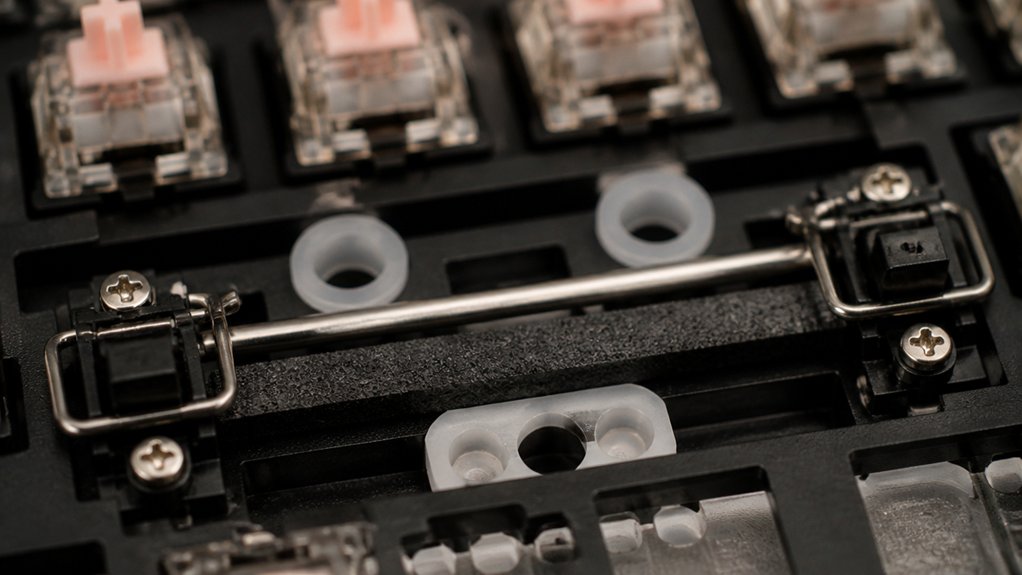
Before you start disassembling your switches, unplug your keyboard and take photos of the key layout. Carefully remove keycaps with a puller, then use a switch opener like the KeebsForAll Switch Opener to separate the switch. Gently lift the top housing from the bottom housing to access the internal parts. During disassembling, pay attention to the leaf and other components, handling them carefully to avoid damage. To ensure compatibility and prevent damage, use a reliable switch opener with high build quality and durability, especially if you plan to mod multiple switches. If your switches are hot-swappable, use a switch puller to extract each switch; if soldered, desolder them first. Organize all parts in small containers for easy reassembly.
Best Methods to Remove Old Lube and Achieve a Clean Switch Surface
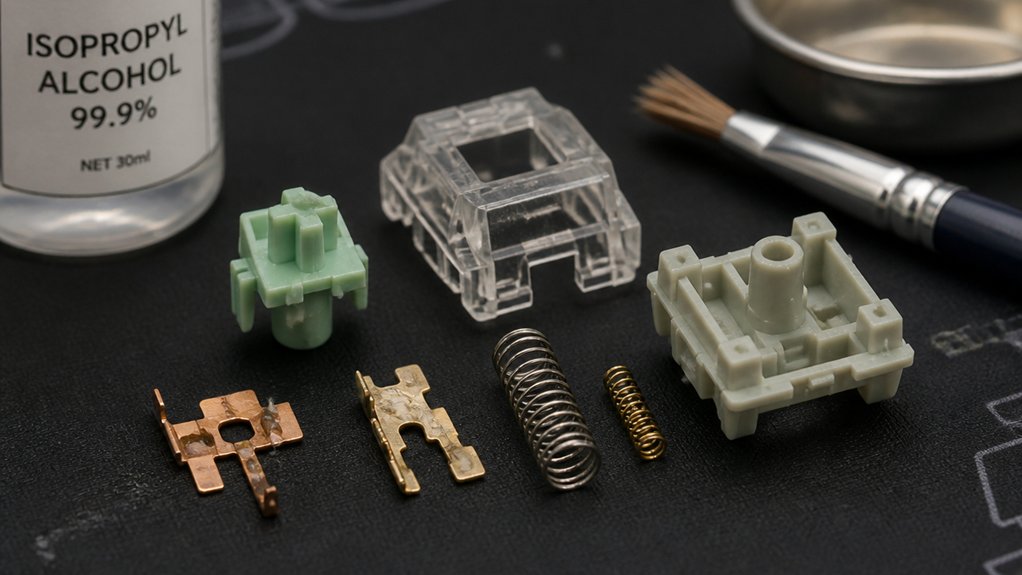
Wondering how to effectively remove old lubricant and achieve a pristine switch surface? Start by disassembling switches carefully with a switch opener, separating stems, springs, and housings.
To remove factory lube or old switch lube, soak stems and springs in isopropyl alcohol (90% or higher) for 3-5 minutes or use an ultrasonic cleaner with mild soap for thorough cleaning. Avoid soaking housings to prevent discoloration.
Use high-density cotton swabs and lint-free microfiber cloths to wipe away stubborn residue. Manually scrub parts of the switch, especially the stem holder, to guarantee all old lube is gone, improving adhesion for future lubing switches.
After cleaning, let all parts dry completely for at least 8 hours, making certain no moisture remains that could impair new switch lubes. Selecting the appropriate purity level of IPA, such as 99%, ensures quick evaporation and residue-free results.
Frequently Asked Questions
How to Clean Pre-Lubed Switches?
To clean pre-lubed switches, gently wipe stems with lint-free swabs dipped in 90% isopropyl alcohol, avoiding soaking, then allow parts to dry for at least 8 hours. Use multiple passes for thorough cleaning without damaging sensitive materials.
Can You Use WD40 to Lube Switches?
No, you shouldn’t use WD40 to lube switches. It’s not designed for that purpose, can damage plastics, attract dirt, and cause gummy feel. Use proper keyboard lubricants like Krytox or Tribosys for smooth, lasting performance.
What Do I Need to Lube My Switches?
You need high-purity isopropyl alcohol for cleaning, a durable switch opener for disassembly, fine lube brushes for precise application, quality lubricants like Krytox GPL-205 or Tribosys 3204, and small soft brushes or microfiber cloths to improve your lube process.
How to Lube a Switch Without Opening It?
You can lube a switch without opening it by carefully applying a thin lubricant through the housing gaps using a fine applicator or needle. Repeatedly press the key to distribute the lube, avoiding over-application for smooth, reliable performance.