
Optimizing keys on your 65% mechanical keyboard improves stability, reduces noise, and makes your typing more consistent. By properly lubricating stabilizers and fixing misalignments, you’ll prevent wobble, rattling, and key chatter. This not only enhances your typing experience but also prolongs your keyboard’s lifespan. If you want smoother, quieter, and more reliable performance, mastering stabilizer maintenance is essential. Keep going to discover how proper tuning can transform your setup.
Why Stabilizers Are Crucial for a Stable Keyboard Feel

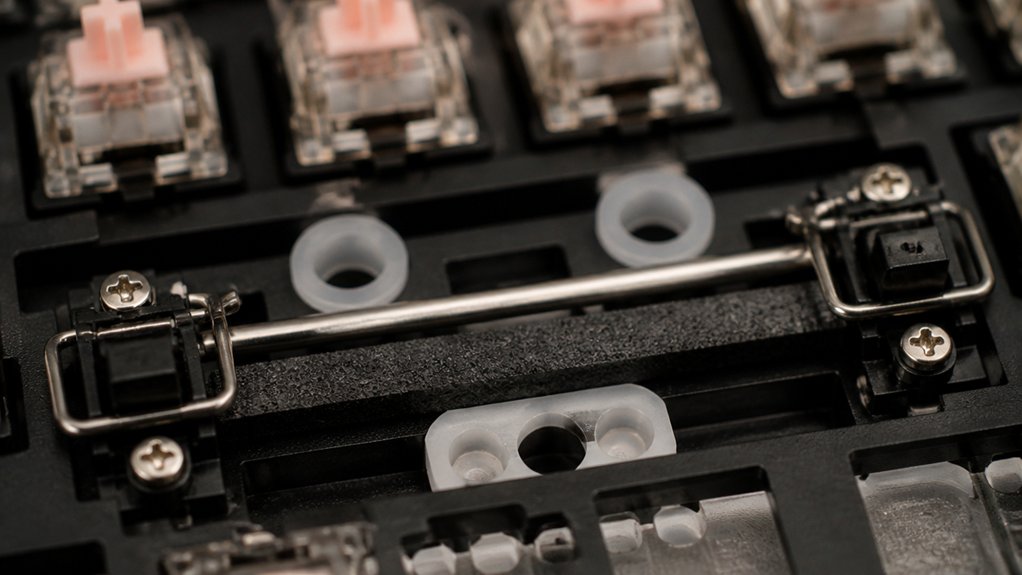
Stabilizers are essential because they guarantee larger keys like the spacebar, shift, enter, and backspace feel stable and consistent during typing. In mechanical keyboards, especially 65% keyboards, stabilizers help reduce key wobble and noise, ensuring a smooth typing experience. Properly aligned and lubricated stabilizers prevent rattling and clacking sounds, improving overall keyboard quality. Plate-mounted stabilizers are more straightforward to install and maintain, making them popular for 65% boards. High-quality stabilizers minimize key resistance inconsistencies, vital in compact layouts where a few keys handle a lot of responsibility. If you neglect stabilizer maintenance, keys may become unresponsive or noisy, diminishing the accuracy and comfort that define a good mechanical keyboard. Without stabilizers, large keys won’t feel solid or reliable. Additionally, these stabilizers often incorporate features such as pre-clipped stems, wire hooks, or dampening pads to further enhance their performance for a rattle-free experience.
How Stabilizers Work in a 65% Mechanical Keyboard
In a 65% mechanical keyboard, stabilizers are essential components that support larger keys such as the spacebar, shift, and enter, ensuring they press evenly and feel stable under your fingers. They sit beneath these keys, preventing wobbling or tilting. There are two main types: plate-mounted, attached to the metal plate, and PCB-mounted, fixed directly to the circuit board. Properly aligned and lubricated stabilizers reduce rattling and noise, enhancing your typing experience. If you’re using hot-swappable switches, maintaining stabilizers becomes even easier, allowing quick swaps without affecting stability. Additionally, choosing stabilizers with elastic support bases can further absorb vibrations and dampen sound, improving overall performance.
Common Stabilizer Problems and Their Impact on Typing

Stabilizer issues like rattling sounds and wobbling can seriously disrupt your typing experience on a 65% keyboard. Misalignment and poor installation often cause uneven keypresses and contact problems, reducing accuracy. Lubricating stabilizers with specialized compounds can smooth out these issues and improve overall performance. Using high-quality kits like the DUROCK or Gateron stabilizers can also help reduce noise, making your typing feel more crisp and satisfying.
Stabilizer Rattling Sound
Ever wonder why those loud rattling sounds sometimes occur when you’re typing on a 65% mechanical keyboard? This is often due to stabilizer rattling, caused by misaligned or poorly lubricated stabilizers under larger keys like the spacebar or shift.
Common issues include:
- Debris trapped beneath stabilizers, increasing friction and noise.
- Manufacturing variances causing loose or uneven stabilizer fit.
- Insufficient or dried-out lubricant leading to increased vibration and rattling.
Plate-mounted stabilizers are typically noisier than PCB-mounted ones because they lack secure fixing points. Proper alignment and lubrication—using products like Krytox or Tribosys—are key to reducing stabilizer rattling, enhancing your keyboard’s sound and feel.
Maintaining high-quality stabilizers with precision-designed components can significantly improve stability and sound consistency.
Misalignment Causes Wobble
Misalignment of stabilizers is a common culprit behind wobbling keys on 65% keyboards, directly impacting your typing accuracy and comfort. When stabilizers aren’t properly aligned during installation or have loose clips, key wobble occurs, especially on larger keys like spacebar, shift, and enter. This wobble not only makes typing less precise but also increases noise and decreases smoothness during long presses. Additionally, using compatible stabilizers can help reduce the likelihood of misalignment and wobbling issues.
In a 65% keyboard, stabilizer misalignment can result from mounting issues—whether plate-mounted or PCB-mounted—that require correction. Over time, persistent wobbling can cause faster key wear and deterioration of the stabilizers.
To improve your typing experience, ensuring stabilizer alignment is essential, preventing wobble and maintaining consistent key performance.
Lubrication Enhances Performance
Applying lubrication to stabilizers is a straightforward way to greatly improve your keyboard’s performance. When lubricating stabilizers on your 65% mechanical keyboards, you reduce friction, resulting in smoother key presses and less noise.
Properly lubricated stabilizers also address common issues like rattle and wobble caused by misalignment or lack of lubrication, boosting typing comfort and accuracy.
To enhance your typing experience, consider:
- Using substances like Krytox or Tribosys for effective lubrication.
- Ensuring stabilizers are well-aligned during lubrication for stability.
- Maintaining regular lubrication to prevent key chatter and fatigue during extended use.
Choosing the Right Stabilizer Type for Your Keyboard

When choosing stabilizers for your 65% mechanical keyboard, understanding the differences between plate-mounted and PCB-mounted options is essential. Plate-mounted stabilizers attach directly to the keyboard plate, making installation easier and providing sturdy support for larger keys.
In contrast, PCB-mounted stabilizers insert into the PCB, offering a lower profile but requiring more precise alignment and lubrication to minimize rattle. Your choice depends on your keyboard’s design and compatibility, as many 65% models support either type.
Lubricating stabilizers with specialty greases like Krytox or Tribosys enhances keypress smoothness and reduces noise, vital for smaller, frequently used keys. Proper stabilizer selection and maintenance improve typing feel and durability, directly impacting your keyboard’s performance and overall typing experience. Using appropriate stabilizer lubricants helps prevent rattling and ensures a quiet, comfortable typing experience over time.
How to Modify and Lubricate Stabilizers Step-by-Step
To effectively modify and lubricate your stabilizers on a 65% mechanical keyboard, start by carefully removing the keycaps with a keycap puller and using a screwdriver if necessary to access the stabilizer components.
Next, disassemble the stabilizers by unclipping the wires from the plastic housings to reveal the moving parts.
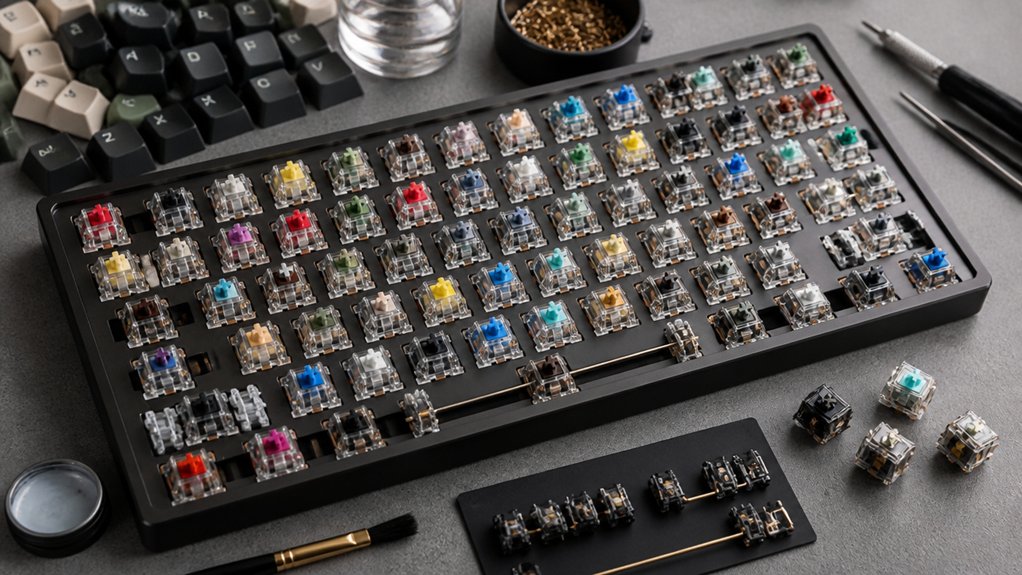
Then, clean all parts thoroughly using isopropyl alcohol and a soft brush to remove dust, debris, and old lubricant.
Finally, follow this simple process:
- Apply a thin, even layer of high-quality grease like Krytox GPL 205 or Tribosys 3204 sparingly to the stabilizer wires, housings, and inserts.
- Reassemble the stabilizers securely, ensuring all parts are properly seated.
- Test for smooth movement and minimal noise before replacing the keycaps, checking that stabilizers don’t wobble or chatter.
How Lubrication Reduces Rattle and Noise

Lubrication techniques are key to minimizing rattle and noise on your mechanical keyboard by reducing friction between moving parts.
Properly lubricated stabilizers improve performance and stability, cutting down on wobble and unwanted vibrations.
When you apply lubricant correctly and regularly, you maintain quieter, smoother keypresses over time.
Using the right application tools ensures a precise and even layer of lubricant, maximizing the effectiveness of your lubrication efforts.
Lubrication Techniques Essential
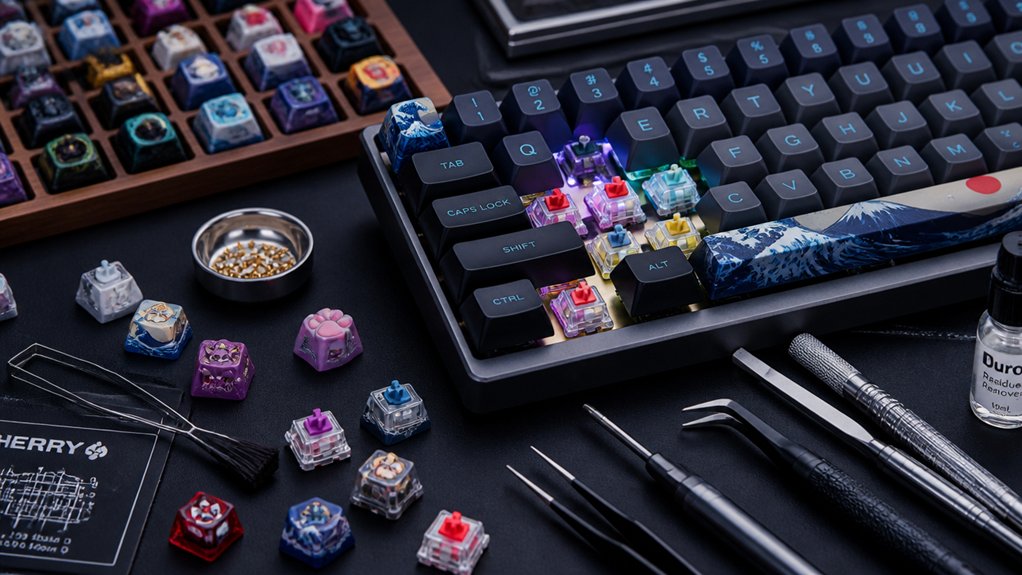
Applying the right lubricants to your 65% keyboard’s switches and stabilizers is essential for reducing rattling and noise. Proper lubrication minimizes friction and dampens vibrations, resulting in smoother, quieter key presses. Using organized lubrication stations can streamline the process, ensuring consistent application and avoiding messes.
To maximize benefits, follow these tips:
- Use specialized greases like Krytox or Tribosys for targeted application on switch sliders and contact points.
- Apply lubricant evenly to stabilizer components to eliminate rattling caused by loose or misaligned parts.
- Avoid over-lubrication, which can cause sluggish responses; focus on slider rails and contact areas for balance.
These techniques improve the acoustic performance and extend your switches’ lifespan. Well-executed lubrication transforms your 65% keyboard into a quieter, more consistent typing tool that feels as good as it sounds.
Stabilizer Performance Enhancement
When you lubricate stabilizers on your 65% mechanical keyboard, you greatly reduce the friction between moving parts, which directly diminishes rattling and noise. Properly lubricating stabilizers using products like Krytox or Tribosys enhances stabilizer performance by ensuring smoother key presses, especially on larger keys such as the spacebar, shift, and enter.
Both plate-mounted and PCB-mounted stabilizers benefit from lubrication, as it prevents misalignment noises and wobbling during actuation. Regular maintenance, including cleaning and lubrication, keeps stabilizers functioning at their best, prolonging their lifespan. Additionally, applying high-quality lubricants can help maintain the tuning and stability of your stabilizers over time.
Without lubrication, stabilizers often cause noticeable rattling that diminishes the quiet, focused typing experience that 65% mechanical keyboards are known for. Improving stabilizer performance creates a more consistent and pleasurable typing feel.
Noise Reduction Methods
Using the right lubrication methods can greatly cut down the noise and rattle on your 65% mechanical keyboard. Proper lubrication reduces friction between switch components, resulting in quieter keystrokes.
It also helps stabilize larger keys, dampening impact and preventing wobble. To maximize noise reduction, consider these steps:
- Apply specialized lubricants like Krytox or Tribosys to the switches, ensuring smooth, quiet actuation.
- Lubricate stabilizers on larger keys to prevent rattling caused by misalignment or wobble.
- Regularly maintain your keys with proper lubrication techniques to avoid stickiness and switch chatter over time.
Tips for Aligning Stabilizers for Better Stability

Proper alignment of stabilizers is key to achieving a stable and consistent typing experience on your 65% mechanical keyboard. Misaligned stabilizers can cause key wobble, rattling, or sluggish keypresses, especially on keys like the spacebar, shift, and enter. To guarantee proper fit, test stabilizer movement before installing keycaps—make sure wires are centered and clips are fully secured. Plate-mounted stabilizers need careful insertion into plate holes, while PCB-mounted stabilizers snap onto the PCB for better alignment. Lubricate stabilizer components with Krytox or Tribosys grease to improve smoothness and reduce noise. Correctly aligned stabilizers will make your keyboards offer a more stable feel and improved reliability.
Custom Stabilizer Mods and Wire Tweaks to Improve Performance
Optimizing stabilizers with lubing techniques and padding can dramatically cut down on rattle and wobble, giving your keyboard a smoother feel.
Adjusting wire legs guarantees even, secure mounting for better stability during long presses. Properly tuned stabilizers improve both sound and tactile consistency, making your 65% board feel more polished and reliable.
Stabilizer Lubrication Techniques
Enhancing stabilizer performance on your 65% mechanical keyboard hinges on effective lubrication and modification techniques. Properly lubricating stabilizers can drastically cut down wobbling and rattling noise, making your typing quieter and smoother.
Consider these key steps:
- Lubricate stabilizers with specialized greases like Krytox 205g0 or Tribosys 3204. Apply thin layers to the housing and wires for smoother movement.
- Perform stabilizer mods by clipping the stabilizer legs, removing plastic inserts, and reducing key wobble.
- Adjust the stabilizer wire by slightly bending or aligning it to prevent misfires or rattling.
Wire Connection Optimization
Custom stabilizer mods and wire tweaks can make a significant difference in how your 65% mechanical keyboard performs. Improving wire connections guarantees reliable electrical contact, reducing key wobble and improving switch responsiveness.
If you use custom cases, you can carefully reinforce solder points and tidy internal wiring, which minimizes signal interference and latency. Tweaking or replacing internal wires can eliminate issues like switch chatter and unresponsive keys, critical in compact layouts.
Stabilizer mods, such as clipping and lubricating wires, further cut down noise and rattle. These precise adjustments allow you to maintain the keyboard’s compact form while boosting durability and typing experience, especially on frequently used keys.
Optimizing wire connections is a simple yet effective way to enhance overall performance.
Preventing Stabilizer Rattle
Stabilizer rattle can disrupt the smooth, quiet feel of your 65% mechanical keyboard, but proper mods and wire tweaks can greatly reduce this issue. To prevent rattling, consider these steps:
- Lubing the stabilizer and wire to reduce friction and chatter, using products like Krytox or Tribosys.
- Clipping the stabilizer to eliminate excess material causing noise, and adding foam or band-aids for sound dampening.
- Adjusting wire tweaks, such as bending the stabilizer wire legs for proper alignment and ensuring tight fits in the plate or PCB mounts.
Regular maintenance—including re-lubing, cleaning debris, and checking alignments—keeps your stabilizers performing quietly and smoothly.
Proper stabilization not only improves sound dampening but also enhances keypress stability on your compact keyboard.
Troubleshooting Sticky and Rattling Stabilizers
Have you noticed your keys feeling sluggish or making rattling noises? Sticky stabilizers often happen from debris buildup or lack of lubrication, making keys unresponsive. Rattling stabilizers usually result from misalignment or insufficient lubrication, especially on larger keys like the spacebar.
To troubleshoot, start by cleaning your stabilizers with compressed air or carefully removing keycaps to clear out debris. Applying a specialized stabilizer lubricant such as Krytox or Tribosys can reduce friction, eliminate rattling, and improve key smoothness.
If rattling persists, check for proper stabilization installation and realignment, especially after switch replacements or maintenance. Regular maintenance, including cleaning and lubrication, is essential for preventing these issues and maintaining your keyboard’s peak performance.
Best Practices for Maintaining Stabilizers and Extending Their Lifespan
Regular maintenance is key to keeping stabilizers functioning smoothly and extending their lifespan on your 65% mechanical keyboard. Proper upkeep guarantees dedicated keys register correctly, maintaining the overall keyboard layout.
To optimize stabilizers, consider these best practices:
- Lubricate stabilizers with high-quality lubricants like Krytox or Tribosys to reduce friction and key rattle.
- Guarantee stabilizers are properly aligned and securely clipped to prevent wobble and uneven presses.
- Gently clean stabilizers from dust and debris with soft brushes or compressed air to keep operation smooth and prevent sticking.
When to Replace Stabilizers Versus Repairing or Modifying
Determining whether to replace stabilizers or repair and modify them depends on the severity of the issues you’re experiencing. If stabilizers cause persistent rattling or clunking noise that cleaning or lubrication can’t fix, replacement is necessary. Repair or modify first: lubricate with suitable grease, like Krytox or Tribosys, and check alignment to reduce wobble and noise. If stabilizers are physically damaged, missing parts, or are poor quality, replacing them is the best option. Modifying, such as clipping or adding padding, can enhance sound and feel without full replacement on a 65% board. Regular maintenance delays need for replacements, saving time and cost.
| Issue | Repair/Modify | Replace Stabilizers |
|---|---|---|
| Noise persists after oiling | Lubricate and realign | If noise continues, replace |
| Physical damage or wear | Usually requires replacement | Damaged stabilizers must be replaced |
| Low quality stabilizers | Repair or modify for better feel | When repair isn’t enough or parts are missing |
| Wobbling or instability | Adjust by modifying stabilizers | When modification can’t fix wobble |
How Optimizing Stabilizers Enhances Overall Keyboard Feel and Reliability
Optimizing stabilizers on a 65% mechanical keyboard greatly enhances its overall feel and reliability. Properly lubricated stabilizers reduce key wobble and rattle, creating a smoother, quieter typing experience.
When you focus on stabilizer tune-up, you’ll notice:
- Improved consistency for larger keys like spacebar, shift, and enter, boosting keyboard feel and accuracy.
- Lower noise levels by minimizing chatter and impact sounds, making your board more suitable for shared or quiet spaces.
- Enhanced durability as well-aligned stabilizers prevent key sticking and reduce mechanical stress on switches and PCB components.
Frequently Asked Questions
What Is the Advantage of a 65% Keyboard?
A 65% keyboard offers a perfect balance of portability and functionality, providing dedicated arrow keys and navigation clusters while saving desk space. This enables easier navigation, customization, and comfortable use, especially in limited workspace or gaming setups.
What Are the Function Keys on a 65% Keyboard?
On a 65% keyboard, function keys (F1-F12) are accessed via secondary layers activated by the FN key. You might need to hold or customize these layers since they’re typically mapped to other keys, balancing size and functionality.
What Is the Difference Between 60% and 65% Keyboard Layout?
A 60% keyboard lacks dedicated arrow keys and some navigation buttons, making it more compact but less convenient for editing. A 65% layout includes these keys, offering better navigation while maintaining a small, portable design.
Is a 65% Keyboard Good for Coding?
A 65% keyboard is good for coding because it offers a compact design that reduces hand movement and can be customized with macros, despite lacking a dedicated function row, making it efficient for many programming tasks.