
Soldering switches offers you a highly durable and reliable connection that prevents switches from loosening over time, ideal for complex layout designs. It also provides consistent sound and feel across your keyboard, enhancing your typing experience. However, it requires skill, specialized tools, and can be time-consuming to modify or repair later. If you’re comfortable with soldering and want a long-lasting build, soldering is a great choice—stay tuned to discover more about its benefits and challenges.
What Is Soldering, and Why Do It in Mechanical Keyboards?

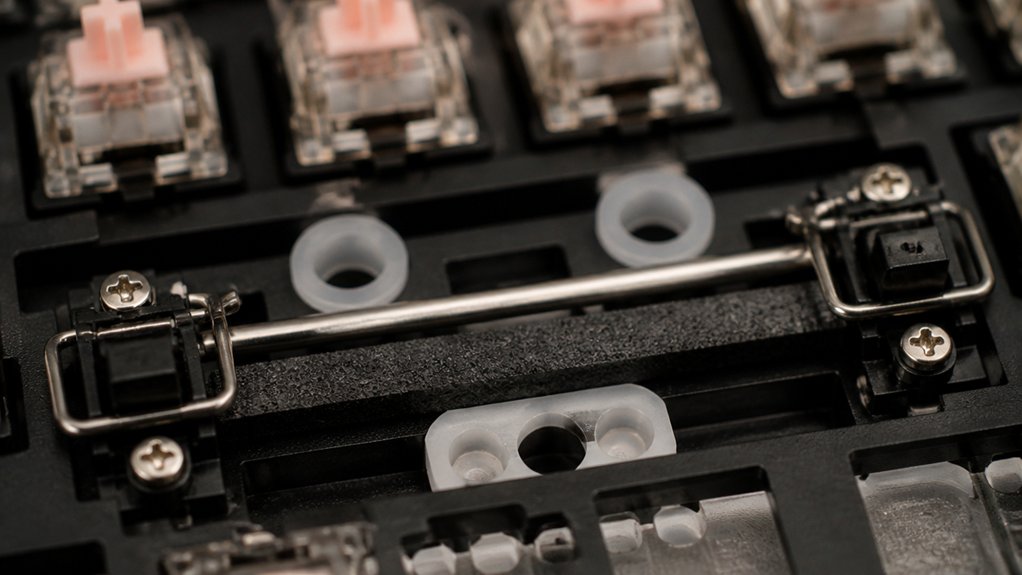
Have you ever wondered what soldering really entails in the context of mechanical keyboards? Soldering involves melting solder to create a permanent electrical connection between switch pins and the PCB, ensuring a sturdy fit. This process provides a reliable electrical connection and strong switch mounting, preventing switches from loosening or popping out during heavy typing. Using the correct solder alloy composition is crucial for achieving durable joints and efficient heat transfer during soldering. In soldered keyboards, you use a soldering iron to melt the solder, securely attaching the switches to the PCB. This technique supports complex layouts like split spacebars and stepped caps lock that hot-swap sockets can’t handle.
As a keyboard hobbyist, you’ll also need a desoldering pump to remove solder if adjustments are needed. Though it takes time and skill, soldering offers durability, consistent sound, and a satisfying custom feel that many enthusiasts appreciate.
What Are the Key Benefits and Drawbacks of Soldering Switches?
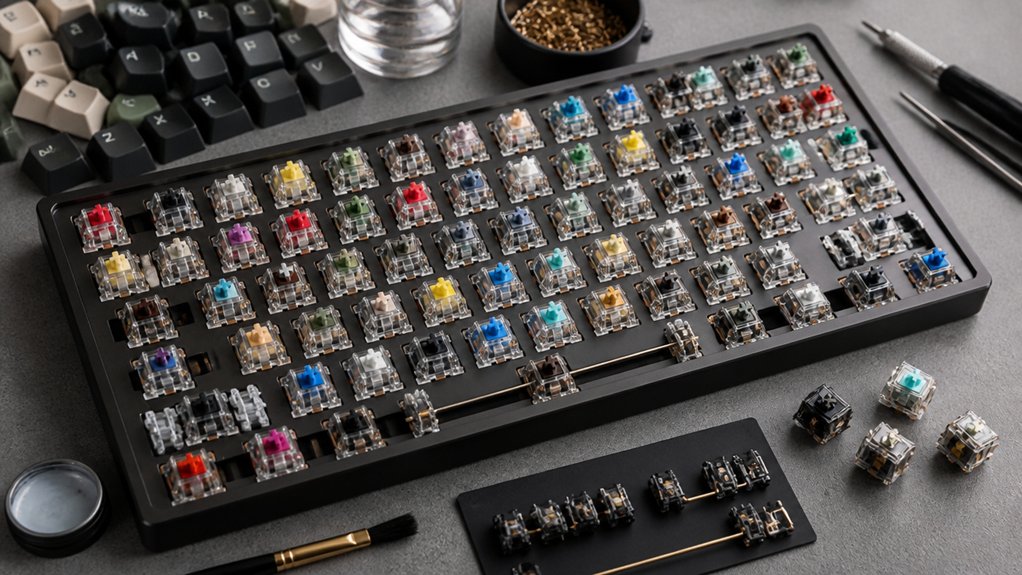
Soldering switches offers several key benefits that appeal to dedicated enthusiasts and those seeking a long-lasting, stable keyboard setup. A soldered connection guarantees durability and reliable electrical contact, preventing switches from loosening or popping out over time. This method supports complex layouts, such as split spacebars and stepped caps lock, which hot-swap sockets can’t always accommodate. Plus, soldered joints provide a consistent feel and sound, enhancing the overall typing experience. Additionally, soldering a keyboard provides an educational opportunity to understand circuitry and component interaction more deeply, especially for those interested in PCB assembly and electronics fundamentals. However, soldering requires skill; improperly handling tools could damage the PCB, especially if you don’t have precise soldering skills. Replacing a switch isn’t straightforward—it involves desoldering and can be time-consuming, making maintenance less flexible compared to hot-swappable mechanical keyboards, where switches can be swapped without soldering or a switch puller.
Is Soldering the Right Choice for Your Custom Mechanical Keyboard?

Deciding whether to solder your switches depends on your priorities and technical skills. Soldered boards provide a highly secure and stable connection for keyboard switches, enhancing long-term durability. They support complex layouts, including split spacebars and stepped caps lock, which hot-swap PCBs often can’t accommodate.
However, soldering requires specific equipment and experience; it’s not ideal for beginners. Once soldered, your PCB is permanent, making repairing switches more time-consuming and risking damage to the sockets or pads.
If you value layout flexibility, frequent switch experimentation, or easy upgrades, soldering mightn’t be the best choice. But if you seek a stable, customized keyboard with improved durability and are comfortable with soldering, going the soldered route offers significant benefits.
Frequently Asked Questions
What Are the Disadvantages and Drawbacks of Soldering?
Soldering switches makes modifications difficult, requires specialized tools, and poses a risk of damaging your PCB. Desoldering is time-consuming and can degrade the board’s functionality over multiple attempts, making future repairs or upgrades challenging and less flexible.
Is Soldering Better Than Hot-Swap?
Soldering is better if you prioritize long-term durability, stable connections, and layout flexibility. However, it requires skills and tools, making it less suitable if you want quick, easy switch changes without permanent modifications.
What Are the Downsides of Hot-Swap?
Hot-swap switches may wear out after about 100 insertions, easily become loose, and are susceptible to damage from misaligned pins. They also often support fewer layouts and add extra cost, reducing overall durability and customization options for your keyboard.
Is It Better to Solder Wires or Use Connectors?
You should solder wires if you seek long-term reliability and a compact setup, as soldering creates a stable connection. However, if flexibility and easy maintenance matter more, using connectors is better, allowing quick disassembly without specialized tools.
In Summary
Soldering switches offers precision and durability, making your keyboard truly personalized. However, it can be challenging and less flexible if you want to swap switches frequently. If you’re comfortable with the process or willing to learn, soldering provides a solid, long-lasting connection. But if you’re new or want easy customization, consider hot-swappable boards. Weigh these pros and cons carefully to decide if soldering fits your DIY keyboard journey.