
To properly lubricate mechanical switch, you’ll need tools like a keycap puller, switch puller, and brand-specific switch openers to disassemble parts safely. Use fine brushes or applicators for precise lubricant application, and tweezers or jeweler’s claws to handle tiny components. Good lighting, magnifiers, and cleaning supplies help guarantee accuracy. Organizing parts with small containers keeps your workflow smooth. If you’re curious about the best tools and techniques, you’ll find plenty of helpful tips ahead.
Must-Have Tools to Start Lubricating Switches

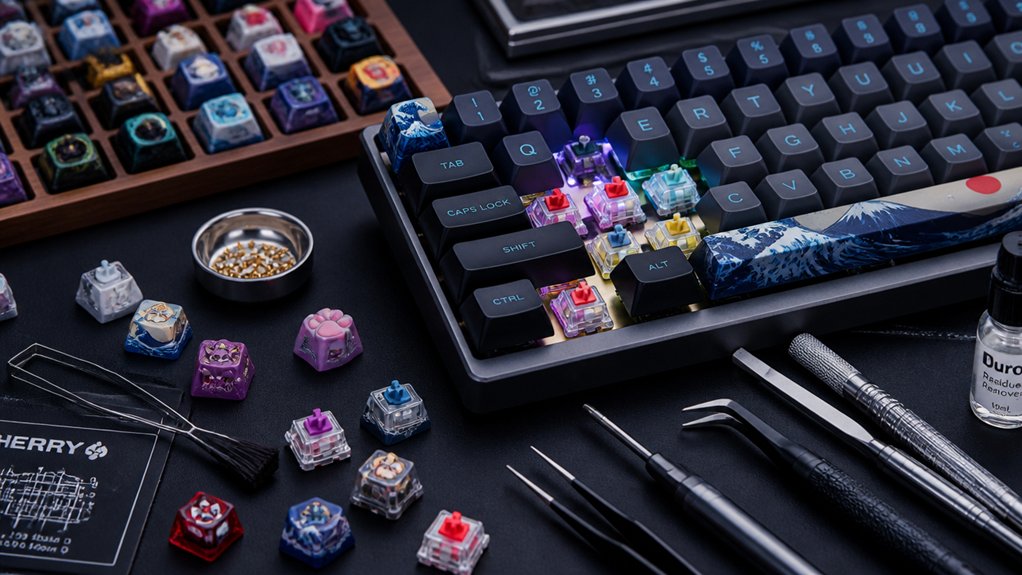
To start lubricating switches effectively, you need a few essential tools. First, a keycap puller makes removing keycaps quick and damage-free, while a switch puller allows you to extract switches safely from the keyboard. A switch opener is indispensable for disassembling switches without risking damage, especially if you’re working with specific brands like Cherry or Kailh. Once disassembled, a fine lube brush—around size 00 or 5 mm—lets you precisely apply lubricant to stem rails and housing parts. Handling small components like springs and stems becomes easier with tweezers, helping you keep parts clean and damage-free during reassembly. A clean workspace with a lube station or polarized container will keep everything organized and efficient, ensuring a smoother application process from start to finish.
Specialized Switch Opening and Disassembly Tools
Having the right tools makes switch lubrication easier and more reliable. A specialized switch opener designed for your switch brand, like Kailh or Cherry, guarantees safe and efficient disassembly. These openers hold the switch in place and apply even pressure, reducing the risk of damaging delicate components. Using high-quality switch pullers with durable construction and ergonomic handles will further protect components and improve your workflow.
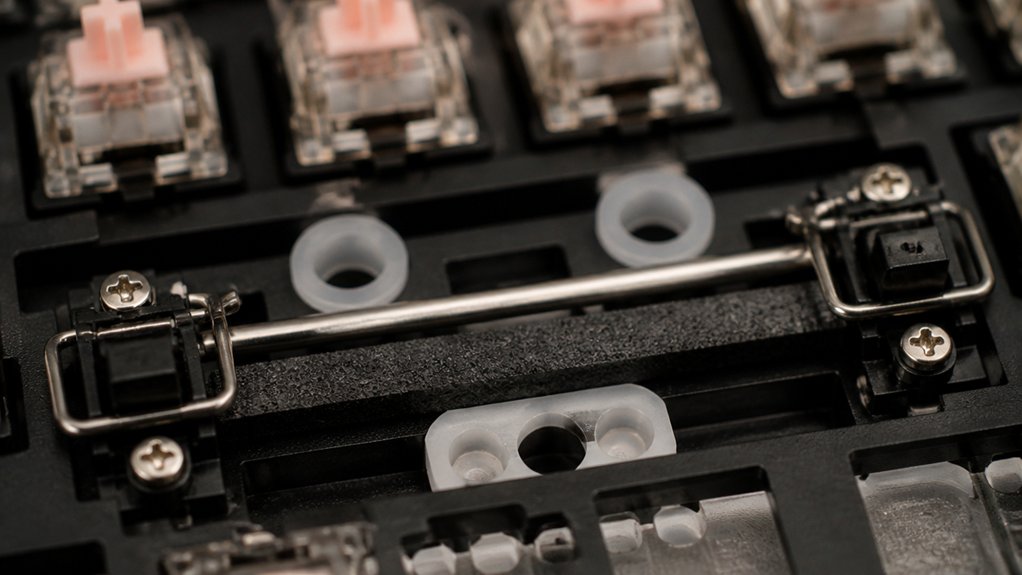
Using the correct tool helps prevent bending or breaking the metal leaf inside the switch, particularly important for maintaining switch integrity.
Consider these tools:
- Switch opener tailored to your switch type
- Tweezers for handling small parts
- Small containers for organizing switch components
- Tools that support safe removal of the switch housing
These tools streamline the disassembly process and protect critical parts during lubrication.
Precision Applicators for Applying Lubricant Exactly Where Needed

Ever wonder how to guarantee your keyboard switches feel smooth and consistent? The key is using precision applicators designed for targeted lubrication. A fine lube brush, size 00, allows you to apply lubricant precisely to stem rails and contact areas, avoiding over-application. Using integrated tools like tweezers and specialized applicators helps you control the amount and placement of lubricant more effectively. Precision tweezers help hold tiny switch components steady, keeping your work clean and accurate. Switch lubrication brushes are perfect for controlling thin coats, ensuring you don’t mush up the switch with excess lube. Using switch lubing stations or holders secures the switch, giving you both stability and hands-free control. Avoid applying lubricant with your fingers or coarse tools; instead, rely on these specialized tools to focus the lube exactly where it’s needed for smooth, reliable switch performance.
Tweezers and Holders for Small Parts Handling
Using the right tools to handle small switch parts keeps your workspace organized and prevents damage or loss. Tweezers to grab tiny components like springs and stems guarantee safe, precise handling without contamination. Non-BBQ tweezers are recommended—they leave no oily or metallic residues that could affect Switch Lube or switch performance. Jeweler’s claws or fine-tipped tweezers give you better grip and control during assembly or when applying lubricant. Holders such as switch lubing stations or Dygma Bowls help keep parts separated and stable, making the process more efficient. These anti-static coatings reduce the risk of static discharge damaging sensitive components during delicate work. These tools prevent mix-ups and lost components, streamlining your work. Proper tweezers and holders make switch lubrication cleaner and more accurate, assuring each part stays in perfect condition.
Brushes and Applicators for Controlled Lubricant Application

Choosing the right brush guarantees you can apply lubricant precisely where needed, preventing over-application. A fine-sized brush with synthetic bristles offers smooth, even coverage on switch parts, especially plastic housings and stems. Small applicators or jewelers’ claws can help hold delicate components steady for more accurate and controlled lubrication. Additionally, selecting brushes with anti-static properties helps protect sensitive electronics from static discharge during maintenance.
Precision Brush Selection
What makes a precision brush ideal for switch lubrication is its ability to deliver control and accuracy. A small-sized brush, typically size 00, allows you to target switch components like stems, rails, and housings without excess Lube.
Its soft, thin bristles evenly spread small amounts of grease or oil, preventing over-application. Using a dedicated brush guarantees the switch’s internal parts stay uncontaminated and properly coated.
To sharpen your control, consider:
- Small, size 00 brushes for tight corners and delicate parts
- Soft bristles to avoid damaging switch components
- Fine tips to precisely reach rails and stems
- Specialty applicators or jeweler’s claws for steady handling
Choosing the right brush helps Lube switches smoothly and evenly, ensuring peak performance. Incorporating tools with high-quality materials and ergonomics can also enhance precision and ease during application.
Applying Lubricant Evenly
To guarantee your switch feels smooth and consistent, applying lubricant evenly is paramount. Use a fine-sized lube brush, typically size 00, to control the amount of lube applied to each part. Start with a minimal amount on the brush and gradually layer as needed, avoiding excess during the process.
A quality brush with synthetic bristles guarantees smooth, consistent coverage without absorbing lubricant, which helps you apply lubricant evenly on switch housings, stems, and rails. This control prevents over-application that can cause mushy or inconsistent feels. Proper lubrication ensures durable and effective noise reduction and friction minimization.
Focusing on precise placement on delicate areas like stem rails and spring contact points preserves switch tactility. With careful, even application, your switch will feel smooth, responsive, and properly lubricated without mess or waste.
Choosing the Right Lubricants for Switches
Selecting the appropriate lubricant for your switches depends on their type and your desired feel. For tactile switches, use lubricants with lower viscosity like Tribosys 3203 or Krytox 203 to preserve the tactile bump. An effective application of pre-lubrication can also help achieve a consistent sound profile and improve overall performance. In contrast, linear switches benefit from higher viscosity greases like Krytox 205g0, ensuring maximum smoothness. Consider these options: 1. Choose greases such as Krytox 205g0 for linear switches and plastic parts for durability. 2. Use oils like Krytox 104 or Tribosys 3203 for versatile application and improved spring lubrication. 3. Avoid over-lubricating tactile switch stem legs, as excess thick lubrication can dampen tactility. 4. Match the viscosity of the lubricant to your switch type and budget, with Krytox offering precise options and Tribosys providing budget-friendly alternatives.
Storage Containers for Switch Components and Spare Parts

Keeping switch components organized is essential for efficient lubrication and reassembly. Storage containers help keep switch components like stems, springs, and housings separated and prevent mixing parts from different switches.
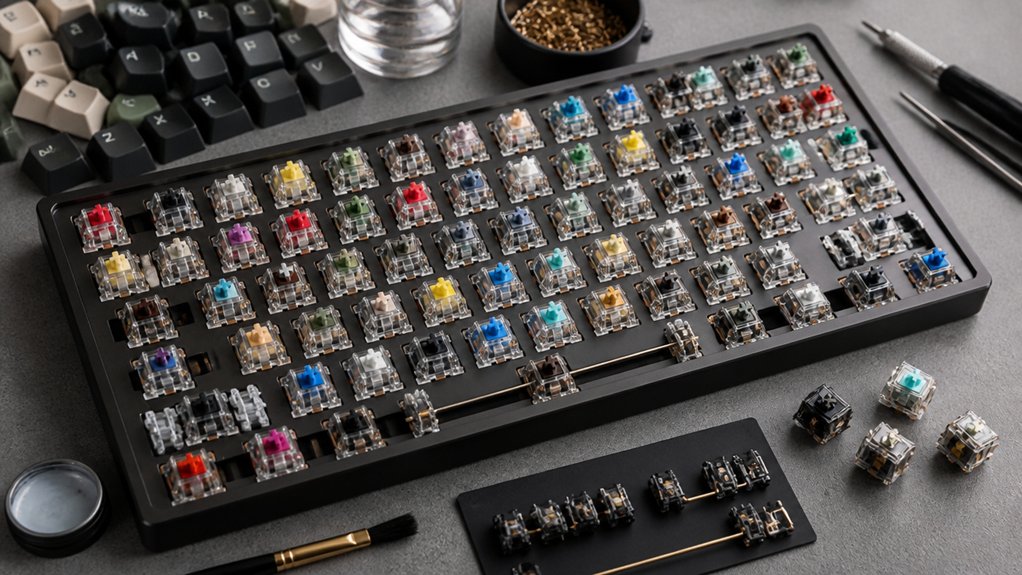
Using separate containers for each part—such as top housings, bottom housings, stems, and springs—makes reassembly easier and reduces the risk of losing small pieces. Clear, compartmentalized containers or small trays like Dygma Bowls provide easy visibility and quick access while working on multiple switches.
Labeling each container according to switch type or keyboard row assists in maintaining order, especially when handling large batches. Additionally, keeping containers dust-free protects lubricated parts from contamination, ensuring consistent performance and smooth operation during the lubrication process. Proper material selection in storage solutions further enhances durability and ease of maintenance for these parts.
Magnifiers and Lights for Seeing Small Details Clearly
When working with small switch components, having the right magnifiers and lighting can make a significant difference in achieving precise lubrication. Magnifying glasses or head-mounted magnifiers enlarge tiny parts, reducing eye strain and guaranteeing you can see every detail clearly. Using tools with higher magnification quality options, such as 2.5X to 4X magnifying glasses, can further enhance visual clarity for delicate work. Bright, adjustable LED lights or desk lamps illuminate the workspace, highlighting small amounts of lubricant and intricate features like stem rails and springs. Combining magnification with proper lighting enhances visibility of delicate components, helping prevent damage. To optimize your work:
Proper magnification and lighting are essential for precise lubrication of small switch components.
- Use magnifying glasses or head-mounted magnifiers for hands-free precision.
- Choose bright LED lights with adjustable intensity for clear illumination.
- Position lights to avoid glare and shadows on tiny parts.
- Make sure your setup minimizes eye strain during extended work sessions.
These tools together guarantee accurate, safe lubrication of your switches.
Tools for Cleaning and Maintaining Switches

Proper cleaning and maintenance of switches require the right tools to guarantee thorough and safe procedures. Start with a keycap puller to remove caps easily without damage.
Use a switch opener, tailored to your switch brand, to access internal parts for cleaning or re-lubrication. A fine-tipped lube brush, such as a size 00, allows precise application of lubricant to avoid contamination or over-lubrication.
An electrical contact cleaner helps remove dirt and oxidation from contacts without harming components. Keep your workspace organized with containers or bowls to sort switch parts, reducing the risk of loss or mix-up.
For detailed inspections, a magnifying glass or magnification glasses can help confirm you clean and maintain every intricate detail properly. These tools make switch maintenance effective and efficient.
Complete Lubrication Kits for Beginners and Pros
Complete lubrication kits provide everything you need to efficiently maintain and improve your switches, whether you’re just starting out or a professional.
These versatile sets often include key tools like pullers, openers, brushes, and lubricants, all organized for easy access. Using a complete kit guarantees you have the right instruments on hand, making the process smoother and yielding better switch performance.
All-in-One Lubing Kits
All-in-one lubing kits are designed to simplify switch maintenance by bundling essential tools and lubricants into a single package. These all-encompassing sets make open, lube, and reassemble tasks straightforward for both beginners and pros.
Typically, you’ll find items such as:
- A switch opener for easy disassembly
- A lube brush (often size 00) for precise application
- Various lubricants like G-Lube or Krytox variants for different parts
- Organized containers or lube stations to prevent mess and mix-ups
These kits streamline the process, reduce the need for multiple purchases, and often include instruction guides to help you optimize switch feel and sound.
Versatile Tool Sets
Versatile tool sets like the Glorious Lube Kit provide everything you need to effectively maintain and improve your keyboard switches, whether you’re just starting out or have advanced skills.
The kit includes a keycap puller to remove keycaps safely, a switch opener to disassemble switches without damage, and a fine lube brush (size 00) for precise lubricant application. High-quality lubricant guarantees smooth switch operation and long-lasting performance. Many kits also feature organizational containers or lube stations to keep parts tidy and prevent mixing.
Advanced options may include tweezers, jeweler’s claws, or magnifying glasses, which help handle small parts delicately. These complete lubrication kits enable you to upgrade your keyboard with professional results, no matter your experience level.
Tools and Tips for Testing and Reinstalling Switches and Keyboards
Before reassembling your keyboard, it’s important to use the right tools and follow proper testing procedures to guarantee each switch functions correctly. Start by using a switch puller to carefully remove the switches without bending pins or damaging the PCB.
Once removed, you can clean or lubricate the switches before reassembling them. Afterward, make sure to test each switch by actuating it several times, ensuring smooth movement and proper registration.
Use key tester software or a word processor to verify all keys register correctly and that no switches feel sticky or unresponsive.
When reinstalling, align the switch legs properly with the PCB sockets to prevent damage. Keep tweezers and a clean workspace handy for handling small components or fixing metal leaf misalignment during testing and reinstallation.
Frequently Asked Questions
What Tools Do I Need to Lube Switches?
To lube switches, you need a keycap puller, switch puller, switch opener, a fine lube brush (size 00), tweezers or a jeweler’s claw, a lube station, and a quality lubricant kit, ensuring precise application and safe disassembly.
How to Lubricate a Switch?
To lubricate a switch, disassemble it carefully, apply a thin layer of lubricant with a fine brush to the stem and housing, lubricate springs separately, then reassemble and test the switch to guarantee smooth, quiet operation.
What Is the Best Lubricant for Switches?
You should use specialized lubricants like Krytox 205g0 for linear switches or Tribosys 3203 for tactile switches. These maintain smoothness without dampening tactility, with Krytox greases suited for housing and stems, and oils for springs.
Can You Use WD40 as a Switch Lubricant?
You shouldn’t use WD40 as a switch lubricant because it can damage plastics and paint. Instead, opt for specialized lubricants like Krytox or Tribosys, and clean residue afterward with an electrical contact cleaner for ideal switch performance.